


Solitaire Truck review
 Analysis by Appsdrops
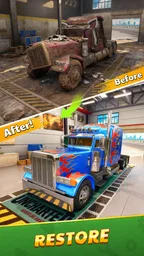
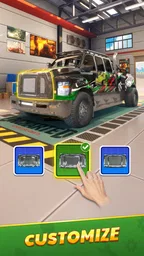
Solitaire Truck puts a familiar card game alongside a simple, appealing goal: restore and customize a truck as you play solitaire. That pairing gives each round a little more context than a standalone card puzzle. Instead of playing only to clear cards, you can also look forward to making progress toward a personal project. I find that a sensible hook for anyone who enjoys casual card games but appreciates having a longer-term reason to return.
Card play with a destination
At its heart, this is a solitaire card game with a customization theme. The truck is the distinctive part of the pitch: you play solitaire while working toward restoring it and making it your own. That gives the game a relaxed, goal-oriented identity without asking players to learn a complicated premise before they begin.
The idea should appeal to people who like familiar games that are easy to understand at a glance. Solitaire already comes with a clear objective during a round, while the truck provides a broader sense of direction beyond that single session. I like how the two ideas complement each other: cards provide the moment-to-moment activity, and the promise of a customized truck adds a reason to keep playing.
There is also a nice balance in the concept between routine and reward. A card game can be satisfying on its own, but repeated rounds may feel much the same when there is nothing to connect them. Here, the restoration theme gives play a more personal frame. The truck is not just decoration in the short description; it is the central goal that makes this version of solitaire distinct.
A clear first goal
For a new player, the broad objective is easy to grasp: play solitaire and work toward restoring and customizing the truck. That clarity matters in a casual game. I do not need a long explanation to understand why I might want to start a round, and the theme gives the activity an immediate sense of purpose.
That early goal is also flexible. Some players will be drawn to the cards first, while others may be more interested in the idea of shaping a truck to their taste. The concept leaves room for both motivations to coexist. It does not require the player to treat solitaire as a serious contest; it can simply be a pleasant way to make progress toward something appealing.
Because the game is built around a familiar card format, it is easy to imagine fitting it into short breaks or a quieter moment at home. I see that as a strength for a casual mobile game: the central activity is recognizable, and the long-term theme gives it more personality than a plain card table. Whether someone plays for a few rounds or settles in for longer, the central reason to play remains straightforward.
Progress that gives rounds context
The restoration and customization premise acts as the game’s progress signal. Each session belongs to a larger goal, so the appeal is not limited to whether a particular hand goes well. That wider frame can make ordinary play feel more rewarding: a round becomes part of an ongoing effort rather than an isolated puzzle with no connection to what came before.
I appreciate this kind of structure when it stays easy to understand. The promise of making a truck your own is concrete, and it gives the player something to anticipate. It can also support different moods. On one day, the pleasure may be in the card challenge; on another, the motivation may come from seeing the restoration theme as a continuing project.
The customization angle is especially useful because it suggests personal investment rather than a single finish line. A restored truck can feel like a destination, while making it your own hints at an additional layer of satisfaction. That is a compelling setup for a game designed around repeat play. It gives progress a sense of identity, not just a tally.
At the same time, I would describe the appeal in terms of the broad promise rather than assuming a particular system of rewards. What stands out is the connection between solitaire and the truck project. That is enough to establish a clear progression fantasy: play cards, keep moving forward, and work toward a vehicle that reflects your choices.
Challenge and pacing
Solitaire offers a naturally readable form of challenge. A player can focus on the cards in front of them, consider the available moves, and decide how to proceed. That familiar rhythm suits a game with a relaxed restoration theme, since it keeps the central activity approachable while still asking for attention and planning.
The pacing is likely to appeal most to players who enjoy taking a game one round at a time. The card activity provides a contained challenge, while the truck goal supplies a broader reason to continue. That combination can make the experience feel steady: there is something to think through in the present and something to work toward beyond the current hand.
For experienced solitaire players, familiarity can be a benefit. There is no need to learn an entirely new genre to understand the main appeal. For newer players, the recognizable card-game framing makes the idea easy to approach. In either case, the truck theme helps differentiate the experience, even though the core attraction remains the pleasure of playing solitaire.
Difficulty and pacing matter because a longer-term goal works best when the activity leading toward it remains enjoyable. The concept here has a natural rhythm: card play supplies the immediate challenge, and restoration gives that challenge a wider purpose. I find that a more inviting proposition than relying on a dramatic premise alone. The theme supports the game instead of obscuring what it is.
Reasons to return, without losing the simple appeal
The truck provides the clearest retention hook. Players who enjoy seeing a project take shape may find it satisfying to return to solitaire because each session is connected to the larger restoration and customization idea. That is a familiar and effective kind of motivation: the game offers an ongoing goal while keeping the actual activity easy to recognize.
There is a potential pressure point in any progression-focused game: if the surrounding goal starts to feel more important than the play itself, a relaxing card game can become less relaxing. The strongest version of this concept is one where the truck remains an enjoyable incentive rather than a demand. The simple solitaire foundation is valuable precisely because it can be played for its own sake, without needing the player to turn every session into a chore.
That balance is why I see the game’s premise as its most important design strength. The long-term objective gives players a reason to come back, but it does not replace the familiar pleasure of working through a card puzzle. People who like gentle progress may enjoy having both layers. Those who prefer a pure, unadorned card game may care less about the customization theme, but it still gives this title a recognizable personality.
The best reason to keep playing is the combination of a familiar solitaire challenge and a personal truck-restoration goal. That pairing makes the game easy to understand while giving it a longer arc. It is a straightforward approach, but straightforward can be exactly right for a mobile card game meant to offer an approachable pastime.
Who may enjoy the game
I would point Solitaire Truck toward players who like solitaire and want a little more context around each session. It may also suit casual players who enjoy the idea of building toward a visible personal goal rather than simply completing hands one after another. The restoration theme adds warmth to the card-game format without changing the basic appeal of playing cards.
The game is free to download and is rated for Everyone. It has an average rating of 4.6 from around 43,000 ratings, with roughly 2,300 written reviews and over 1 million installs. Those figures suggest a substantial audience for this combination of solitaire and truck customization. The game was released on October 29, 2024, and its current version is 3.8.0.
It is developed by Dolyplay Games, and the minimum operating system requirement is version 7.0. Optional in-app purchases range from $0.99 to $49.99 per item. As with any free-to-play title, I recommend keeping personal spending preferences in mind before making purchases. The core pitch, though, is easy to grasp without getting distracted from the main draw: play solitaire while working on a truck you can make your own.
Final verdict on its progression
As a solitaire game with truck customization, this title has a clear identity and a sensible progression hook. The card game supplies familiar, self-contained challenges; the truck supplies a broader goal that can make returning feel worthwhile. I like that the premise does not need to be complicated to make the experience feel more personal.
Its strongest appeal is the way it links immediate play to longer-term progress. That structure can support a satisfying routine for players who enjoy casual challenges and visible goals. The key is that solitaire remains central: the truck should make the rounds more meaningful, not turn a relaxing pastime into an obligation.
Overall, I see it as a promising choice for anyone who wants a familiar card game with an extra layer of purpose. If the thought of restoring and customizing a truck makes solitaire more appealing to you, the concept has a lot going for it. It offers a clear reason to begin, a personal goal to work toward, and a relaxed card-game foundation that can keep the experience approachable.
What we like
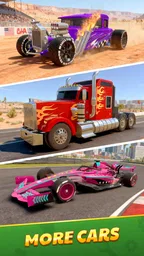
- Truck-themed visuals give familiar solitaire a playful look.
- Short rounds make it easy to play during a break.
- Simple controls are approachable for new players.
- Card layouts offer a relaxing change of pace.
- The classic solitaire format is easy to understand.
What could be better
- Gameplay may feel repetitive after many rounds.
- Truck themes do not substantially change the card rules.
- Solitaire relies heavily on luck in some deals.
- Small cards may be harder to read on compact screens.
- Players seeking action or story may find it too quiet.







