






Solitaire Rewards review
 Analysis by Appsdrops
I like a Solitaire game best when it makes a short break feel restful rather than turning every hand into a chore. Solitaire Rewards has a clear appeal for that kind of play: it keeps the focus on familiar card-table decisions, with the prospect of rewards adding an extra nudge to start another round. My overall view is positive but measured. It is a sensible pick if you want straightforward solitaire on your phone; it is less compelling if you need deep customization, a particularly demanding challenge, or a reason to trust that every session will feel different.
Familiar card play, with a reward-shaped extra
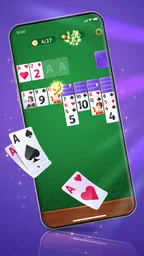
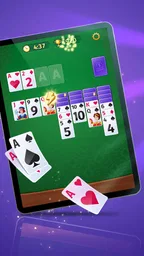
Solitaire Rewards is a free card game from Apperfun. Its premise is easy to understand, which matters in a mobile game: you can open it for a quick diversion without first learning a large set of rules or building a long-term strategy. The familiar solitaire format is the main attraction, while the rewards angle gives routine play a small additional purpose.
That combination works best when I treat the game as a little pause in the day, not as a dependable way to earn something valuable. The title and short description put rewards front and center, but I would approach that wording with realistic expectations. The card game is what you can count on enjoying; any reward element is a bonus, not a substitute for a game you would otherwise want to play.
The game sits in the broad solitaire and casual card-game tradition, where accessibility is a strength. A familiar layout lets experienced players get moving quickly, while newcomers can use each move to understand how cards open up further choices. The best moments are often quiet ones: spotting a useful sequence, clearing a space, or realizing that a move that looked harmless has blocked a better option.
Why the basic format can still hold attention
Solitaire’s appeal comes from a useful balance: the rules are approachable, but choosing the order of moves still asks for attention. I find that makes it more satisfying than a purely passive time-killer. Even a short session can feel complete, and you do not need a group of friends or a live opponent to make the game worthwhile.
There is also a practical advantage to a familiar card game on a phone. It fits the small gaps that are awkward for longer games: waiting for an appointment, taking a short break, or winding down before switching tasks. In those situations, I want the game to let me focus on a hand and then put it aside. Solitaire Rewards is aimed at that lightweight routine rather than an elaborate campaign or a competitive match.
One useful way to keep the experience enjoyable is to decide what a good session means before opening it. If the goal is to relax with a few hands, the game’s straightforward pitch makes sense. If the goal is to chase rewards for as long as possible, the same framing can encourage more play than you intended. I recommend setting a natural stopping point, such as finishing the current hand, rather than letting a reward prompt decide when your break ends.
What the popularity and version tell me
The game has a 4.7 average from around 2,700 ratings, alongside roughly 400 written reviews and over 100,000 installs. That is a promising reception for a simple card title, though I would not take the score as proof that it suits every player. Solitaire preferences are personal: small differences in presentation, pacing, or how a game handles a frustrating hand can matter more than a high average suggests.
It was released on March 27, 2025, and its current version is 15.55.38. Those details are useful context if you are comparing it with older solitaire apps, but they do not by themselves tell me how often it changes or what a particular update contains. I would judge it by whether the actual play feels comfortable on your device and whether its reward framing suits your habits.
The game is free, has an Everyone age rating, and supports Android 7.0 or later. That makes it a low-cost option to try on a compatible Android device. It is still worth keeping the usual distinction in mind: free to install does not automatically mean every part of an app will feel equally unobtrusive. I would pay attention to the rhythm of play and any interruptions, then decide whether the overall experience remains relaxing for me.
The trade-off: rewards can distract from the cards
The biggest limitation is also part of the game’s identity. When a solitaire app emphasizes rewards, it can shift attention away from the small, satisfying decisions that make card play enjoyable. I would rather make a move because it improves the hand than because I feel pushed to complete another round. If reward prompts or progress cues become the main reason you continue, the game may start to feel like a task instead of a break.
That is not a claim that every session will be intrusive; it is a reason to notice your own reaction. Some players enjoy having an extra goal layered onto a familiar game. Others prefer a clean, quiet table with no added incentive. If you fall into the second group, a traditional solitaire app with a more restrained presentation may be a better fit, even if it offers less motivation to return.
There is a second trade-off: familiarity makes the game accessible, but it also limits how distinctive it can feel. Anyone seeking a fresh card system, a story, deep deck customization, or direct competition should look elsewhere. Solitaire Rewards is best assessed as a convenient version of a known pastime, not as a reinvention of card games. That keeps expectations fair and helps avoid mistaking simplicity for a lack of ambition.
Small habits that make sessions work better
I find solitaire more enjoyable when I pause before committing to the first available move. A quick scan for cards that could uncover a hidden option can prevent the common mistake of playing a move simply because it is legal. That habit is especially useful when a hand begins to feel stuck: instead of tapping through automatically, reconsider the sequence and ask which move creates the most flexibility.
Another practical tip is to use the game as a deliberately bounded break. Start a hand while you are waiting, but avoid opening it when you need to return instantly to a demanding task. Card games invite “just one more” thinking, and a rewards theme can make that temptation stronger. Finishing a hand before putting the phone away gives the session a cleaner endpoint than stopping midway through a decision.
If you are new to solitaire, do not judge your skill by a single difficult deal. The useful learning is in recognizing how one choice affects the cards you can reach later. Experienced players, meanwhile, may appreciate the low setup effort but should be prepared for a familiar loop rather than a steady stream of new mechanics. Those are different expectations, and the game makes more sense when you know which one you bring to it.
Who should choose it, and who should pass
I would recommend Solitaire Rewards to casual players who already enjoy solitaire, want a free mobile option, and like the idea of a small reward-oriented layer around familiar card play. It also suits people who want something they can pick up without arranging a multiplayer session or learning a complicated ruleset. Its straightforward nature is a benefit if your priority is an easy, self-contained diversion.
I would be more cautious if you are trying to cut down on phone time, dislike incentive-driven game design, or want every session to offer a noticeably different kind of challenge. In those cases, a physical deck, a minimalist card app, or a more strategic game may serve you better. The right alternative depends on what you want from the break: less screen stimulation, more variety, or a tougher puzzle.
For an everyday example, imagine you have ten quiet minutes before heading out. I would open the game only if I was happy to spend that time on one focused hand, then stop when it was done rather than treating the reward angle as a target. That approach preserves the simple pleasure of arranging cards and keeps the app in its best role: a short, low-effort pastime.
A fair choice for a familiar kind of break
My verdict is that Solitaire Rewards is worth trying if you want approachable solitaire and find a reward-themed reason to return appealing. Its strongest quality is the low barrier to playing: the card format is recognizable, the game is free, and it can fit into small pockets of downtime. Apperfun has built its appeal around a familiar activity rather than asking players to master a new one.
The caveat is that rewards should remain secondary. If you enjoy the cards, this can be a pleasant casual game; if you mainly want a deep challenge or a distraction-free experience, another option is likely better. I would give it a try on a compatible Android device, keep my expectations centered on the solitaire itself, and judge whether the extra incentive improves my break or makes it harder to stop.
What we like
- Familiar solitaire rules make it easy to start playing.
- Short rounds fit into brief breaks.
- Daily challenges can add variety to regular games.
- Simple controls work well on touchscreens.
- The game offers a goal beyond simply clearing cards.
What could be better
- Reward amounts may depend on eligibility and location.
- Cash-out options can require meeting minimum thresholds.
- Some features may require an internet connection.
- Ads or promotions can interrupt play.
- Rewards are not guaranteed and may take time to earn.







