



Solitaire Deluxe® 2: Card Game review
 Analysis by Appsdrops
I can see why Solitaire Deluxe® 2 is easy to keep around: it offers a broad choice of familiar card games without asking you to learn a complicated system first. My first impression is of a casual collection meant for short visits as much as long sessions. If you already know Klondike or Spider, you can get started immediately; if you want a change, other variations are ready to try. The real question is whether that variety stays useful after the first burst of curiosity.
What keeps the first week interesting
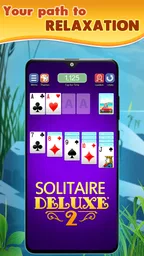
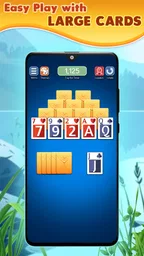
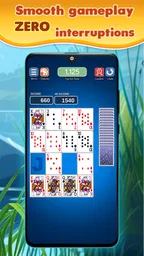
In its first few days, the strongest appeal is the ability to change the kind of puzzle to suit your mood. Klondike is a comfortable default when I want a familiar solo game. Spider asks for more planning, while Freecell gives a different sort of challenge, and Pyramid breaks up the rhythm with another recognizable format. Having more than twenty solitaire games in one card game makes experimentation feel natural rather than like a commitment to a single ruleset.
That breadth is especially handy when I have only a few minutes. I can choose a straightforward game while waiting for an appointment, then switch to something that calls for more attention when I have time to think. This is not the same as a deep campaign with unlocks or a story to follow; the draw is the compact card puzzle itself. For someone deciding what to play, that distinction matters: the collection offers variety in rules, not a narrative journey.
Solitaire Deluxe® 2 is a free game from Murka Games Limited, and its central idea is refreshingly simple: put several familiar forms of solitaire within reach. Its average rating is 4.3, based on around 46,000 ratings, and it has been installed over five million times. Those figures suggest an established audience, but they do not tell me whether every variation will suit a particular player. The best test is to try a few different games rather than judge the whole collection by the first deal.
Choosing a game that fits the moment
One useful habit is to pick a variation by the kind of attention you have, not just by name recognition. When I want a relaxed session, I reach for a format whose rules I already know. When I am alert and want to plan several moves ahead, Spider or Freecell can feel more involving. If I am tired, trying to learn an unfamiliar variation may turn a soothing break into a frustrating one. The collection’s range is most valuable when it helps match the game to the moment.
It also makes the app approachable for people with different levels of solitaire experience. A newcomer can begin with a familiar option and explore gradually; a regular player can use the other variations to avoid repeating the same pattern every time. Still, this is a card-game collection, not a general puzzle library. If what you want is a steady stream of new mechanics, characters, or objectives, the familiar foundations may start to feel limited.
Does the variety last beyond the novelty?
After the first week, the question changes from “What can I try?” to “Which games do I actually return to?” That is where the collection makes a reasonable case for lasting space. You do not have to play every mode for the app to be useful. A couple of favorites can become dependable choices, while the rest remain available for occasions when the usual game feels stale. I see that as more practical than treating the full selection as a checklist to complete.
For month-to-month use, the appeal depends on how much you enjoy replayable card puzzles. Solitaire’s pleasure often comes from making decisions with the cards in front of you, rather than discovering a new level each session. If you like that small, self-contained challenge, having Klondike, Spider, Freecell, Pyramid, and other options can make routine play less repetitive. If you need a strong sense of progression to stay interested, this may not provide the kind of continuing motivation you are looking for.
A realistic everyday use is a short break between tasks: I can open the game, choose a familiar format, and stop when the break is over. Another is winding down at home, where a more demanding variation can hold my attention longer. The practical trade-off is that a quick session still depends on choosing a mode that fits my energy. When I am distracted, a thoughtful game can feel like work; when I want something absorbing, the simplest option may not be enough.
How it compares with a single-game alternative
Compared with installing one dedicated Klondike or Spider game, this collection’s advantage is convenience and range. I would choose it if I like switching rules without keeping several separate solitaire apps on my device. A focused alternative can be the better choice, though, if I care most about one particular version and want an experience built entirely around it. Solitaire Deluxe® 2 is strongest as a varied casual collection, not necessarily as the definitive choice for a specialist in one format.
The same comparison helps set expectations about depth. More versions give the player options, but variety alone does not guarantee that each game will become a favorite. I would try the recognizable modes first, then keep only the ones that genuinely suit my habits. That approach makes the collection feel like a useful set of tools rather than an obligation to explore everything.
Everyday upkeep, spending, and possible friction
There is little maintenance in the ordinary sense: this is a game you can return to when you feel like playing, rather than an app that depends on a daily routine. That suits me. I would not install it expecting reminders, social obligations, or a long-term schedule; its value comes from being available for a spare moment. The low commitment is a strength for casual players, but it also means there may be little to pull someone back if they stop enjoying the card puzzles.
The game is free to download, with optional in-app purchases listed from $0.99 to $49.99 per item. I would treat those purchases as something to consider only if I find myself playing regularly and understand what I want from them. The free entry point makes it easy to see whether the range fits my taste, while the price span is a reason to be deliberate before buying anything. I would not spend simply because a purchase is offered; first I would establish which parts of the experience I return to.
For parents choosing a casual game, its content rating is Everyone. That makes the stated age classification broad, though I would still use the usual judgment about a child’s device use and any spending controls. The game’s card format is familiar, but a free download with optional purchases is still worth discussing with younger players before they use it unsupervised.
Its current version is 4.88.0, and it requires Android 7.0 or later. If you are deciding whether an older Android device can run it, checking the operating system version is a practical first step. The game was released on March 3, 2015, so it is not a brand-new arrival; that long presence may reassure players who prefer an established title, but it does not by itself guarantee that every detail will match personal expectations.
Where repetition can set in
The main source of fatigue is built into the genre: card layouts and familiar rules can begin to feel samey when you play for long stretches. Switching from Klondike to Spider or Pyramid can refresh the decision-making, but it will not change the basic fact that these are variations on solitaire. I would take a break or change modes rather than force a session when the cards stop feeling engaging. The range helps manage repetition; it cannot remove it altogether.
Another possible friction point is choice. More than twenty options sounds generous, but a large menu can be less helpful if you are unfamiliar with the names and rules. I would begin with the games I already understand, then sample one new variation at a time. That makes it easier to notice what is genuinely different and prevents the collection from becoming a blur of options. Players who want a single, instantly obvious mode may prefer a simpler standalone game.
There is also a meaningful difference between wanting relaxation and wanting challenge. Some sessions call for a familiar puzzle that does not demand much concentration; other times, a more strategic format is better. No one choice is ideal for both moods. The useful approach is to treat the variations as alternatives for different situations, rather than expecting every game in the collection to deliver the same pace or satisfaction.
Who I would recommend it to
I would recommend Solitaire Deluxe® 2 to someone who already enjoys solitaire, wants several well-known styles in one place, and values being able to play in short bursts. It also suits a newcomer who is willing to learn gradually, starting with familiar rules instead of trying to master the whole collection. The game is less suitable for someone who quickly tires of repeated card-based puzzles, needs an unfolding story, or wants a single mode with specialist depth above all else.
Murka Games Limited has made a straightforward proposition: a free card game with a wide selection of solitaire variations, optional purchases, and a rating of Everyone. With around 11,000 written reviews, it has attracted substantial feedback as well as a broad player base, though the right fit still depends on your own taste. I would focus less on how many modes are available and more on whether two or three make you want to come back.
My long-term verdict
For me, this earns space when solitaire is already part of how I take breaks. Its best long-term quality is not novelty but convenience: familiar games are close at hand, and another ruleset can help when the default starts to feel repetitive. The collection does not need daily attention, which makes it easy to keep installed without turning play into a chore.
I would skip it if I were looking for constant new content or a strong progression loop, and I would choose a dedicated alternative if I cared deeply about just one solitaire format. But for a casual player who likes changing between Klondike, Spider, Freecell, Pyramid, and other card puzzles, it is a practical collection with a clear use. Its lasting value comes from having the right familiar game available when a small, focused break is exactly what I want.
What we like
- Offers a variety of solitaire games beyond classic Klondike.
- Includes adjustable options for card faces and backgrounds.
- Daily challenges provide goals for regular play.
- Undo and hint tools can help when a deal gets tricky.
- Runs well for short sessions without requiring multiplayer.
What could be better
- Some features and content may require in-app purchases.
- Advertisements can interrupt play in the free version.
- Small cards may be difficult to see on compact screens.
- Random deals can feel repetitive after extended play.
- Some game modes may take time to learn.







