Solitaire 2026 review
 Analysis by Appsdrops
I like solitaire best when it is easy to begin, easy to pause, and still gives me a small puzzle to think about. Solitaire 2026, a free card game from Standard Puzzle, aims squarely at that familiar kind of play. Its appeal is not a dramatic twist on the genre; it is the chance to settle into a recognizable deal, make a few thoughtful moves, and decide whether to start another round.
The game is listed as suitable for Everyone, and its current version is 1.952. It has a 4.7 average from around 5,700 ratings, with more than 500,000 installs. Those figures suggest a well-established casual choice, though they do not tell me whether its particular style will suit every solitaire player. The useful question is simpler: does this version make the basic card-playing loop enjoyable enough to return to?
Starting a round without a learning curve
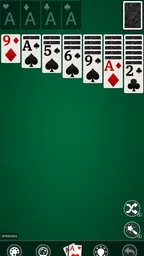
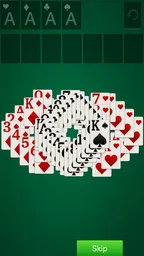
The first move in a classic solitaire game is usually less about speed than orientation: scan the visible cards, find a legal move, and work out whether moving it will expose something useful. That is the right mindset here. The familiar card-game format makes Solitaire 2026 approachable if you already know the basics, while the modest learning burden makes it a reasonable starting point for someone who wants to try solitaire without committing to a complex game.
I find the opening of a deal most satisfying when I resist moving every available card immediately. A move can look productive because it clears a space, yet still leave the tableau less flexible. I would first look for a move that reveals a face-down card or preserves room to rearrange the columns. That small pause turns the opening from automatic tapping into a genuine, low-pressure decision.
This is also a practical game for short gaps in the day. I can imagine opening it while waiting for a kettle to boil, playing until the next interruption, and returning when I have a spare moment. Solitaire does not demand the sustained attention of a story-driven game or the quick reactions of an action title. Its basic pleasure is having one manageable problem in front of me.
The best first-session approach is to treat each deal as a fresh puzzle rather than a test of skill. If I cannot see a strong move, I can check the tableau again instead of shifting cards just to keep my fingers busy. That habit makes the game feel calmer and helps me notice which choices actually open up the board.
Small decisions create the rhythm
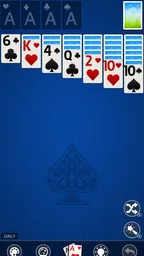
The feedback in solitaire comes from the board itself. A card moved into place changes what is visible and what may become possible next. When a move uncovers a useful card, the payoff is immediate; when it only rearranges the same options, I get a quiet reminder that not every legal move is a helpful one. That simple cause-and-effect is the game’s strongest source of momentum.
I would describe the pace as self-directed rather than competitive. There is no need to keep up with another player, and a cautious player can take time to compare options. That is a real advantage when I want a screen-based break that does not add more urgency to the day. It also means the pleasure depends on whether I enjoy thinking through small sequences; anyone looking for constant surprises may find the rhythm too restrained.
A useful habit is to ask what a move changes before making it. Does it uncover a card, create a more useful arrangement, or simply shift a visible card to another spot? That quick check is especially helpful when several legal moves appear at once. In a game built around familiar rules, the most meaningful challenge often lies not in knowing what can be moved, but in choosing what is worth moving now.
There is a trade-off to this gentle feedback. A successful move can feel satisfying, but it is a small reward rather than a spectacular event. If I have only a minute, that is enough; if I want a deep strategic challenge, the standard solitaire loop may feel limited. I would choose a more demanding card game when I want a larger decision space or stronger competition.
Why one more deal is tempting
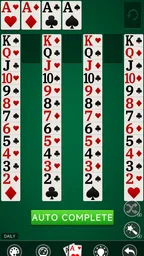
The reward is partly practical: a good sequence gradually turns a cluttered layout into a more orderly one. I enjoy the moment when a previously blocked card becomes available because an earlier choice paid off. The satisfaction is modest but clear, and it gives each deal a shape: assess the board, make a move, watch for new options, and see whether the arrangement can be brought to a finish.
Another reason to continue is that a new deal resets the problem. A round that stalls does not have to become a long commitment; I can take what I learned about my own choices and begin again. That makes the game easier to fit around interruptions than a mode where leaving halfway through would mean losing a long build-up.
Still, I would not mistake replayability for endless variety. The basic attraction is the classic solitaire puzzle, not a promise of elaborate progression. If I want a game with a campaign, character development, or a social contest at its center, I would look elsewhere. Solitaire 2026 makes more sense when I want a dependable card-table routine and am happy for the pleasure to come from the cards I can see.
One small strategy I recommend is to avoid treating a cleared column as an automatic win. An empty space can be valuable, but only if the card you move there helps organize the tableau. Before committing, consider whether the move will make a useful sequence possible or merely make the layout look tidier. This is the kind of practical judgment that can make an ordinary round more engaging without requiring advanced knowledge.
When the board calls for a reset
Every solitaire session reaches a point where the visible choices stop feeling promising. I see that as part of the format rather than a personal failure: some deals ask for patience, and others simply do not unfold in a satisfying way. The sensible response is to reassess the available moves, avoid repeating a choice that has already led nowhere, and start fresh if the puzzle has stopped being enjoyable.
That reset is central to the loop. A round gives me a contained task; the board responds to each decision; a useful reveal offers a little reward; and a finished or stalled layout leaves room for another attempt. Because the steps are familiar, I do not need a long warm-up before beginning again. The game is particularly suited to short sessions where I want a clear beginning and a natural stopping point.
For everyday use, I would keep expectations simple. This is a good choice for a quiet break, a waiting-room distraction, or a few minutes away from a busier game. It is less suitable if I need something that can be enjoyed entirely without attention: even relaxed solitaire asks me to track card positions and think ahead. It is also not my first recommendation for players who prefer multiplayer interaction or a steady stream of new mechanics.
Compared with other familiar card games, solitaire is more solitary and more forgiving of an uneven pace. A competitive card game gives a person to react to; a puzzle card game may ask for a denser strategy. This one sits in the simpler, more personal corner of the category. That is a strength when I want control over the tempo, but a limitation when I am in the mood for conversation, rivalry, or a more involved challenge.
Who I would recommend it to
I would recommend Solitaire 2026 to someone who already enjoys classic solitaire or wants a straightforward way to learn the feel of the genre. The Everyone age rating and free price make it an easy game to consider, while its card-game focus keeps the purpose clear. Standard Puzzle is the developer behind it, and the game’s established audience gives a new player a useful sign that this is not an obscure experiment.
I would be more cautious about recommending it to someone who gets frustrated by deals that do not develop smoothly. The game’s calm pace cannot remove the uncertainty that makes solitaire a puzzle, and a stalled board may feel repetitive rather than relaxing if the player wants guaranteed progress. In that situation, a more guided puzzle game or a social card game could be a better fit.
If you are new to the genre, I suggest playing slowly at first and focusing on what each move reveals. If you already know solitaire, try using the game as a short mental reset rather than expecting it to reinvent the card table. Either way, the best sessions are the ones where I make deliberate choices, enjoy the small changes in the layout, and stop when the round has run its course.
The loop holds up when you want calm
My overall impression is that Solitaire 2026 earns its place as a simple, accessible card game by leaning on the appeal of the classic format. The action is easy to understand, the board provides immediate feedback, and a promising reveal supplies just enough reward to make another deal tempting. Then the session resets cleanly, which is exactly what I want from a casual game I may open for only a few minutes.
The strongest reason to try it is its low-pressure, repeatable solitaire loop, not a claim that it transforms the genre. I would keep it in mind for quiet breaks and familiar card play, while choosing something more social or strategically demanding when that is what I need. For players who enjoy making one careful move at a time, Solitaire 2026 offers a straightforward reason to return to the table.
What we like
- Quick rounds make it easy to play during short breaks.
- Simple controls are approachable for new solitaire players.
- Daily challenges offer a reason to return regularly.
- Offline play is useful when an internet connection is unavailable.
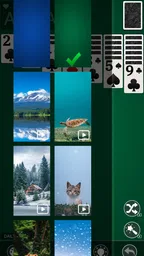
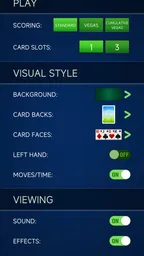
- Adjustable card settings can improve readability on small screens.
What could be better
- Ads may interrupt the flow of play.
- Some features may require an internet connection.
- Daily challenges can feel repetitive over time.
- Small cards may be difficult to tap on compact displays.
- The game may include in-app purchases.







