





SCHOOLBOY RUNAWAY - STEALTH review
 Analysis by Appsdrops
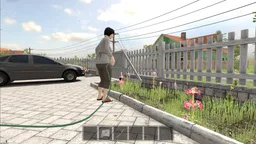
I like arcade games that give me a clear problem to solve before asking for a long commitment, and SCHOOLBOY RUNAWAY sets up its trouble quickly: you are stuck at home and need to find a way past your parents. That premise makes the first goal easy to understand, but it also hints at the game’s real appeal. Success is less about charging forward than about watching, choosing a moment, and learning what your surroundings let you get away with.
In my experience, that makes it a better fit for curious players than for anyone looking for a conventional reflex-heavy arcade rush. The fun comes from testing an idea, noticing why it fails, and trying a more careful approach. The setup is playful, but the challenge asks for patience. If you enjoy small stealth puzzles and the satisfaction of improving through observation, there is a good reason to give it a try.
Small goals make the escape feel personal
The central objective is deliberately straightforward: get out without being stopped. That gives each attempt a natural focus. Instead of needing a complicated backstory before I can play, I can concentrate on the immediate question of how to move through the situation safely. The schoolboy-at-home premise also gives the stealth a light, mischievous tone rather than making it feel like a serious action scenario.
What keeps that basic goal from feeling entirely automatic is the need to think about timing and risk. A careless move can be more costly than waiting for a better opportunity, so progress starts with paying attention rather than tapping as quickly as possible. I found that useful when returning after a distraction: the objective is easy to remember, and I can pick up the problem without having to reconstruct a complicated story.
That simplicity is a strength for short sessions. A quick break is enough to make an attempt, reconsider a choice, and decide whether I want another go. But it also means the game depends heavily on whether its sneaking challenge clicks for you. Players who want a broad range of activities, constant action, or elaborate character development may find the central escape premise too narrow.
One practical way to approach it is to treat the opening attempts as reconnaissance rather than as a race to finish. Look for what makes a route feel safe or risky, and avoid changing several decisions at once after a failed attempt. When I adjust one choice at a time, it is easier to understand what I learned. That turns failure into useful feedback instead of a reason to repeat the same rushed move.
What progress feels like from one attempt to the next
In a stealth game, progress is not always a new item or a visible level marker. Sometimes the clearest sign is that I understand the situation better: I know which moments call for patience, which moves are too bold, and where my earlier plan went wrong. That kind of learning suits this premise because the escape itself is the puzzle. It also gives the player a reason to replay with a more deliberate plan.
I would not assume that every attempt will feel like a dramatic breakthrough. The satisfaction is quieter: a choice that seemed uncertain starts to make sense, or a route that felt impossible becomes manageable after I stop treating it like a sprint. If you need frequent unlocks or a steady stream of new mechanics to feel that you are progressing, this style may feel restrained. If you enjoy mastering a compact challenge, the gradual improvement can be rewarding on its own.
A useful habit is to pause mentally after a mistake and identify the decision that mattered most. Was the problem moving too soon, choosing an exposed moment, or simply acting without enough information? I find that question more helpful than repeating the whole attempt immediately. It makes each retry a small experiment, which is a particularly good fit for an arcade game built around getting past watchful parents.
It is also worth separating progress from speed. A faster attempt is not automatically a smarter one when the goal depends on staying unnoticed. I would rather take an extra moment to read the situation than rush into a move just because I want to see the ending. That trade-off is central to the game’s appeal: careful play feels purposeful, while impatience can make the same objective feel needlessly frustrating.
Difficulty depends on how you handle uncertainty
The challenge is most enjoyable when I accept that I may not know the safest choice immediately. That uncertainty gives the stealth its tension, but it can also create friction. If you prefer games that explain every consequence clearly before you act, the need to infer what is safe may feel less like a puzzle and more like trial and error. The right mindset is to make cautious decisions and use setbacks to refine them.
For younger or less experienced players, the Teen content rating is a useful signal to check before installing, especially if a parent is choosing games for a child. The premise is comic and domestic, but the rating still matters when deciding whether the tone suits the person who will play. I would not use a playful setup alone as a substitute for checking the game’s age suitability.
On the practical side, Android 6.0 or later is the minimum requirement, so it is worth checking a device’s software before making room for the game. The current version is 1.05. The game is free, which makes trying it a low-commitment way to see whether its cautious, repeat-and-learn rhythm suits you. I would still decide based on the actual play style you want, not simply because there is no purchase price.
For a realistic everyday use, I can see it working well during a short wait when I want something more engaging than a quick reflex test but do not want to settle into a long session. I can make one attempt, think about what went wrong, and stop without feeling that I have abandoned a sprawling campaign. On the other hand, if I am tired and want effortless entertainment, the need to observe and plan can feel like work rather than a relaxing distraction.
How it compares with familiar arcade choices
Many arcade games put the emphasis on immediate reactions: dodge, jump, collect, and keep moving. SCHOOLBOY RUNAWAY stands apart by making restraint and attention more important than constant motion. That difference is useful if you already have plenty of fast-paced games and want a change of tempo. It is less suitable if the pleasure you want from arcade play is a steady stream of action and obvious moment-to-moment rewards.
Compared with a more open stealth adventure, its small domestic premise is also easier to grasp. You do not need to approach it as a large world to explore; the hook is the challenge of getting away with an escape. The trade-off is that players seeking broad exploration or a lengthy narrative may be better served by another kind of game. Here, I would come for focused sneaking, repeated attempts, and the comic tension of trying not to be caught.
The developer, Linked Squad, has made a game with a premise that travels well in a quick session, and its audience is substantial: it has passed 50 million installs. Its average rating is 3.8 from around 562 thousand ratings, with roughly 4.6 thousand written reviews. I take those figures as context rather than a promise that every player will enjoy the same things. The central question remains personal: do you like learning a stealth challenge through observation and retries?
Who should keep playing—and who should move on
I would recommend it to players who enjoy compact stealth problems, do not mind learning through mistakes, and like having one clear objective to work toward. It can also suit someone who wants an arcade game that asks for thought instead of pure reaction speed. The best sessions are likely to be the ones where you give the situation attention, test a sensible plan, and regard a setback as information rather than as wasted time.
I would skip it if repeated attempts are a deal-breaker, if you want every goal and reward spelled out, or if you prefer fast action without pauses to consider what might happen next. It is also not my first choice when I want a broad, varied experience that keeps introducing new kinds of play. Its appeal rests on the escape challenge, so enjoying that loop matters more than wanting a particular kind of unlock system.
For anyone unsure, I would start with a short session and pay attention to whether the careful pace feels satisfying or slow. Try changing one part of your approach after a failed attempt instead of rushing into another identical one. That simple adjustment gives the game a fair chance to show what it does well, while also making it easier to tell whether the stealth suits your taste.
A measured verdict on its staying power
The game’s goals are easy to understand, and the strongest progress signal is the player’s growing ability to read the situation. Its challenge can sustain interest for people who enjoy careful retries, but that same design can frustrate anyone who expects a smooth, constantly escalating rush. I find that a fair trade: the escape premise gives the play a clear identity, even if it will not satisfy every arcade preference.
My recommendation is to try it if the idea of outthinking a household obstacle sounds more fun than simply racing through one. It is free, focused, and easy to approach, yet it asks for patience rather than rewarding impatience. I would keep playing when each attempt teaches me something; if the retries stop feeling informative, I would move on without expecting the game to turn into a different kind of experience.
What we like
- Stealth mechanics make each escape attempt feel tense.
- Multiple hiding spots encourage experimentation.
- The school setting gives the game a distinct atmosphere.
- Watching patrol patterns rewards careful observation.
- Short attempts make it easy to play in brief sessions.
What could be better
- Repeated routes can make later attempts feel familiar.
- Some stealth sections may require trial and error.
- Patrol timing can be difficult to judge at first.
- The premise may feel unsettling to younger players.
- Progress can depend on repeating failed escape attempts.







