




Rummy 500 - Card Game review
 Analysis by Appsdrops
I like card games that let me settle into a familiar rhythm without turning a short break into a setup project. Rummy 500 - Card Game is built around that appeal: it brings the classic Rummy 500 format to a mobile screen, with large cards and AI opponents. My overall impression is that it makes the most sense for people who already enjoy the decisions in Rummy 500 and want a straightforward way to play on a phone, rather than for anyone looking for a broad collection of card games or a heavily social experience.
What the free access gets you
The game is free to download, so you can try its core card-game experience without paying upfront. It also offers in-app purchases priced from $4.99 to $29.99 per item. That gives prospective players a useful distinction to keep in mind: getting started costs nothing, while optional purchases can add to the eventual spend. I would treat the free entry as a low-risk way to see whether this particular take on Rummy 500 suits you, not as proof that every part of the experience is free.
For a card game, that arrangement is easier to assess than it might be for a large adventure game: the central question is whether you enjoy playing Rummy 500 against the available AI. If you do, the free download gives you a chance to decide whether you want to keep playing before spending anything. If you do not, there is little reason to buy an item in the hope that it will make the underlying game feel like a different genre.
I would also separate the purchase range from the value of the game itself. The listed item prices span $4.99 to $29.99, but that alone does not tell me what each item does or whether any purchase is worthwhile for a particular player. I would check the purchase details in the app before confirming a transaction and decide based on what is actually offered there. The soundest approach is to enjoy the free access first and spend only if a specific option clearly improves how you want to play.
A focused way to play a familiar card game
Rummy 500 is the entire point here, rather than one entry in a large menu of unrelated games. That focus can be a strength. I do not have to pick between poker, solitaire, and a dozen other modes before getting to the style of play I wanted. The design is aimed at a recognisable card-table routine, with AI providing an opponent when I want to play on my own.
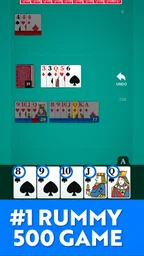
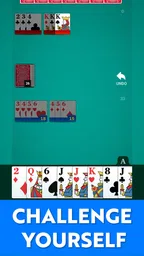
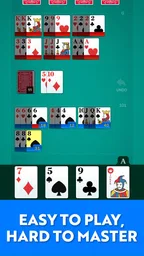
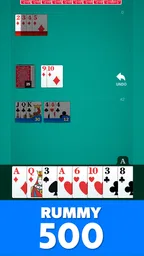
The large cards are a practical choice on a small screen. In a card game, a tiny rank or suit can turn a relaxed round into an exercise in squinting, particularly when playing one-handed or glancing down between other tasks. Larger cards make it easier to read the hand at a glance. They also suit players who prefer a clear display over a compact layout, though anyone who wants to see more of the table at once may still have a personal preference for a denser interface.
The game is described as having smooth, clean gameplay, and that is the right kind of ambition for this format: the interface should stay out of the way of decisions about what to keep, what to play, and what to collect. I value that restraint more in a classic card game than decorative effects or a long progression system. The appeal is the turn-by-turn judgement, not a stream of distractions layered over it.
Where the AI changes the experience
Playing against AI makes this a useful option when nobody else is available or when I want to fit in a round without coordinating with friends. It also changes the feel compared with a physical table. Human opponents bring conversation, unpredictable habits, and the pleasure of reading someone across from you; an AI opponent offers a more private, self-contained session. If companionship is the main reason you play cards, that difference matters more than a tidy screen.
There is a practical way to get more from solo play: use a few rounds to focus on one decision at a time. For example, I would pay attention to whether I am holding cards because they could connect later or because I am reluctant to let go of a hand that has already become unlikely to help. That small self-imposed focus turns an ordinary session into practice without requiring a tutorial or a formal challenge system. It is especially useful for someone who knows the broad idea of rummy but wants to sharpen their choices.
Another helpful habit is to avoid judging the AI from a single hand. Card games involve luck, and a short run can make an opponent seem either much easier or much tougher than it is. If I am trying to learn, I would look for repeated patterns in my own decisions across several sessions instead of treating one win or loss as a reliable measure of skill. This is not a special mode; it is simply a better way to use an AI card game as practice.
Trade-offs to consider before settling in
The biggest limitation is also the defining choice: this is a Rummy 500 game, not a general-purpose card collection. Players who switch between several games depending on their mood may get more lasting variety from an app that includes multiple formats. Likewise, anyone seeking a social match should compare it with a card game built around playing with other people, because an AI table cannot recreate the conversation and shared rivalry of a real group.
Its focused format can also feel repetitive if Rummy 500 is only an occasional interest. A clean presentation and readable cards help each round, but they do not change the basic kind of decision the game asks you to make. I would not recommend it as a substitute for a varied puzzle collection or a game with a continually changing set of activities. It is better understood as a convenient place to return to one familiar card game.
There is a second trade-off around spending. Free access is a meaningful advantage for a curious player, but optional purchases make it sensible to decide a budget before browsing them. The price range reaches $29.99 per item, so I would not assume that every purchase is a trivial add-on. Since the game can be tried without an upfront payment, there is no need to buy quickly: first see how often you actually return to it and whether a particular item addresses something you want.
It is also worth setting expectations about what “smart AI” means in practice. The game is intended to offer AI play, but I would not approach that phrase as a promise of a particular difficulty curve or a human-like opponent. If you are an experienced Rummy 500 player who needs a precise training tool, you may prefer a setting or opponent system that explicitly matches your skill level. For casual play and self-directed practice, the AI premise is more than enough to make the app relevant.
Who is most likely to get value from it
I see the best fit as someone who already knows, or is curious about, Rummy 500 and wants a quick solo session on a phone. It could work during a quiet break, while waiting for an appointment, or at home when other players are busy. In those moments, the appeal is that the game gives you a familiar card activity without needing to organise a table or carry a deck. The large cards are especially welcome if you usually find mobile card hands cramped.
It is also a reasonable choice for a casual player who wants to learn by doing rather than reading a long explanation first. The useful routine is simple: play a few rounds, notice which cards you tend to hold too long, and adjust your next decisions. That makes the game more valuable than a purely passive diversion for someone who enjoys gradually getting better at a familiar format.
By contrast, I would steer away from it if you mainly want multiplayer interaction, several different card games in one download, or a strong narrative and progression structure. Those are different needs, and a single-format Rummy 500 game should not be expected to fill them. Players who already have a preferred way to play this game with friends may also find that the AI option is a useful backup rather than a replacement for their usual table.
The game is rated for Everyone, which makes its intended audience broad, though a family should still decide whether the particular screen-based activity fits their preferences. It is published by FIOGONIA LIMITED. On the store, it has a 4.6 average from around 12,000 ratings, with roughly 2,000 written reviews, and has passed 1 million installs. Those figures suggest that many people have tried it, but they do not settle the more personal question of whether you enjoy this version of Rummy 500.
Practical details and my verdict
The release date is May 19, 2025, and the current version is 1.2.0. Its minimum operating-system requirement is Android 7.0, so it may suit an older Android device that still meets that requirement. I would check the app store on the device I plan to use before downloading, especially if I am choosing between platforms or managing an older phone.
In everyday use, I would think of it as a compact answer to a specific question: “Can I play Rummy 500 right now, by myself?” If yes, the free download makes it easy to test that answer. If what I really want is a lively group game, a collection of different card rules, or a deeper learning course, I would look elsewhere rather than expecting purchases to transform the basic experience.
My recommendation is measured but positive for the right player. Rummy 500 - Card Game offers a focused, readable way to play a classic card format against AI, and free access gives newcomers a sensible chance to see if it clicks. I would skip optional spending until I had played enough to know what I wanted from it. If Rummy 500 is already the game you reach for, this is an easy one to try; if you need variety or human company, a different card app will likely deliver better value for your habits.
What we like
- Easy-to-learn rules make it approachable for casual players.
- Offline play lets you enjoy matches without an internet connection.
- Adjustable difficulty suits both beginners and experienced players.
- Quick rounds fit well into short breaks.
- A clear interface makes cards easy to follow.
What could be better
- Computer opponents may feel predictable after repeated games.
- Luck can have a strong influence on the outcome.
- The game may offer limited variety for long-term play.
- Small card graphics can be difficult to see on some screens.
- Ads may interrupt play in the free version.







