


Real Coaster: Idle Tycoon review
 Analysis by Appsdrops
I approached Real Coaster: Idle Tycoon as a small, casual theme-park project: the sort of game I might open during a quiet break, make a few decisions, then leave to develop while I do something else. Its central appeal is easy to grasp—you build roller coasters and grow a park—but the more useful question is whether that simple premise stays comfortable to use across different abilities, attention levels, and everyday situations. My impression is that it suits players who enjoy gradual progress and visual construction, while its accessibility depends in part on how comfortably each person handles a busy simulation interface.
Finding your way around a growing park
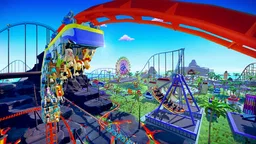
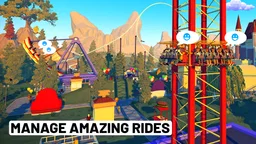
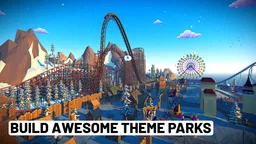
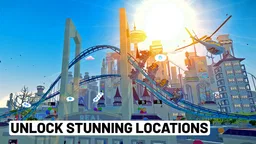
Real Coaster is a simulation game from Raventurn Games, and its basic idea gives a new player a clear starting point: shape a park around coasters and keep expanding it. That focus is helpful for anyone who finds open-ended management games daunting. Rather than needing to invent a goal from nothing, you can treat the park itself as a sequence of practical choices—what to build, what to improve, and when to check back.
The idle format also changes how I read the interface. A player does not have to approach every visit as a long session of continuous management. It can work as a quick check-in, which is useful if sustained concentration is difficult or if a person simply prefers short bursts of play. The trade-off is that an idle game can make progress feel indirect: if you want constant, hands-on control over every moment, a slower park-building loop may feel less engaging than a more active management game.
The game’s scale is part of its appeal. It has attracted a 4.8 average from around 117,000 ratings, and its broad audience suggests that the premise is easy to approach. Those figures do not tell me whether every screen will feel clear to every player, though. For someone with low vision, limited reading stamina, or difficulty distinguishing small interface elements, the practical test is whether the important controls remain comfortable to locate during play on their particular device.
I would recommend taking a few minutes at the start to learn the rhythm rather than tapping rapidly through every prompt. In a construction game, rushing can make it harder to notice which choice is actually moving the park forward. A slower first session gives players who process information at a different pace room to understand the relationship between building and progress, without assuming that the game offers a dedicated tutorial or special accessibility setting.
Reading the pace, not just the park
Because the game is centered on building coasters and creating a park, visual information is likely to be a major part of the experience. That can be a strength: a park is a more intuitive subject than a dense spreadsheet of abstract numbers. It can also create friction if a player needs large text, strong contrast, screen-reader support, or a simplified display. I would not assume those needs are covered; anyone who relies on a specific accommodation should check the current app-store details or try the game briefly before committing to longer sessions.
For players who are comfortable with visual interfaces but tire easily, the idle structure offers a useful compromise. You can make a small set of decisions and leave, rather than staying alert to a continuous stream of action. I found that a good way to think about it is as a park you tend over time, not a ride you must operate every second. That distinction matters for people balancing play with work, caregiving, study, or fatigue.
Motor comfort and sensory load
Touch-based park management can be more demanding than the relaxed premise suggests. Selecting small targets, making repeated taps, or navigating a screen while holding a phone can be uncomfortable for players with tremors, restricted reach, joint pain, or one-handed use. The idle structure may reduce the pressure to keep tapping constantly, but it does not by itself make every interaction easy. If precise touch is difficult, I would test the core building actions early and notice whether they remain manageable after a few minutes.
There is also a useful pacing strategy for players who experience hand fatigue: decide on one park task before opening the game, such as checking progress or making a single improvement, and stop when that task is done. That keeps a casual visit from turning into a long sequence of repetitive interactions. It is a practical way to enjoy the incremental loop without treating every available action as something that must be completed immediately.
Sensory comfort is similarly personal. A theme-park setting naturally brings visual activity, and some players enjoy that lively presentation while others prefer quieter, less stimulating games. I would not describe this as a universally calm experience simply because it is idle; visual motion or a crowded screen can still be tiring. If you are sensitive to movement, brightness, or busy layouts, try a short session in a comfortable setting and see whether the presentation feels restful or distracting.
On the other hand, players who like watching a space gradually take shape may find the visual premise especially satisfying. The park gives the incremental progress a concrete context: improvements are connected to a place rather than being only a number on a screen. That can make brief visits feel purposeful, particularly for someone who enjoys planning and observing changes but does not want the reflex demands of an action game.
When and where it fits
A realistic use case is a short break between errands or during a quiet wait. I would open the game, check how the park is progressing, make one considered building decision, and put the phone away. That routine is more compatible with the idle concept than expecting a complete, self-contained session every time. It also makes the game easier to fit around interruptions, since a player can return later instead of needing an uninterrupted stretch of attention.
The game is free to download, with optional in-app purchases ranging from $0.99 to $99.99 per item. That broad range makes it worth deciding your own spending boundary before playing, especially if you or a family member is prone to impulse purchases. A sensible approach is to enjoy the core loop first and treat paid items as optional rather than necessary. Parents should also remember that an Everyone age rating does not remove the need to manage purchase access for a child.
For people who share a device or play in public, an idle game can be more convenient than one that demands constant sound or uninterrupted attention. Still, I would not assume that sound can be muted, that all information is available without audio, or that the game has a particular offline behavior. If those details matter in your setting—such as a quiet workplace, a commute, or a limited-data plan—check them directly before relying on it there.
Compared with the usual alternatives in simulation games, Real Coaster is a better fit for someone drawn specifically to coaster-centered park creation and gradual progress than for someone seeking a broad city-management sandbox. A more hands-on tycoon game may suit players who want close control over staffing, budgets, or every operational detail; a creative builder may be preferable if free-form design matters more than incremental growth. Real Coaster’s narrower premise is a benefit when you want a clear theme, but a limitation if you expect deep management across many unrelated systems.
Who may encounter barriers
The most important limitation is that a simple concept does not guarantee a simple interface. Players who need large, highly legible text, keyboard or switch access, extensive screen-reader compatibility, or carefully adjustable visual effects should verify those specific needs rather than infer support from the game’s broad audience. The game is rated for Everyone, but that age classification is not an accessibility promise and says little about whether a particular person can comfortably operate it.
Another possible friction point is the idle structure itself. Some players find waiting between decisions relaxing; others experience it as a lack of control. If you want immediate feedback from each action, complex optimization, or a strong narrative that continually directs your attention, this may not be the right simulation. I would also skip it if frequent visual checking is tiring, because even a low-pressure game still asks you to return to its interface to make progress feel rewarding.
There is a practical way to judge the fit without overcommitting: install it, explore the first few interactions at your normal text size and brightness, and notice how much effort it takes to identify the next useful action. If the interface feels comfortable and the park-building goal holds your interest, keep it as a short-session game. If you find yourself squinting, repeating taps, or searching for controls, that is a meaningful sign to choose a less visually or motorically demanding alternative.
Real Coaster has been available since November 4, 2021, and the current version is 2.0.25; it requires Android 7.0 or later. It has passed 10 million installs, which speaks to its reach, but popularity is not a substitute for checking compatibility and comfort on your own device. For a player who wants a recognizable theme, gentle progress, and coaster-focused construction, those basics make it an easy game to try without an upfront purchase.
A welcoming idea, with individual needs in mind
My inclusive verdict is positive but measured. Real Coaster: Idle Tycoon has a clear, approachable premise and a pace that can suit short visits, interrupted schedules, and players who prefer gradual progress over constant action. Its focused park theme also gives a newcomer a concrete reason to return, instead of asking them to master a sprawling simulation before they can enjoy it.
At the same time, I would not call it a universal recommendation for accessibility. The experience may be less comfortable for anyone who depends on specific visual, motor, or sensory accommodations unless those needs work well with the game’s actual interface. The best reason to try it is the combination of coasters and an idle management rhythm; the best reason to pass is wanting richer hands-on control or clearer assurance that a particular access need is supported. If the first brief session feels comfortable, it is a pleasant free starting point for a casual park-building habit.
What we like
- Easy idle progression keeps the park earning while you are away.
- Simple controls make it approachable for casual players.
- Attractions provide a clear sense of progression as the park grows.
- Short play sessions fit well into spare moments.
- The coaster theme offers a more distinctive setting than many idle games.
What could be better
- Progress can slow considerably without frequent upgrades.
- Waiting for income may encourage repeated check-ins.
- Some upgrades can require substantial in-game currency.
- The idle tycoon format may feel repetitive over time.
- Limited direct interaction may disappoint players seeking hands-on coaster design.







