






Police Pursuit: Burnout Rush! review
 Analysis by Appsdrops
I enjoy arcade games that make their point quickly: a clear objective, immediate pressure, and enough room to improve through repetition. Police Pursuit: Burnout Rush! fits that mood. It puts a high-speed escape at the center of the experience, so the appeal is less about a long story and more about reacting well when a chase gets tense. I’d recommend it to someone who wants a compact game to dip into between other activities, provided they enjoy repeating runs to sharpen their timing.
Getting into a chase without overthinking it
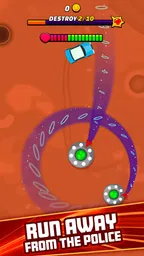
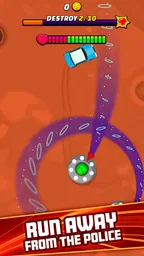
Made by Kwalee Ltd, this free arcade game is built around outrunning police. That simple premise is useful: I don’t need to learn a complicated setting or remember a long chain of objectives before I can enjoy a session. The basic rhythm is to stay alert, respond to the pursuit, and try to keep the run going. Its strongest quality is how easy it is to understand what I’m aiming for, even when the action gets busy.
My practical approach is to treat each attempt as a short lesson rather than a test I have to pass. On an early run, I focus on noticing how quickly danger builds and on making deliberate choices instead of reacting to every moment with a frantic swipe or tap. After a crash or a capture, I ask what decision put me in trouble. That small habit makes the next run feel more purposeful, and it’s more rewarding than restarting immediately without thinking.
The chase concept naturally suits brief sessions: a break, a wait for a friend, or a few minutes before starting something else. I wouldn’t pick it when I want a deep campaign or a calm game to play while barely paying attention. Police Pursuit is at its best when I can give the screen my focus. The pressure is the point, and splitting attention makes it harder to learn from what happens.
A useful routine for the first few runs
I suggest starting with a couple of attempts where the goal is simply to get comfortable with the pace. Don’t chase a personal best straight away. Notice which moments demand a quick response, whether the screen feels crowded, and how much time you have to correct a mistake. The first useful skill is not speed; it’s recognizing when a risky move is likely to cost the run.
Then change one thing at a time. If you try to be more aggressive, keep the rest of your approach steady. If you decide to play cautiously, make that the experiment for the next attempt. This makes your results easier to interpret. It also avoids a common arcade-game frustration: finishing a run without knowing whether a different choice helped or whether the outcome was just luck.
There’s a trade-off in this kind of simple loop. The game can get going without much explanation, but that doesn’t mean every attempt feels fresh. A player who enjoys refining a familiar challenge may find that repetition satisfying. Someone who needs new characters, stages, or story developments to stay interested may find the central chase less compelling over time.
Settings and habits that make play smoother
I’d check the available settings before settling into longer sessions, especially if the default controls or presentation don’t feel comfortable on your device. I won’t assume a particular menu or control option is present, but a quick look is sensible in any touch-based arcade game. If the game offers a way to adjust how it feels, make one change, play a few runs, and keep it only if it genuinely improves your reactions.
That kind of careful check matters more than it sounds. A setting that looks appealing can make a fast chase harder if it changes the feel of movement in a way you haven’t adapted to. Avoid adjusting several things at once: if the next run feels better or worse, you want to know why. I also prefer to test changes during a low-pressure session rather than when I’m trying to beat a strong result.
For repeat play, I use a simple reset routine: take a breath after a failed attempt, identify one mistake, and start again with one specific intention. For example, I might decide to prioritize safer reactions instead of trying to squeeze through every opening. That gives each retry a purpose and keeps frustration from turning into careless play. It’s a small, repeatable improvement method, not a secret feature.
Another practical tip is to choose your session length before opening the game. A few focused attempts are often more useful than playing until irritation sets in. Once I start making rushed decisions, I’m no longer learning the chase; I’m just repeating the same error. Putting the phone down for a moment can help preserve the game’s quick, playful feel rather than letting a run of bad luck sour it.
When quick play works—and when it doesn’t
For an everyday example, I’d use it while waiting for a takeaway order or sitting through a short break. I can start with the intention of playing a handful of runs, focus on one improvement, and stop without needing to remember a story thread later. It’s a good fit for that kind of spare time because the central objective is immediately clear.
It is less suitable when I’m commuting on a crowded train and can’t keep my eyes on the screen, or when I need a game that can be played almost automatically. The chase asks for attention, and a distraction can turn a manageable moment into a sudden failure. If I want something gentler, a puzzle game or a slower arcade title would be a better choice; if I want a long progression system, I’d look for a game designed around that instead.
Compared with the usual arcade alternatives, its appeal is the focused pursuit rather than a broad collection of modes or a complicated set of mechanics. That focus helps it get to the point, but it also defines its limit. Players who enjoy learning the timing of a single kind of challenge may prefer this over an arcade game that constantly changes its rules. Players who need variety from session to session may prefer a broader package.
What the numbers say about its audience
The game has a 4.6 average from around 263,000 ratings, and it has passed 10 million installs. Those figures suggest that the chase premise has found a sizeable audience, though popularity alone doesn’t tell me whether its pace suits a particular player. I’d use the core loop as the real test: if reacting under pressure feels fun rather than stressful, there’s a good chance the game will click.
It’s free to download, with optional in-app purchases priced from $1.99 to $3.99 per item. I’d treat those purchases as optional rather than a reason to install. If you’re trying it casually, play first and decide whether you enjoy the repeated chase before spending anything. That’s especially sensible for a game whose appeal depends on whether its central action stays entertaining for you.
It is rated Everyone, and the game’s arcade framing makes it easy to understand for a wide range of players. It first arrived on August 31, 2018, and the current version is 2.3.7, with Android 8.0 as the minimum operating-system requirement. That gives Android users a straightforward compatibility check before downloading, while the simple premise makes it approachable for people who don’t want to study a manual.
Where experienced play reaches its limits
Once the basic rhythm feels familiar, improvement comes from consistency more than from trying to force every run into a spectacular escape. I’d keep a mental note of the mistake that ends attempts most often and make that the focus for a few sessions. If it’s poor timing, slow down your decisions. If it’s overconfidence, resist the urge to take a risky option simply because the previous run went well.
There is a ceiling to what that practice can do. A disciplined routine can make a repeated challenge more satisfying, but it can’t create a campaign or variety that the game’s focused design doesn’t offer. If I’ve learned the chase and still feel bored, the honest answer is to switch to another game rather than treating every failure as a skill problem. Not every arcade game has to become a long-term hobby.
I’d also be cautious about judging a run by its final moment alone. A near miss or a sudden end can feel dramatic, but the useful question is whether your decisions were improving. Separating “that was exciting” from “I handled that well” helps keep the game enjoyable without pretending every attempt is progress. That distinction is a good way to avoid grinding when you’re no longer having fun.
My verdict: a focused chase for the right player
Police Pursuit: Burnout Rush! is an easy recommendation for anyone who likes short, responsive arcade challenges and doesn’t mind learning through retries. I especially like it as a spare-time game because its goal is clear and I can bring a simple practice habit to each session. The best way to enjoy it is to focus on one decision at a time, check settings only when something feels uncomfortable, and stop before repetition turns into frustration.
I’d skip it if you want a detailed story, a wide mix of activities, or a relaxed experience that can run in the background. Its chase-centered design is both its strength and its main limitation. For players who enjoy pressure, quick reactions, and gradual refinement, it offers a direct arcade diversion; for everyone else, a slower or more varied game will probably be a better use of their time.
What we like
- Quick races make it easy to enjoy short play sessions.
- The pursuit theme gives each run a clear sense of urgency.
- Responsive steering helps make tight escapes feel rewarding.
- Unlockable vehicles provide a reason to keep playing.
- Simple controls are easy for new players to learn.
What could be better
- Repeated chase routes can make sessions feel familiar.
- Frequent crashes may interrupt the flow of a run.
- Progress can feel slow when new vehicles take time to unlock.
- On-screen controls may obscure parts of the action.
- The pursuit gameplay offers limited variety over time.







