



Phase 10: Casual Card Game review
 Analysis by Appsdrops
I like card games that give a round a clear purpose, and Phase 10 does that better than a hand of cards built only around shedding. Each hand asks you to complete a particular combination before you can move on, so I’m weighing choices against a goal rather than simply racing to empty my hand. That makes the game easy to explain to family, but gives experienced players plenty to think about. The central appeal is the changing target: every phase asks me to plan again.
Phase 10: Casual Card Game is a free mobile card game from Mattel Game Studios HK Limited, based on the familiar Phase 10 format. It has a 4.7 average from around 640,000 ratings, and has been installed over 10 million times. Those figures point to a broad audience, but the more useful question is whether its style of play suits the way you like to spend a few spare minutes—or a longer evening with other people.
Why the first goals make the game easy to pick up
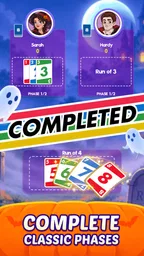
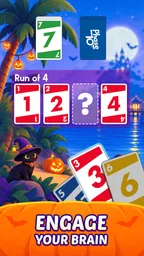
The basic idea is approachable: build the combination requested for your current phase, then try to be the first to finish your cards. A target might involve sets or runs, and the changing requirement keeps each hand from feeling identical. I can understand what I’m working toward without learning a complicated collection of card effects first.
That clarity helps when introducing the game to someone who has not played before. Rather than teaching a long strategy guide, I can explain the current objective and let the cards show why decisions matter. The challenge is less about memorizing rules than recognizing which cards are worth keeping while the hand develops.
The useful habit is to sort cards mentally by how they might contribute to the phase, not just by color or number. A card that looks unhelpful at first may complete a run later, while holding too many possibilities can leave me short of a finished combination. I try to decide early which plan is most realistic, then adjust when a draw changes the picture.
That small discipline is where the game gains depth. A tempting discard can help an opponent, but keeping a card indefinitely because it might become useful has its own cost. The best choice is often not obvious, especially when the phase requires more than one group and I have to balance progress on both.
Small decisions that shape a hand
One practical tip is to pay attention to what other players pick up or discard. It will not reveal their whole plan, but it can make a discard feel less harmless. If someone is collecting a particular kind of card, I may choose a different card to throw away even when both seem equally expendable. That adds a light layer of reading the table without turning a family card game into serious competition.
I also avoid treating every hand as a race to use a card immediately. If I have not completed my phase, preserving the cards that support it usually matters more than shedding a random card. Once I have laid down the required combination, the priorities change: now clearing the remaining hand becomes the focus. Switching between those two objectives is the game’s most important decision-making rhythm.
This is especially good for mixed-age groups. The core goal is concrete enough for younger or casual players, while adults can still think about timing, risk, and what to keep. The game is rated Everyone, and its card-based play makes it a reasonable choice when you want something social without a steep learning curve.
Progress feels earned, but the pace depends on the table
The phases give a match a natural sense of forward movement. Completing one goal is satisfying because it changes what I need to do next; failing to finish means I have to keep working on the same requirement while someone else advances. That creates stakes without needing a complicated story or a large set of rules.
The progress signal is easy to read: I either meet the current target or I do not. That straightforward feedback is one of the game’s strengths, particularly for players who prefer visible objectives to open-ended play. It also means a bad hand can feel frustrating. If the cards do not line up, I may spend a round waiting for the pieces I need while another player gets closer to moving on.
There is a useful trade-off here. A changing goal keeps the match from becoming a repetitive race to discard, but it can make progress uneven. Someone who completes an early phase quickly may build momentum, while another player stays stuck. I find that tension engaging when the group is happy to play a full match; it is less appealing if everyone expects each round to be perfectly even.
For a quick break, I would treat a single hand as a self-contained session rather than assume I can finish a longer run before putting the phone down. The game’s appeal comes from seeing how the next phase changes the decisions, so stopping after one hand can feel like leaving the larger contest unfinished. If you have a limited window, it helps to agree with friends or family in advance whether you are playing one round or continuing.
How the challenge changes as play continues
The difficulty comes from the goals and the other players, not from a need to master elaborate controls. Early on, I can focus on understanding what combinations are useful. As the match progresses, I have to manage the possibility that others are advancing while I am still trying to complete my own target. That makes later play feel more pressured even though the underlying rules remain accessible.
It is not a pure test of planning. The cards I draw affect which options are realistic, so a thoughtful player can still be slowed by luck. I see that as part of the genre rather than a flaw unique to this game, but it matters if you want a contest where skill alone determines the result. Phase 10 is better suited to people who enjoy adapting to a hand than to anyone who dislikes chance deciding whether a plan comes together.
Against a conventional shedding game, where the main aim is usually to empty your hand as quickly as possible, Phase 10 asks me to complete a specific task before shedding becomes the priority. Compared with more elaborate collectible card games, it is much easier to approach and does not ask me to build a deck before playing. That simplicity is a strength for casual groups, though players seeking deep deck construction or a wide strategic toolkit may find it too restrained.
What keeps me playing—and what can wear thin
The goal sequence is the main reason I want another hand: finishing a phase feels like progress, and the next target makes me reconsider what to hold. That structure is satisfying when I have time for a longer session. It is less compelling if I only want an instant round with no continuing objective, or if the group is not in the mood to stick with a match after a player falls behind.
I would not assume that every player will enjoy the same pace. A hand can move briskly when people make decisions quickly, but the need to collect a particular combination can also leave someone waiting on the right cards. If your preferred card games are fast, direct, and over as soon as you discard your last card, this one may feel drawn out. I recommend it more to people who like a sequence of milestones than to those who want constant, immediate progress.
The game is free to download, with in-app purchases listed from $0.99 to $399.99 per item. That broad range is worth noticing before handing a device to a child or treating the game as a no-cost activity. I would check purchase settings on the device if spending needs to be restricted. The game itself may be free to start, but optional spending can affect the experience for players who prefer to avoid in-app purchases altogether.
For a family evening, I can see it working well as a shared activity: one person can learn by watching a round, and the visible phase goal gives everyone something concrete to discuss. It also suits friends who enjoy gentle rivalry and do not mind luck affecting who advances first. For solo play, the strongest draw is still the puzzle of shaping a hand around its current target; people who need a deep solo campaign or a complex narrative should look elsewhere.
Practical details before you install
The app was released on October 11, 2019, and its current version is 1.15.8128. It requires Android 6.0 or later. I would check that minimum requirement before downloading on an older device, especially if the phone or tablet is kept for occasional family use. Its content rating is Everyone, which fits the broad, card-game audience.
Its scale—over 10 million installs—makes it a familiar option in mobile card gaming, but popularity alone does not decide whether it fits your group. The more relevant question is whether everyone enjoys working toward changing combinations and can tolerate a round where luck delays progress. If those parts sound fun, the game’s simple premise has enough decision-making to support repeated play.
My verdict on the progression
Phase 10: Casual Card Game is at its best when I have a willing group and enough time to enjoy the movement from one phase to the next. Its goals are clear, the decisions are accessible, and the shift from building a combination to shedding leftover cards gives each hand a satisfying change of focus. I also appreciate that the strategy is practical rather than intimidating: hold useful cards, watch the table, and know when your plan needs to change.
I would skip it if you want a tightly balanced, skill-only contest, a very short round with guaranteed momentum, or the depth of a collectible card battler. Random draws can slow progress, and in-app purchases mean it is sensible to keep spending preferences in mind. But for families and casual players who enjoy a clear objective with a little tactical tension, it is an easy game to recommend. The progression gives me a reason to continue, while its straightforward rules make it simple to bring someone new into the next hand.
What we like
- The familiar Phase 10 rules are easy for card game fans to pick up.
- Different phases give each round a clear objective.
- Short matches suit quick play sessions.
- The colorful card designs make phases easy to follow.
- Solo play offers an option when friends are unavailable.
What could be better
- Later phases can make a match feel lengthy.
- Random card draws may strongly affect your progress.
- Players who fall behind can struggle to catch up.
- The screen may feel crowded on smaller phones.
- Some features may require an internet connection.







