
Paper Delivery Boy review
 Analysis by Appsdrops
I like arcade games that explain themselves in seconds, and Paper Delivery Boy gets to its main idea quickly: ride through a neighborhood, deliver what you’re carrying, and steer clear of danger. That gives each attempt an easy-to-understand purpose without asking me to learn a complicated setup first. The appeal is less about mastering a sprawling game and more about seeing whether I can keep a simple delivery run on track.
Made by Supercent, Inc., this free arcade game is rated Everyone and has drawn a 4.4 average from around 235,000 ratings, with more than 10 million installs. It first appeared on April 17, 2023, and version 1.47.0 requires Android 7.0 or later. Those figures suggest a widely played, approachable pick, though popularity alone cannot tell you whether its short-loop style will suit you. I’d judge it by a more practical question: do you enjoy quick runs where the basic task is clear and avoiding trouble is part of the fun?
Start with the ride, not a long tutorial
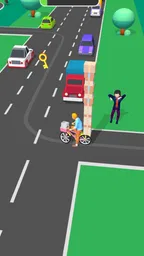
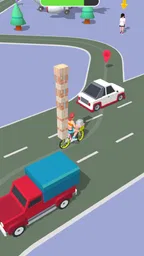
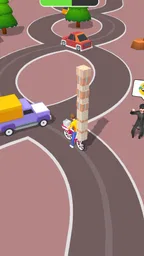
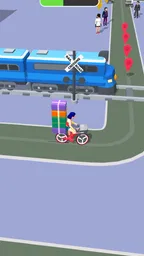
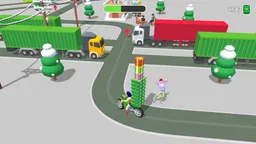
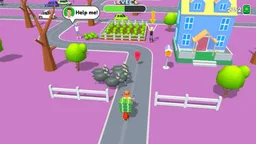
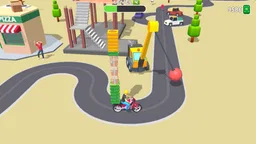
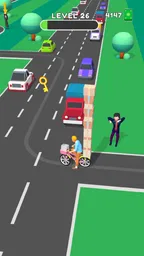
The first useful thing to know is what the game asks of you moment to moment: keep moving on a bike, make deliveries to neighbors, and avoid hazards along the way. That simple combination makes the objective easy to grasp even if you only have a spare moment. You can focus on the route in front of you rather than studying a set of rules before anything happens.
That simplicity is a strength for casual play, but it also sets expectations. This is an arcade delivery game, not a realistic cycling simulator or a detailed management game. I wouldn’t choose it expecting to plan a postal business, explore a richly explained neighborhood, or get a demanding racing experience. Its hook is the contrast between a routine errand and the need to stay alert as you ride.
A handy way to approach a run is to treat delivery and avoidance as two parts of one job rather than separate goals. If I concentrate only on moving quickly, I risk overlooking danger; if I focus only on dodging, I can lose sight of the purpose of the ride. Keeping both in mind makes the small decisions feel more meaningful, even when the controls and objective are easy to understand.
Why the basic premise works
Paper and packages give the ride a clear destination and a light, everyday theme. That makes the action feel different from an arcade game built solely around racing or surviving for as long as possible. There’s a practical reason to keep going: someone in the neighborhood is waiting for a delivery. The idea is straightforward enough to make a quick session feel complete without requiring a long story to explain it.
It also gives the game a friendly tone that fits its Everyone age rating. I’d be comfortable recommending it to someone looking for uncomplicated entertainment rather than intense or mature subject matter. That doesn’t mean every player will find it equally engaging: younger or casual players may enjoy the clear task, while anyone seeking deep strategy may find the premise too light.
How each run finds its rhythm
The core rhythm is easy to picture: ride, react to hazards, and try to finish the delivery task. The feedback comes from whether your choices keep the trip moving or put the run at risk. That cause-and-effect is a good fit for an arcade format. You can understand why paying attention matters without needing a complicated explanation of the game’s world.
One small but useful tip is to look ahead rather than treating every obstacle as a last-second surprise. In a delivery run, the temptation is to focus on the immediate target, but scanning the path gives you more chance to make a calm adjustment. This is a general play approach, not a hidden mechanic: the value lies in using the game’s basic objective and hazards together instead of reacting blindly.
Another practical point is to keep a run’s purpose modest. If you have only a short break, one attempt can still give you a clear task and an outcome. If you’re in the mood to improve, a reset gives you another chance to handle the same kind of challenge with more care. That makes the game easy to pick up in small windows, though players who want a longer session with a strong narrative arc may prefer a different kind of arcade title.
The likely friction comes from repetition. A simple loop is welcoming when you want something immediately playable, but it can feel thin if you need each session to introduce a major new idea. I’d pay attention to whether the ride itself stays enjoyable for you, rather than expecting the delivery theme alone to provide depth. The main decision is not whether the premise is understandable; it is whether repeating that premise remains satisfying.
What the reward means in practice
Deliveries provide a natural sense of progress within the game’s central task: you are not riding without a reason. The satisfaction is tied to carrying out the errand while managing the danger around you. That is a modest kind of reward, but it suits a game designed around an immediately readable objective. I wouldn’t approach it expecting a complex progression system or a large collection of goals unless I had seen those details in play.
This distinction matters when comparing it with other arcade options. A score-focused runner may make distance or a personal best the central motivation, while a racing game may emphasize speed and competition. Paper Delivery Boy instead frames movement as a neighborhood service job. If you find that delivery context charming, it gives familiar dodging action a small narrative purpose. If you mostly want head-to-head racing or elaborate route planning, those alternatives are likely a better match.
For a realistic everyday use case, I’d open it while waiting for a drink or taking a short pause between tasks. The delivery objective gives that brief spell of play a beginning and an end: start a ride, pay attention, and see how the attempt goes. It is less suited to someone hoping to sink into a long, uninterrupted adventure, since its appeal rests on repeating a compact action rather than following an extensive plot.
The game is free to download, with optional in-app purchases priced from $0.99 to $10.99 per item. I’d treat those purchases as a separate choice from whether the basic premise sounds enjoyable. Since the delivery-and-avoidance loop is the first thing to assess, it makes sense to try the free game and decide whether you want to spend anything only after you know that this style of play holds your attention.
Why another run begins
A reset is part of the appeal when a run ends with the feeling that one better decision could have helped. You can return to the same central task with a fresh chance to ride more carefully. That is a familiar arcade pleasure: the attempt is short enough to leave room for another, and the objective is clear enough that you don’t need to relearn the game before continuing.
There’s a trade-off, though. Resets create a reason to try again only if the action stays enjoyable; they cannot make a repetitive loop feel fresh by themselves. If you like refining your timing and staying alert, the next delivery can feel like a small personal challenge. If you dislike repeating a similar task after a mistake, a game with more varied missions or a persistent story may be a better use of your time.
That also answers the practical question of who should skip it. I would steer away anyone looking for realistic bike handling, a deep simulation of parcel delivery, extensive tactical planning, or a competitive racing focus. The game’s identity is much lighter: take a bike through a neighborhood, complete the delivery objective, and avoid danger. Its uncomplicated format is a feature for the right player and a limitation for someone wanting more complexity.
For families or casual players, the accessible premise and Everyone rating make it an easy option to consider. For adults, I think it works best as a low-commitment break rather than a main game to build a long evening around. Supercent, Inc. has a widely installed arcade release here, but the best reason to choose it is personal: you enjoy the small challenge of turning an ordinary delivery into a careful ride.
My verdict on the loop
I’d recommend Paper Delivery Boy to anyone who wants a free, straightforward arcade game with a clear job to do and hazards to watch for. Its best quality is how quickly the premise makes sense; its main limitation is that the same compact loop may not satisfy players who expect variety or depth. Version 1.47.0 supports Android 7.0 and later, and optional purchases are available, but neither detail changes the central question: do you enjoy repeating a simple ride-and-deliver challenge?
My answer is yes for short, casual sessions, especially when I want an objective that doesn’t need much explanation. I’d choose a more demanding racer for competition, or a richer simulation for detailed planning. But when the mood is simply to ride, make a delivery, avoid trouble, and have another go after a reset, Paper Delivery Boy has a focused little arcade loop that is easy to understand and easy to recommend to the right person.
What we like
- Simple controls make the game easy to pick up.
- Short levels suit quick play sessions.
- Paper deliveries give each run a clear objective.
- The premise offers a nostalgic neighborhood feel.
- Basic gameplay can appeal to younger players.
What could be better
- Repeated delivery tasks may feel monotonous.
- Gameplay may offer limited variety over time.
- Precision can be tricky on a small touchscreen.
- Progress may depend on replaying earlier levels.
- Frequent interruptions can make runs less enjoyable.







