





PAC-MAN 256 - Endless Maze review
 Analysis by Appsdrops
When I want an arcade game that asks for quick decisions rather than a long commitment, PAC-MAN 256 is an easy one to reach for. Its familiar maze-chase idea is reshaped into a run that keeps moving forward, so each attempt feels like a small test of timing and route choice. I’d recommend it to people who enjoy short, replayable sessions, though it is less suited to anyone looking for a calm puzzle or a substantial story.
What to consider before you play
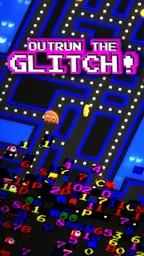
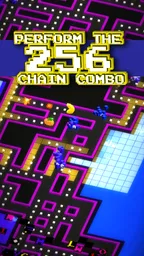
The central appeal is the tension between collecting what you can and getting out of danger. You steer Pac-Man through a maze, gather pellets, and avoid ghosts while the play area presses onward. That forward momentum gives the game a different feel from a traditional fixed-maze arcade round: hesitation can be as costly as taking a risky turn.
It is an arcade game from BANDAI NAMCO Entertainment Europe, built around recognizable PAC-MAN imagery but organized for modern, repeatable play. The free download makes it straightforward to try, and it is rated for Everyone. In-app purchases range from $0.99 to $4.99 per item, so it is worth checking the purchase options before handing the phone to a child or anyone who might tap through menus quickly.
The first decision is whether you enjoy learning through repeated attempts. This is not a game where every session unfolds like a carefully authored level. Instead, the pleasure comes from reading the maze, reacting to ghost positions, and gradually getting better at making choices under pressure. If you prefer a steady, predictable challenge with a clear finish, a conventional level-based arcade game may suit you better.
Why the endless format works
The continuous maze makes small choices matter. A path that looks convenient because it contains pellets may leave you boxed in, while a less rewarding turn can preserve room to maneuver. I find that this keeps the familiar chase from feeling like a simple matter of clearing a board. You are weighing immediate collection against the space and time needed to stay alive.
That trade-off also makes the game easy to pick up for a spare moment. A short attempt has a clear beginning and an immediate goal: survive longer and make better decisions than last time. It works well during a commute or while waiting for an appointment, provided you have a moment when you can focus on the screen. The action is quick enough for brief play, but it still rewards attention; it is not ideal when you need to glance away every few seconds.
Where it stands out among arcade games
Many arcade games lean either on precise timing or on steadily increasing difficulty. Here, route planning is part of the reflex challenge. I have to watch not only where the ghosts are but also whether the next turn gives me an escape route. That extra layer makes each run more interesting than simply moving toward the nearest visible reward.
The recognizable characters help make the rules intuitive, but the design does not depend on nostalgia alone. The ongoing forward push gives the maze a distinct source of pressure. If you have played classic PAC-MAN and want a familiar starting point with a more restless rhythm, this is a natural fit. If you want a faithful recreation of a stationary maze, its constant onward motion may feel like the wrong kind of change.
One useful habit is to look for an exit from a crowded area before committing to a pellet-rich detour. The tempting route can be a trap if a ghost closes the only way back. I also find it helpful to treat a run as practice in recognizing patterns rather than as a demand to collect everything. Choosing survival over a few extra pellets often leads to a more controlled attempt.
Another practical point is to avoid making turns at the last instant whenever possible. In a game built around narrow passages and moving threats, planning one turn ahead reduces panic. That is not a magic strategy, and a crowded maze can still leave you with few options, but it turns some losses into useful lessons: notice where the escape route disappeared and make a different choice next time.
When another kind of game is the better choice
If you want a relaxed maze puzzle, a turn-based puzzler gives you more time to consider each move. If you prefer arcade action that depends on repeated jumping or precise timing, a platform-style game may be a better match. PAC-MAN 256 sits between those tastes: movement is immediate, but survival depends on anticipating how the maze and its threats constrain your next move.
It may also disappoint players who want a narrative campaign, a sense of completing a sequence of handcrafted stages, or a slow ramp into the action. The endless structure prioritizes replaying and improving rather than reaching a final story moment. I would skip it if that feeling of closure is what makes a game satisfying for you. Its appeal is strongest when you enjoy returning to a challenge and refining your approach.
There is a similar trade-off for people who dislike pressure on a small screen. The maze can become visually busy as you concentrate on pellets, passages, and ghosts at once. A larger display may make those details easier to follow, while anyone playing in short bursts should choose a setting where they can give the screen their attention. This is not the best pick for distracted, one-handed play if you want every attempt to feel fair.
Getting value from a free download
The game is free to download, while optional in-app purchases are priced between $0.99 and $4.99 per item. I would start without spending and first decide whether the basic loop is enjoyable. The important question is not whether you can keep playing for hours; it is whether the quick decisions make you want to try another run. If they do, you can consider purchases later rather than treating them as necessary to find out what the game is like.
That approach is especially useful for families. The Everyone age rating makes the game broadly accessible, but the purchase range is still worth discussing before a child plays. It is also sensible to check the purchase controls on the device itself. The game’s basic appeal is easy to understand without making an immediate purchase, so there is little reason to rush that decision.
For an everyday example, I can see it fitting into a short wait when I have a few minutes and want something more involving than a passive time-killer. I can play an attempt, think about whether I took a poor turn, and put the phone away without needing to remember a story or manage a long session. On the other hand, if I am tired and want something soothing, the constant pressure is likely to feel more irritating than entertaining.
There is little to learn before starting if you already understand the basic PAC-MAN idea, but the endless pace changes what good play looks like. Instead of treating every pellet as a must-have, I pay attention to how much room remains around me. That shift is a small but important adjustment for returning fans, and it is also a useful way for newcomers to avoid chasing rewards into a dead end.
What to expect from the current release
The current version is 2.1.6, and the game runs on Android 7.0 or later. That makes the minimum operating-system requirement easy to check before installing, particularly if you are using an older device. The title has been available since August 18, 2015, and its enduring audience is reflected in an average rating of 4.2 from around 481,000 ratings, alongside roughly 29,000 written reviews and over 10 million installs.
Those figures suggest that it has reached many players, but they do not guarantee that its specific rhythm will suit you. I would judge it by the central loop: do you like navigating tight spaces while threats close in, and do you enjoy improving through short retries? If the answer is yes, the game’s straightforward premise has room to stay engaging. If you want substantial variety in activities, a deeper campaign, or a slower pace, popularity alone is not a reason to choose it.
Switching to this game from another arcade title is easy in practical terms: there is no long plot to catch up on or elaborate setup to master. The bigger adjustment is mental. You need to accept that the maze keeps pushing you forward and that a good run may depend on leaving tempting rewards behind. Players accustomed to clearing every item on a board may need a few attempts to stop treating collection as the only goal.
My recommendation
PAC-MAN 256 is a strong choice if you want a compact arcade challenge built around route decisions, quick reactions, and replaying to improve. Its most satisfying moments come when a risky-looking situation is handled with a planned escape rather than a last-second scramble. I particularly recommend it to PAC-MAN fans who are open to a faster, less traditional maze format, and to casual players who like a game that can be enjoyed in short sessions.
I would pass if you are mainly after a relaxed puzzle, a complete story, or a carefully staged progression with a defined ending. The endless pressure is the game’s identity, not a minor setting you can ignore. But if that sounds appealing, the free entry point lets you test the feel before deciding whether optional purchases are worthwhile. For me, it works best as a focused little arcade diversion: familiar enough to understand immediately, yet demanding enough that planning the next turn still matters.
What we like
- The swipe controls are easy to learn and responsive.
- Short runs make it convenient to play in spare moments.
- Maze layouts and power-ups keep each run feeling different.
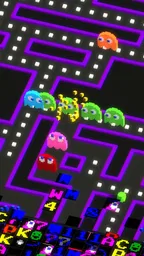
- A variety of ghosts adds challenge and replay value.
- The bright visuals make hazards easy to spot.
What could be better
- Ghost patterns can feel punishing for new players.
- The screen can become crowded during hectic runs.
- Progress may depend on collecting enough in-game resources.
- Some power-ups are more useful than others.
- Repeated runs may feel familiar over time.







