

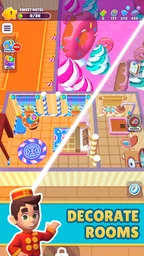
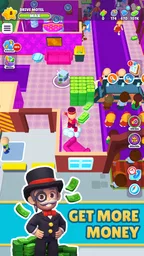
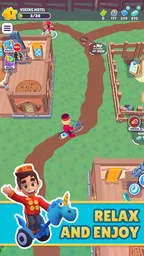
My Perfect Hotel review
 Analysis by Appsdrops
I found My Perfect Hotel easiest to enjoy when I treated it as a small, hands-on hospitality game rather than a serious hotel-management simulator. Its appeal is the steady shift from welcoming guests to keeping the hotel moving, with new tasks and improvements giving each short session a clear purpose. If you like arcade games that let you make visible progress without a long tutorial, it’s a friendly place to start. If you want deep financial planning or a realistic simulation, though, this is likely too lightweight.
What the hotel game feels like
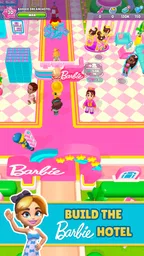
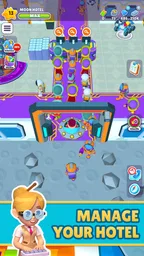
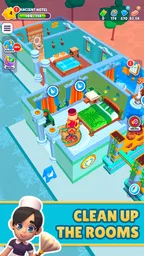
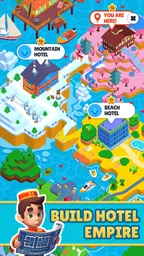
This is an arcade game from SayGames Ltd, built around the everyday bustle of running a hotel. The basic pleasure is practical: guests need attention, the hotel needs upkeep, and successful work helps you develop the business. Rather than asking me to master a complicated set of menus, the game makes activity itself the focus. You are moving through a service routine, responding to what needs doing and gradually making the operation feel more capable.
That hands-on approach sets it apart from many management games. In a typical tycoon game, I expect to spend much of my time adjusting prices, comparing charts, or planning a layout. Here, the emphasis is more immediate and physical: notice what requires attention, get there, and keep service flowing. That makes the game easier to understand at a glance, but also means it offers less room for strategic decision-making than a full simulation.
The store describes a fast-paced hospitality experience, and that is the right expectation to bring. I would not start it expecting a story-heavy adventure or a puzzle game with a single clever solution. The satisfaction comes from a loop of work and improvement. When I have a few spare minutes, that loop is easy to pick up; when I want a slower, more reflective game, the constant sense of activity may feel less relaxing.
Its broad reach is notable: the game has passed 100 million installs and has an average rating of 4.5 from around 1.9 million ratings. Those figures suggest it has found an audience among casual players, but they don’t mean every player will enjoy the same pace. The key question is whether you like simple, repeated tasks that build toward a more developed hotel.
Starting out without overthinking it
My advice to a first-time player is to begin by following the immediate demands of the hotel instead of trying to plan several steps ahead. Early on, the most useful lesson is learning what the game expects you to notice and how one task leads into another. Take a moment to identify the next visible need, complete it, and see what changes. That small loop is a better introduction than rushing around without understanding why a task matters.
The game is free to download, and it is rated Everyone, so it is accessible as a casual pick for a wide range of players. It does offer in-app purchases, with items listed from $0.99 to $99.99 each. I’d approach those as optional spending rather than a necessary part of the first session: try the basic progression first and decide whether the game’s routine is enjoyable before considering any purchase.
There is no need to treat the opening as a test of management skill. If a room or service task seems to be holding up progress, focus on resolving that immediate bottleneck rather than doing unrelated work. This is a useful habit in a game built around hospitality: a tidy chain of completed tasks tends to feel more rewarding than darting between several unfinished ones.
One practical tip is to use the first session to learn the game’s rhythm, not to chase every possible upgrade. Pay attention to which actions seem to make the hotel run more smoothly, and notice whether progress feels tied to serving guests, maintaining the space, or expanding what you can do. That gives you a clearer basis for deciding what to prioritize later, without assuming that every new option deserves attention at once.
Your first satisfying bit of progress
The first meaningful success is not a grand milestone; it is the moment you complete a short sequence of hotel work and see the place become more functional. For me, that is the point where the premise clicks. A guest’s needs are not just background decoration, and the hotel is not merely a screen to upgrade. Your attention is what connects the activity to progress, which gives even a simple task a satisfying purpose.
To reach that feeling quickly, stay close to the task the game is currently making obvious. Complete it, check what has changed, and then choose the next clear need. This keeps the early minutes reassuring: you can see what to do rather than having to guess at a hidden strategy. It also helps you recognize whether you enjoy the central loop before investing much time.
A realistic use case is a short break between errands or while waiting for a meal. You can open the game, handle a few visible hotel jobs, and leave after making a little progress rather than committing to a long campaign session. That convenience is one of its strongest qualities. The trade-off is that a brief session may feel repetitive if you are not in the mood to repeat the same broad pattern of service and improvement.
I also found it helpful to think in terms of flow instead of raw speed. Rushing may make the screen feel busy, but a simple order—deal with the task that is most directly blocking the next step, then reassess—makes the hotel easier to manage. That’s a small tactical difference, but it helps the game feel less like aimless running and more like a compact work routine.
Where new players can get confused
The main source of confusion is the gap between the game’s hotel-management theme and its arcade-style priorities. The setting may suggest a detailed business simulator, but the experience is more about carrying out service tasks and seeing progress. If you are searching for complex staffing plans, detailed accounts, or elaborate room-design decisions, the theme may lead you to expect more depth than the game is trying to provide.
Another possible snag is interpreting every visible activity as equally important. A busy hotel naturally gives you several things to look at, but that does not mean you need to address them all at once. I recommend checking which task seems connected to the immediate goal and handling that first. This keeps the play session readable and can prevent the feeling that you are moving constantly without accomplishing anything.
Progression can also make the routine feel repetitive. Repetition is part of the appeal when you enjoy seeing familiar work become more efficient, but it is a limitation if you need every session to introduce a completely different mechanic. I’d give the game a fair trial through a few rounds of its core activities; if the service loop already feels dull, more hotel growth may not change your mind.
It is worth being deliberate about purchases, too. Because the game includes optional in-app items across a wide price range, I would avoid tapping through a purchase prompt casually. First decide whether the ordinary pace is fun for you. Someone who enjoys gradual progression may be perfectly happy playing without spending, while a player who dislikes waiting or repeating tasks should consider whether paying would actually improve the experience rather than simply shorten it.
Who will enjoy it, and who should look elsewhere
I’d recommend this to players who like straightforward arcade games, clear tasks, and visible development. It suits someone who wants a casual game that can fill short gaps in the day and who finds satisfaction in making a small operation run better. The hospitality theme gives the routine a recognizable setting, while the accessible structure makes it suitable for newcomers who do not want to learn a dense control scheme or complicated management system.
It is less suited to players who want a serious hotel tycoon, open-ended decorating, or a narrative built around characters and drama. In those cases, a deeper management simulation or a design-focused game would be a better fit. It may also disappoint anyone who needs constant novelty: My Perfect Hotel’s pleasure depends on enjoying its repeated service-and-growth cycle, not on a new kind of challenge appearing every few minutes.
Compared with puzzle games in the arcade category, this one is less about finding a perfect answer and more about staying engaged with a stream of practical tasks. Compared with traditional tycoon games, it puts more emphasis on active participation and less on abstract planning. That middle ground is its identity. I like it most as an easygoing time-filler, not as a replacement for a strategy game when I want to weigh decisions carefully.
What to do after the first session
Once the opening routine makes sense, let your next session answer one question: do you enjoy improving the hotel enough to repeat the work that gets you there? If yes, continue at a comfortable pace and use each return visit to focus on the next clear need rather than trying to optimize everything. If not, there is little reason to force it; this game’s core pleasure is consistent, so the first impression is a useful guide.
The current version is 1.39.0, and the game was released on April 13, 2022. It requires Android 8.0 or later. Those details are useful when checking device compatibility, but the more important decision is about your taste: this is a hands-on arcade take on hotel service, not a detailed business tool. Its rating and popularity show that the formula works for many players, yet your enjoyment will depend on whether its simple routine feels satisfying rather than repetitive.
My overall recommendation is to try it if you want a light, easy-to-understand game that turns hotel work into short bursts of progress. Start with the obvious tasks, learn how the routine connects to development, and hold off on purchases until you know you like that loop. My Perfect Hotel is at its best when I treat each visit as a small, focused shift; it is not the right choice when I want deep strategy, but it makes a reassuringly accessible casual game for a spare moment.
What we like
- Hotel upgrades give a clear sense of progress.
- Simple controls make the game easy to pick up.
- Short play sessions suit quick breaks.
- New rooms add variety as your hotel grows.
- The idle income system supports progress between visits.
What could be better
- Progress can feel slow without frequent upgrades.
- Waiting for staff to complete tasks can interrupt play.
- Ads may appear during play or offer optional rewards.
- The gameplay loop can become repetitive over time.
- Some upgrades require substantial in-game currency.







