


Monster Collector: Card Battle review
 Analysis by Appsdrops
I like card games that give me a small, satisfying goal for a spare moment: open a pack, make a choice, and see whether my collection grows. Monster Collector: Card Battle is built around that loop, with collectible monsters, mini-games, and player-versus-player battles. Its appeal is easy to understand, but the different activities also mean a first-time player may wonder what to focus on first. I’d approach it as a casual collection game with competitive options, rather than expecting a deep, uninterrupted card campaign.
What to expect from the card-and-monster mix
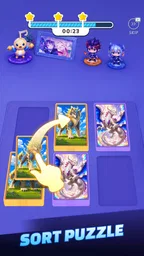
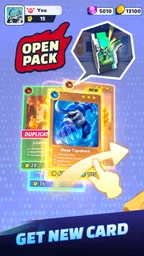
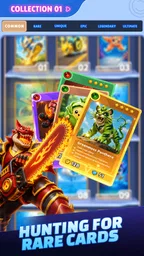
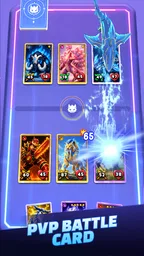
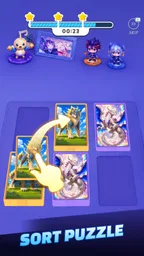
This is a free card game from developer brain, rated for Everyone. The core idea is to build a monster collection by opening card packs, then spend time with mini-games or take on PvP opponents. That blend gives you more than one reason to return: collecting suits the player who enjoys gradual progress, while battles give the collection a more active purpose.
The balance between those parts matters. If you mainly want a structured, story-led adventure, the pack-and-battle premise may feel lighter than you’re looking for. If you prefer a game you can dip into without committing to a long session, the mix is more promising. I’d think of each activity as a different way to engage with the same collection, not assume that every mode is equally important or equally rewarding.
The game has a 4.4 average from around 1,400 ratings and has passed 500,000 installs. Those figures suggest it has found an audience, though they can’t tell you whether its particular style will suit you. The current version is 1.0.2, and it requires Android 7.0 or later. If you’re checking compatibility before installing, that Android requirement is the practical detail to look at first.
There are in-app purchases, with items priced from $0.99 to $14.99, even though the game itself is free. I’d start without spending. That lets you find out whether opening packs, playing mini-games, and competing are enjoyable enough to make the game part of your routine before deciding whether any purchase has real value for you.
How I’d make the first session count
On opening the game, resist the urge to treat every available activity as equally urgent. First, get a feel for how the collection is presented and what the game asks you to do to open packs. Then try a mini-game before moving to PvP. This order makes it easier to learn the basic rhythm without adding the pressure of competing against another player while you’re still figuring things out.
Your first useful milestone isn’t necessarily owning a large collection. It’s understanding the loop: what action leads to a pack, what you gain from opening one, and how the game gives you a reason to use what you collect. Keeping those questions in mind helps you tell the difference between a satisfying early session and simply tapping through menus without knowing why.
A practical tip is to pause after each activity and check what changed. Did your collection grow? Did the mini-game give you a clear next step? Did a battle teach you something about how to approach the next one? That quick check turns the game into a series of understandable decisions instead of a blur of rewards. It’s especially useful if you only have a few minutes and don’t want to lose track of your progress.
For a first successful action, I’d aim to open a pack and then immediately explore one of the other activities. The pack gives you a tangible collection moment; the follow-up shows whether the game’s other modes make that moment feel connected to play. If a mini-game is the more comfortable starting point, use it to learn the interface before testing PvP. There’s no need to make your first battle the test of whether you understand everything.
Where beginners can get mixed up
Collection games can make it easy to confuse “more cards” with “better progress.” I wouldn’t assume that every new monster automatically changes how you should play, or that collecting quickly is the only measure of success. Give yourself time to understand what the game actually lets you do with the cards before spending money or chasing a larger collection.
Another possible point of confusion is the relationship between mini-games and PvP. They are distinct reasons to play, and a player who enjoys one may not enjoy the other. If you find battles stressful or simply less appealing, that doesn’t mean you’re using the game incorrectly; the collecting and mini-game side may be enough for your preferred style. On the other hand, if you want competition to be the main event, try PvP early enough to see whether it holds your attention.
I’d also be careful about treating the existence of purchases as a requirement to enjoy the game. The listed in-app items range from $0.99 to $14.99, so it’s sensible to set a personal spending limit before browsing them. A good rule for a new player is to make at least a few sessions’ worth of progress without buying anything. That reveals whether you like the underlying activities, rather than just the short-lived excitement of opening more packs.
The game is also not the best fit for someone who wants a purely strategic card battler with no collecting emphasis. Monster Collector puts pack opening and building a roster at the center of its identity, alongside its battles. If your ideal game is about carefully mastering a fixed deck, a more focused competitive card game may be a better match. If you’d rather keep discovering monsters and switch between activities, this one has a clearer case.
Making it fit into an everyday routine
I can see this working well as a short break between tasks. Imagine having a few minutes before leaving home: you open the game, check your collection, play a mini-game, and leave PvP for a time when you can pay attention. That’s a more comfortable routine than starting a competitive match when you know you may need to put your phone away halfway through.
For a longer session, I’d alternate rather than repeat one activity indefinitely. Open a pack, try a mini-game, then decide whether a battle sounds fun. This gives the different parts a chance to reinforce each other without assuming that the game has a particular daily schedule or a specific reward structure. The useful habit is simply to choose an activity with a clear purpose before you start.
There’s a trade-off in this variety. A casual player may appreciate having alternatives when one mode stops being fun, while someone who wants a single, tightly developed mode may find the range distracting. The game’s strongest practical appeal is that it offers collection and play in one place; its limitation is that a broad menu does not automatically mean every option will become a favorite.
It’s worth thinking about your tolerance for collection-based progression, too. If opening packs is part of the fun for you, the central loop should feel inviting. If you find random collection mechanics frustrating, the same loop may make progress feel less satisfying than a game where you choose exactly what to unlock. That’s a personal preference, but it’s the best question to answer before investing time or money.
Who should try it, and what to do next
I’d recommend giving Monster Collector a try if you enjoy monster collecting, like quick side activities, and are curious about testing your collection against other players. It’s particularly approachable for someone who wants to explore at their own pace and doesn’t need a long narrative to make a game session worthwhile. The Everyone content rating also makes its intended audience broad, though each player should still decide whether competitive play and optional purchases suit their household.
I’d skip it if your priority is a story campaign, a highly technical card system, or a game with no purchase prompts. Those preferences point toward different kinds of games, and there’s no reason to force this one into a role it isn’t built around. I’d also pass if the collection loop itself sounds like a chore; it’s a central part of the experience, not a small extra.
Compared with a conventional card battler, this game puts more emphasis on finding and collecting monsters, then offers mini-games as another way to spend time outside PvP. Compared with a simple pack-opening collector, the battles give you a competitive outlet. That combination is the reason to choose it over a more specialized alternative, but it also means players seeking the deepest possible version of either style may prefer a game focused on just one.
My advice is to install it, learn the pack-opening routine, and use a mini-game as your first low-pressure test. Once you understand how those parts feel, try PvP and decide whether competition adds something you want to return for. Keep purchases optional until you know which activities you genuinely enjoy. That small, deliberate start is more useful than rushing to build a big collection: it tells you whether this particular blend of cards, monsters, and quick play fits your day.
With its free entry, varied activities, and monster-collecting focus, Monster Collector: Card Battle is an easy one to sample for curious card-game fans. I’d treat it as a relaxed collection game first and a competitive battler second until my own experience showed otherwise. If that sounds appealing, the best next step is simple: start with one pack, follow it with one mini-game, and see whether you’re eager to come back for a battle.
What we like
- Monster collection gives players a steady sense of progress.
- Card battles reward planning rather than luck alone.
- Short matches suit quick play sessions.
- Team building lets players try different strategies.
- The fantasy theme gives the battles a clear identity.
What could be better
- Card balance may make some strategies less effective.
- Progress can slow as opponents become stronger.
- Collecting specific monsters may take patience.
- Repeated battles can feel similar over time.
- New players may need time to learn the card systems.







