Meme Challenge: Dank Memes review
 Analysis by Appsdrops
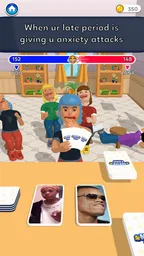
Meme Challenge: Dank Memes makes a familiar social ritual—choosing the funniest caption or image for a prompt—feel like a compact card game. I find its appeal less in elaborate rules than in the quick act of judging a joke: spot the option that fits, decide whether it is clever or gloriously ridiculous, and see how your sense of humor lands. It is an easy game to understand, but its enjoyment depends heavily on whether you like meme humor and playful competition.
A quick laugh, with a distinctly online sensibility
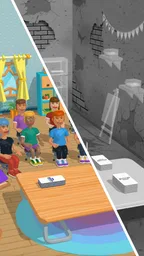
Made by MagicLab, this free card game asks players to make memes and chase the title of Meme Overlord. That premise gives it a clear personality from the outset. Rather than asking me to build a deck, learn a fantasy setting, or manage a long campaign, it puts the joke itself at the center. The result is best approached as a casual diversion: something to open when I want a light, silly round, not a game I expect to occupy an entire evening through deep strategy.
The game has a 4.5 average from around 201,000 ratings and more than 10 million installs. Those figures suggest it has found a substantial audience, though they cannot tell me whether its particular brand of humor will suit a new player. Meme culture is personal: a reference that makes one person laugh can leave another cold. I’d treat the premise as an invitation to try it, rather than a promise that every round will be funny.
First impressions: the joke is the main event
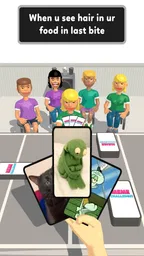
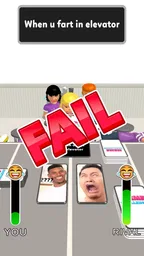
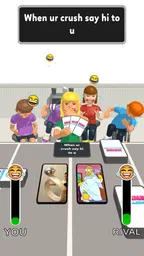
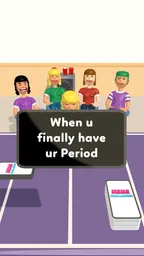
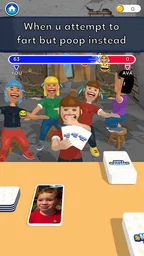
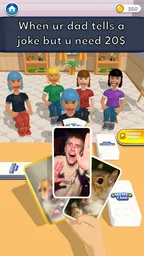
What works for me is the simple social logic. A prompt gives the humor a direction, while the cards provide material to interpret. The fun comes from matching those two things in a way that feels surprising, relatable, or intentionally absurd. That makes each choice more expressive than a basic “pick the highest number” card play, even if the outcome is still meant to be quick and easy to follow.
It also changes how I think about a good play. The most obvious match is not automatically the funniest one. Sometimes a response lands because it takes a prompt literally; sometimes it works because the mismatch is so strange that it becomes the joke. If I’m playing with other people, I’d take a moment to consider the audience’s sense of humor instead of selecting the first card that seems relevant. That small pause can make a round feel more like a shared joke than a random choice.
The game’s tone is deliberately irreverent, so it is not an ideal pick for every group or every moment. I would skip it when I want a calm solo puzzle, a serious competitive card game, or humor that stays gentle and broadly accessible. Its Teen content rating is a useful sign that it is aimed at an older audience than young children, and I’d keep that in mind before handing it to a mixed-age group.
A visual language built around meme humor
The setting is not a story world I need to explore. Its world is the language of memes: familiar visual shorthand, punchlines, and the feeling that an image can change meaning when paired with the right words. That focus is a sensible fit for the card format. Instead of asking me to care about characters or a detailed fictional history, the game invites me to read each prompt and response as a small comic setup.
That approach has a trade-off. A distinctive setting can make a game memorable even when its mechanics are simple; here, the personality depends more on the jokes and the way I interpret them. When a prompt sparks an idea, the minimal framing helps the humor stay front and center. When one does not, there is less of a separate world or narrative to pull me through the lull. The experience therefore rises and falls with the material and my mood.
One useful way to get more from it is to play with a specific comic attitude in mind. I might aim for the most unexpectedly literal response one round, then go for exaggerated drama the next. That turns choosing a card into a tiny creative challenge, rather than simply asking which option looks most obviously funny. It is especially helpful when the prompt feels awkward: changing the style of the joke can reveal a better angle without needing a complicated tactic.
Sound and rhythm: keep the pace light
The game’s premise suggests a brisk rhythm: read a prompt, weigh the joke, and make a choice. That pace is part of the attraction. There is no need to commit to a lengthy narrative before reaching the central activity, and the card-game framing keeps attention on each comic decision. I’d use it in short bursts—a break between other tasks, a casual get-together, or a few rounds when friends are already in a playful mood.
I wouldn’t choose it on the assumption that sound or presentation will carry every moment. The main attraction is the humor and the act of selecting a response, not a richly developed atmosphere that replaces the cards. That is a reasonable design priority for a meme-focused game, but it also means players who want elaborate audiovisual spectacle should look elsewhere. For me, the mood is more about timing and the anticipation of a punchline than about being immersed in a detailed environment.
A practical tip is to avoid rushing through every choice just because the format feels casual. A few seconds spent comparing the tone of the available responses can create a stronger punchline, especially when one card seems safe and another is strange but better suited to the prompt. On the other hand, if a round starts dragging because nobody is connecting with the joke, I would move on rather than force a debate. The game works best when the laughter comes naturally.
Where the card mechanics fit—and where they don’t
Compared with traditional collectible card games, this is a lighter proposition. I would not come to it expecting deck construction, detailed resource planning, or a long-term tactical ladder. Its core pleasure is comic interpretation, so it has more in common with party card games than with strategy-heavy card battlers. That makes it easier to introduce to someone who does not normally play card games, provided they are comfortable with the humor.
There is still a judgment skill here, just not the kind based on calculating several turns ahead. I can think about which response will read clearly, which one creates the strongest contrast, and whether a joke will make sense to the people I’m playing with. A less obvious card can be a better choice if it creates a sharper surprise. This is a small but meaningful distinction: the game rewards reading the comic situation, not merely choosing the card that appears to match a keyword.
For an everyday scenario, I can imagine opening it during a relaxed hangout while friends are waiting for food or taking a break from conversation. A round can give everyone a shared prompt to react to, and the choices can become conversation starters even when nobody agrees on the funniest answer. If the group enjoys internet humor, that social back-and-forth is a genuine strength. If people prefer quiet, individual play, or do not share the same references, the same group setting can make the game feel less engaging.
There is also a useful distinction between playing for the result and playing for the joke. If I focus only on winning, I may lean toward responses I think are broadly safe. If I treat the card choice as a chance to surprise the group, I’m more likely to enjoy rounds where my pick does not land. That flexibility matters in a humor game: taste varies, and no single response can be guaranteed to work for everyone.
The game is free to download, with in-app purchases priced from $2.99 to $3.99 per item. I would try the basic experience before spending anything, then decide whether the game has earned a place in my regular rotation. Purchases may be a drawback for someone who wants every part of a mobile game to remain free, while the free entry point makes it easier to judge the tone first. The current version is 2.8.6, and it requires Android 8.0 or later on Android devices.
Who I’d recommend it to
I’d recommend Meme Challenge: Dank Memes to players who enjoy turning familiar online humor into a quick group activity. It suits casual players who want a card game with a low barrier to entry, people who like judging punchlines, and friends looking for a playful icebreaker rather than a serious contest. The game’s card structure gives the humor a simple framework, while the open-ended nature of a joke leaves room for each player’s personality.
I’d be more cautious about recommending it to someone who dislikes meme culture, wants carefully balanced competitive mechanics, or expects a substantial solo campaign. It is also a poor fit when the group’s humor is very different or when players need a reliably all-ages tone. Those are not minor exceptions: they affect the central activity, because the game’s appeal rests on enjoying the prompts and the style of jokes they invite.
Its audience size and strong average rating are encouraging, but they should not substitute for that personal fit. A popular humor game can still be the wrong choice for a particular friend group. I’d suggest trying a few rounds in a relaxed setting, where a joke that misses does not matter and players can decide for themselves whether the tone feels fun or tiring.
A playful mood with clear limits
My overall impression is that this game knows what it wants to be: a casual card-based space for making and judging memes, not a deep strategy game dressed up with jokes. Its best moments come from an unexpected pairing and the reactions around it. The main limitation is the same thing that defines it: if the humor does not connect, there is not much else to lean on.
The strongest reason to give it a try is its quick, social comic decision-making; the strongest reason to pass is that meme humor is the whole point. If that sounds like your kind of fun, the free download makes a low-commitment test reasonable. If you want layered tactics, a rich setting, or a more dependable tone for a broad audience, a different card game will likely serve you better. For the right group, though, this is an easy way to turn a spare moment into a round of shared silliness.
What we like
- Quick rounds make it easy to play during short breaks.
- The simple controls are easy for new players to learn.
- Meme prompts encourage funny and creative responses.
- Solo play is available when friends are not around.
- Its casual format works well for group gatherings.
What could be better
- The humor may not appeal to players unfamiliar with meme culture.
- Repeated prompts can make longer sessions feel predictable.
- Some content may be inappropriate for younger players.
- The experience depends on having other players for social fun.
- Ads may interrupt the flow of play.







