







Life Sim 3D: Family Simulator review
 Analysis by Appsdrops
Life Sim 3D: Family Simulator is best approached as a relaxed, home-centered life simulation rather than a deep management game. Its appeal is the chance to shape a virtual household and spend time in a 3D domestic setting. I’d recommend it to players who enjoy making a home feel personal and prefer an easygoing pace; if you want intricate family systems or a tightly goal-driven challenge, you may find its focus too narrow.
A home-building idea with a gentle pace
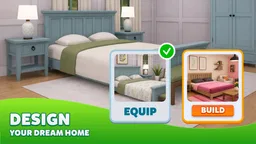
Life Sim 3D: Family Simulator is a free simulation game from Vira Games Inc. The central idea is immediately approachable: create a sweet home in a virtual world and enjoy a slice of family life there. That gives the game a more intimate focus than simulations built around sprawling cities, businesses, or complex resource chains. Rather than asking me to master a demanding system, it invites me to settle into a small domestic space and make it feel like mine.
That emphasis is also the game’s clearest strength. A home is a familiar canvas, so even a brief session can feel purposeful if I’m in the mood to personalize a space or enjoy a bit of make-believe. The 3D presentation supports that sense of place, giving the setting more presence than a flat menu or room-planning screen. The result is an easy entry point for players who want a friendly simulation without first learning a long list of rules.
Its audience response suggests that the concept has found plenty of company: it has a 4.5 average from around 515,000 ratings, and more than five million installs. Those figures don’t guarantee that every player will connect with its style, but they do make it a familiar choice in mobile life simulation. It is rated Everyone, which suits the accessible, domestic framing, though individual preferences about screen time and in-app purchases still matter for families.
Why the home is the main attraction
The home-centered premise gives the game a useful kind of focus. Some life simulators spread attention across careers, relationships, errands, and broad town exploration. Here, the stated draw is designing a household in a 3D world. That narrower frame can be a relief when I want a low-pressure activity: I can treat a session as a small creative break rather than a checklist of obligations.
It also makes the game easier to recommend to people who like virtual interior spaces but don’t necessarily want a dedicated architecture tool. A building or decorating app may offer more precise planning, while a larger life sim may give more complicated social or economic systems. Life Sim 3D sits between those expectations. Its appeal is not that it replaces either alternative, but that it combines a personal home setting with the approachable feel of a family-life game.
For a realistic everyday use case, I can imagine opening it during a short break after work or school, choosing one small thing to focus on, and stopping when I’m ready to return to the day. That is a better match than expecting a long, strategically demanding session. The game’s premise makes casual drop-ins intuitive, though players who need a strong sequence of objectives to stay engaged may prefer a more quest-driven simulation.
Where expectations need to stay grounded
The same focus that makes the game easy to approach can limit its appeal. A home and family setting can suggest a broad, detailed life simulator, but the core pitch is specifically about a virtual household and its surroundings. I would go in expecting a pleasant domestic playground, not a substitute for a highly elaborate simulation with deep character routines, extensive social choices, or intricate long-term planning.
That distinction matters because the life-sim label covers very different experiences. Some games make players juggle needs and schedules; others emphasize open-ended building; still others turn daily life into a narrative. If your favorite part is carefully optimizing a household’s routine or watching complex relationships evolve, check that the game’s home-design emphasis is what you actually want. A more systems-heavy title is likely the better fit for those tastes.
There is also a practical mobile-game trade-off to consider: the game is free to start, but it offers in-app purchases ranging from $0.99 to $59.99 per item. That doesn’t mean a purchase is required to enjoy it, and I wouldn’t assume that every useful option is locked behind spending. Still, I’d recommend deciding on a personal spending limit before browsing optional purchases, especially if a younger player will be using the game. The free entry point is appealing; keeping purchases deliberate is the sensible way to protect that appeal.
Another small but useful point is to treat the game’s current version as part of the experience rather than a promise about how it will feel on every device. The current release is version 2.11.6, and the stated minimum operating-system requirement is 7.1. Before installing, I’d check that the device meets the requirement and has enough room for another game. That quick check is more helpful than assuming a familiar-looking simulation will run comfortably on any phone or tablet.
Who is most likely to enjoy it
I’d point Life Sim 3D toward players who enjoy making virtual spaces feel welcoming, want a family-themed setting, and prefer a relaxed activity over a demanding challenge. It is especially easy to understand as a casual choice for someone who likes the idea of a 3D home but doesn’t want to begin with a complex building editor. The Everyone age rating also makes its general audience broad, although a parent should still consider the device’s purchase controls and the child’s habits.
It may also suit players who rotate between several mobile games and want something with a different rhythm from competitive or action-heavy options. A domestic setting offers a calmer change of pace, and the focus on a home gives a session a clear theme even when I only have a little time. I’d use it as a light creative diversion, not as the one game I expect to supply constant new challenges or a deeply absorbing life story.
On the other hand, I’d steer away anyone who dislikes optional spending prompts in free games, even when purchases are not necessarily central to play. Players who want exhaustive customization tools, highly detailed simulation rules, or a rich narrative should also compare alternatives before settling in. A dedicated home-design game may be more satisfying for precise decorating, while a larger life simulator may be better for players who care most about social systems and long-term decisions.
How it compares with familiar alternatives
Compared with a traditional room-design app, Life Sim 3D has the advantage of placing the home inside a broader family-life setting rather than presenting the space as a standalone planning project. That makes the experience feel more like inhabiting a virtual world than simply arranging a layout. The trade-off is that someone seeking fine-grained design control may be happier with a tool built specifically for that purpose.
Against a large life simulator, the game’s smaller domestic scope is both its identity and its limitation. I find that distinction helpful when deciding what to install: choose this if the home itself is the draw, and choose a broader simulation if you want to manage many interconnected parts of a character’s life. The comparison is not about one format being universally better. It is about matching the game’s family-home premise to the kind of play you want on a particular day.
Vira Games Inc. has made a straightforward proposition that is easy to explain and easy to sample because the game is free. Its popularity, reflected in roughly 16,000 written reviews as well as its much larger pool of ratings, gives prospective players a sense that it has reached a substantial audience. I would still judge it by its specific focus rather than by popularity alone: the best question is whether a 3D family home sounds enjoyable to spend time in.
A sensible way to try it
If I were starting fresh, I’d first decide what I want from the session: a little home-focused relaxation or a detailed simulation to get absorbed in for hours. Then I’d try the free game without treating purchases as part of the basic promise. If optional items catch my eye, I’d pause and consider whether they support the part of the game I already enjoy, rather than buying simply to speed up a first impression.
I’d also pay attention to whether the home-centered play stays interesting after the novelty of entering the 3D world wears off. That is the key personal test. If I keep wanting to return to the space and make it feel more like my own, the game is doing what I came for. If I’m waiting for a much broader set of life-management systems, the issue may be a mismatch of expectations rather than a reason to push through.
My verdict
Life Sim 3D is a welcoming pick for players who want a family-themed simulation built around a virtual home and a relaxed 3D setting. I like how clearly that premise sets the tone: it offers a softer alternative to games that demand constant optimization, and its free starting point makes it easy to see whether the style suits you. The trade-offs are real, though. The domestic focus may feel limited to players seeking a deep life simulator, and optional purchases deserve a little care.
I’d recommend giving it a try if designing and spending time in a virtual family home sounds pleasant, especially if you want a casual game to dip into rather than a demanding project. I’d skip it in favor of a dedicated decorating app or a broader simulation if precision building or complex life systems are your priority. For the right player, its modest, home-first idea is exactly the point; for everyone else, it is better to know that distinction before installing.
What we like
- Easy-to-learn controls make everyday tasks accessible to new players.
- A 3D setting gives the family simulation a more immersive feel.
- Players can shape routines through a range of household activities.
- The family theme offers a relaxed alternative to competitive games.
- Short play sessions suit casual gaming on mobile devices.
What could be better
- Repeated daily tasks may become monotonous over time.
- Progress can feel slow without frequent play.
- Small mobile screens can make detailed interactions harder.
- The simulation may offer limited challenge for experienced players.
- Performance may vary across older or less powerful devices.







