





I Am Monkey review
 Analysis by Appsdrops
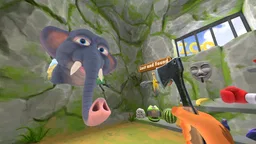
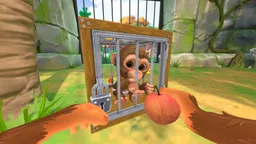
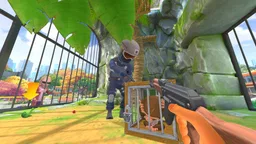
I Am Monkey caught my attention because it puts a simple but unusual situation at the center of a simulation game: you are a monkey living behind bars, with choices shaping how you engage with that confined world. That premise is enough to suggest a different kind of play from the usual building, farming, or life-management simulations. My impression is that its appeal depends less on a sprawling checklist of activities and more on whether you enjoy exploring a small scenario and seeing what you can do with it.
What you get without paying
I Am Monkey is a free simulation game from Estoty, so you can try its central idea without an upfront purchase. It has a 4.7 average from around 148,000 ratings and has passed 10 million installs, which suggests that the concept has found a substantial audience. The game is rated Teen, a point worth keeping in mind if you are choosing something to share with younger players.
Free access is the clearest part of its value proposition. Optional in-app purchases are listed at $1.99 to $4.99 per item, but I would treat those as a separate decision rather than assume they are necessary to enjoy the basic premise. The practical question is whether the free experience gives you enough to do before considering any purchase. If you are unsure, starting without spending is the sensible approach: first decide whether the setting and style of interaction hold your attention.
The current version is 1.2.6, and the game was released on October 31, 2025. Those details place it as a relatively recent release, but they do not tell me how long an individual session should be or how much content a player will find. I would judge value by your own response to its central loop rather than by expecting a particular playtime or a familiar simulation-game progression.
A compact premise with room to experiment
The strongest idea here is the contrast between confinement and choice. A cage is a bounded setting, not the open-ended canvas offered by a city builder or a large sandbox. That limitation can work in the game’s favor: it gives the player a clear place to focus and makes curiosity about the immediate surroundings part of the appeal. The trade-off is equally clear. If you need a large map, a long-term management project, or a detailed routine to maintain, this premise may feel narrow rather than focused.
I find that distinction useful when deciding whether to install it. Someone looking for a quick change of pace may appreciate a game built around one distinctive situation. Someone who wants to plan a settlement, optimize production, or steadily expand a world should probably choose another kind of simulation. I Am Monkey is more appealing as a concentrated play experience than as a substitute for those broader systems.
There is also a different expectation to set around choice. The store summary emphasizes that the player has choices, but that alone does not tell you how many outcomes there are or how much each one changes. I would approach the game with curiosity rather than expecting a complex branching story. A helpful way to play is to try one approach, notice what the game lets you interact with, and then change your behavior on a later session. That makes experimentation feel purposeful without assuming hidden mechanics.
How I would get the most from a session
For an everyday use case, I can see this working as a short game to open when I have a spare few minutes and want something more playful than a routine task list. Instead of committing to a long campaign, I would explore the immediate space, test the available choices, and stop when the novelty of that session has run its course. That is a better fit for the premise than judging it by how many hours it can occupy.
One practical tip is to avoid rushing through the first encounter with the environment. In a tightly bounded simulation, paying attention to what responds to your actions can matter more than moving quickly. Try changing one thing at a time: interact with the space in one way, then see whether a different choice leads to a noticeably different moment. This approach helps you learn what the game considers meaningful without relying on assumptions about its controls or progression.
A second useful approach is to treat each return as a small experiment rather than repeating the same actions automatically. If you already know the basic situation, choose a different way to engage with it and compare how that feels. This is a low-effort way to keep a compact setting interesting. It also gives you a fair test of whether the game’s choices have enough variety for you, before you decide whether the experience is worth more of your time.
That small-scale design has a real limitation: if you prefer simulations where progress is measured through upgrades, resource chains, or an expanding world, a confined premise may not provide the kind of payoff you want. The same boundedness that makes it easy to understand can also make repetition more noticeable. I would not recommend it as a default choice for someone who wants a deep management challenge or a large world to revisit over weeks.
Where it sits among simulation games
Compared with a conventional life simulator, I Am Monkey starts from a more unusual role and a much more restricted setting. Compared with a building or business simulation, it does not invite you to think first about expansion and optimization. Its hook is the perspective of playing a monkey behind bars and the freedom to make choices within that premise. That makes it a better match for players drawn to character, setting, and experimentation than for people seeking elaborate economic systems.
This difference also helps explain who might prefer an alternative. If your favorite part of simulation games is shaping a world over time, a builder will likely offer more satisfying long-range goals. If you want a conventional animal-care game with familiar routines, do not assume this title will work that way just because its protagonist is a monkey. The attraction here is the particular setup, not a promise of standard pet care or zoo management.
For players who enjoy trying an odd scenario simply to see how it behaves, the confined setting can be a strength. There is less setup to learn than in a sprawling management game, and the premise is immediately understandable. I would still keep expectations measured: an original idea does not automatically mean endless variety. Whether it stays entertaining will depend on how much you enjoy revisiting its central situation and testing your options.
Who is likely to find the price worthwhile?
I would recommend giving the free version a try if you enjoy unconventional simulation concepts, short exploratory sessions, or games that invite you to poke around rather than follow a large objective list. It is also a reasonable choice for someone who wants to sample a distinctive premise before deciding whether to spend anything. Since the game is free to start, there is no need to treat an in-app purchase as the entrance fee.
I would skip it if you mainly want a long, structured campaign, detailed resource management, or a simulation that keeps growing through clearly defined systems. I would also pass if the cage setting itself sounds uncomfortable or simply does not interest you; that situation is the game’s core identity, not a minor backdrop you can ignore. The Teen content rating is another reason to check suitability for the person who will play rather than choosing on price alone.
Paid items cost between $1.99 and $4.99 each, but I would only consider them after the free experience has shown you what you personally enjoy. A sensible rule is to wait until you can name the specific part you want more of, rather than buying simply because an option appears in the game. That keeps the decision tied to actual enjoyment and avoids treating optional spending as a way to fix a mismatch in genre or expectations.
My verdict after weighing the trade-offs
For me, the value rests on a clear exchange: no upfront cost, an unusual monkey-in-captivity premise, and a simulation experience centered on choices within a limited world. That can be worthwhile if the setting makes you curious and you enjoy testing what a game allows. It is less compelling if value means a large volume of systems, steady expansion, or a long checklist of goals.
My recommendation is to try it free if its premise genuinely appeals, then decide about optional purchases only after you have explored the experience yourself. The game’s 4.7 average and broad install base offer useful context, but neither guarantees that its particular style will suit you. I see it as a specific, low-commitment pick for curious simulation fans—not a universal replacement for the genre’s deeper builders or management games.
Estoty is the developer, and the game’s current version is 1.2.6. If you want a compact, unusual scenario to explore at your own pace, I Am Monkey is easy to consider because access starts free. If you want a sprawling simulation with clearly defined long-term progression, I would look elsewhere instead of expecting this small, distinctive premise to become a different kind of game.
What we like
- Simple controls make it easy to start playing.
- Short sessions suit casual play.
- The monkey theme gives the game a playful feel.
- Touch interactions encourage experimentation.
- Its unusual premise can make gameplay feel fresh.
What could be better
- The core interaction may become repetitive over time.
- Limited objectives may reduce long-term appeal.
- Some players may find the gameplay confusing at first.
- The humor may not suit every player's taste.
- Performance can vary across different devices.







