


I Am Cat review
 Analysis by Appsdrops
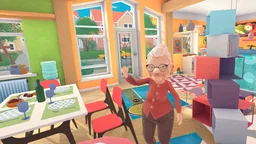
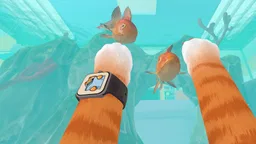
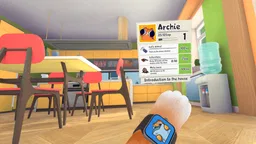
I Am Cat is a playful simulation built around acting like a troublesome house cat. I found its appeal less in any grand objective than in the small pleasure of exploring a space from a cat’s point of view and deciding what kind of mess to make. It suits short, curious play sessions better than a tightly directed adventure, and that difference is worth knowing before you download it.
Getting into a cat’s routine
The first thing I would do is treat the room as a playground to learn, not a checklist to rush through. Move around, look closely at what seems interactive, and try one action at a time. That simple approach makes the game’s central joke land: ordinary surroundings become interesting when you approach them as a cat with mischief on its mind.
In my experience, this kind of simulator is most enjoyable when I set a small intention for a session. I might explore one area, test a few objects, or see how much playful disruption I can cause before moving on. A modest goal gives the free-form play a little shape without forcing it into a serious challenge it was not built to be.
I Am Cat is a simulation game from Estoty, and its premise is easy to grasp even if you have only a few minutes to spare. It is aimed at fans of cat games who want a light, mischievous sandbox rather than a demanding management sim. The tone is deliberately silly, so I would approach it as casual entertainment, not as a realistic study of feline behavior.
A useful habit is to pause after discovering an interaction and ask whether it changes how you want to explore. If it does, follow that curiosity; if it does not, move along rather than repeating the same action in the hope that it will become deeper. That keeps the session lively and helps the game’s physical comedy carry the experience.
Make each session feel purposeful
For an everyday example, imagine opening the game while waiting for dinner to finish. Instead of trying to complete everything at once, spend that short break exploring and testing a couple of things that catch your eye. When you return later, choose a different corner or a new kind of interaction. This is a practical way to enjoy a sandbox without needing a long uninterrupted stretch.
That routine also helps answer whether the game is right for you. If you like poking around, experimenting, and making your own fun, its loose structure can be a strength. If you want clear objectives, a steady story, or a detailed progression system to guide every minute, the open-ended approach may feel thin. I would choose a more goal-driven simulation in that case.
Check the controls and comfort settings first
Before settling into a longer session, I recommend checking the available settings and control options rather than assuming the default setup will suit your device. I would focus on whether movement and interaction feel comfortable, whether the camera is easy to manage, and whether any visual or audio options make play more pleasant. These are general checks, not a claim that the game includes a particular setting or shortcut.
The reason this matters is that a cat simulator depends on observation and movement. If the camera feels awkward, exploring becomes work; if the controls feel natural, small experiments are much more satisfying. Spend a minute adjusting what the game actually offers, then keep the arrangement that feels easiest to repeat. There is little value in constantly changing controls once you have found a comfortable setup.
It is also sensible to check the age and purchase details before handing a device to someone else. The game has a Teen content rating and is free to download, with optional in-app purchases priced from $1.99 to $14.99 per item. I would review purchase settings on a shared device, especially if a younger player might use it, and decide in advance whether optional spending is appropriate.
Build faster, repeatable play patterns
Experienced play in a sandbox is often less about secret tricks than about building a reliable rhythm. I would use a simple loop: scan the surroundings, pick one likely interaction, test it, then move to a fresh spot. This prevents aimless wandering and makes it easier to notice what the environment invites you to do. It is a repeatable habit, not a hidden mechanic.
Another useful pattern is to separate exploration from experimentation. On one pass, move through an area and take note of anything that looks unusual. On the next, focus on those points and try interactions deliberately. Switching between those modes helps avoid the common mistake of tapping at everything without remembering what produced an amusing result.
If you are playing in short bursts, stop after a satisfying discovery rather than trying to squeeze every possible interaction out of the same moment. Returning with fresh attention can make familiar spaces feel less repetitive. I would also avoid treating every object as a mandatory objective: the pleasure here comes from curiosity, and forcing a completionist checklist onto a playful simulator can drain that pleasure.
The game has a substantial audience: it has more than 50 million installs, an average rating of 4.5, and around 269,000 ratings. Those figures suggest broad interest, but they do not tell me whether its relaxed, mischievous style will suit a particular player. I would use them as context, not as a substitute for deciding whether open-ended cat antics are your kind of game.
Where the sandbox can feel limited
The main trade-off is that freedom can become repetition. If you have already explored the places that interest you and tried the interactions that stand out, the game may not provide enough direction to keep you engaged for a long session. That is not necessarily a flaw for a casual toy, but it does make expectations important. I would not download it expecting the layered objectives of a full-scale simulation.
It may also be a poor fit if you dislike experimenting without immediate feedback. A more structured game can make the next task obvious and give each action a clear reward. Here, you need to supply some of the curiosity yourself. When I feel that impulse fading, I would take a break instead of repeating the same actions; a short return later is likely more enjoyable than trying to force momentum.
Compared with the usual alternatives in the simulation category, I Am Cat leans toward playful exploration rather than careful planning, construction, or resource management. That makes it easier to pick up, but it also means players seeking long-term systems may prefer another kind of sim. Cat-game fans who mainly want a light role-play experience, on the other hand, are closer to its intended audience.
It is free to start, but the in-app purchase range is worth keeping in mind when deciding whether to install it for a child or on a shared tablet. I would also check that the device runs Android 8.0 or later if installing on Android. The current version is 1.1.19, and the game was released on February 22, 2025.
Who I would recommend it to
I would recommend it to someone who likes cat-themed games, enjoys harmless chaos, and is comfortable making their own goals. It is particularly suitable for quick breaks, casual play at home, or sharing a funny moment with someone nearby. Its appeal depends on whether you enjoy testing a space and seeing what happens, rather than on a demanding skill curve.
I would steer away from it if you want a realistic pet-care routine, a tightly plotted campaign, or a simulation where every session advances a clear long-term plan. Those expectations point toward a different subgenre. Likewise, if you quickly tire of open-ended play, the novelty may fade before the game becomes a regular part of your routine.
For a first download, I would keep the decision simple: try a short session, check whether movement feels comfortable, and see whether you naturally start inventing little goals. If you do, the sandbox is doing its job. If you find yourself asking repeatedly what you are supposed to do next, a more structured game is probably a better match.
My verdict after looking at the bigger picture
I Am Cat works best when I treat it as a small, playful escape rather than a deep simulation. The most useful way to get value from it is to explore deliberately, use comfortable controls, and vary your own short-session goals. That approach brings out its charm while reducing the risk of wandering aimlessly or repeating the same antics until they stop being funny.
Estoty has made a concept with broad appeal, reflected in its 50 million-plus installs and roughly 6,000 written reviews, but popularity alone cannot make a loose sandbox right for everyone. I see this as a good choice for curious cat-game fans who want accessible mischief, and a weaker choice for players who need a strong story or substantial systems. Go in with the right expectations, and its simple premise can make for an amusing little break.
My recommendation is to give it a try if the idea of exploring as a cat sounds fun on its own. Keep your sessions light, avoid demanding a full-scale simulation from it, and let curiosity provide the direction. If that sounds like the kind of play you enjoy, this is an easy game to pick up; if not, a more structured alternative will likely hold your attention longer.
What we like
- Playful cat animations give the game a lively feel.
- Interactive objects encourage curious exploration.
- Simple controls are easy for younger players to learn.
- Short play sessions suit casual gaming.
- The cat perspective adds charm to familiar activities.
What could be better
- Some interactions may feel repetitive over time.
- Progress can depend on completing specific objectives.
- The camera may take practice to control smoothly.
- Younger players may need help with some tasks.
- Performance can vary across different devices.







