
Gin Rummy Classic review
 Analysis by Appsdrops
I like card games that give me a reason to think without demanding a long session, and Gin Rummy Classic is aimed squarely at that kind of play. It is a free card game from SATORISYS PLAY, built around a familiar gin rummy format rather than a larger collection of unrelated activities. My impression is that its appeal comes from the decisions in each hand: what to keep, what to discard, and when to stop improving a hand and act. If you already enjoy gin rummy, it offers a straightforward way to return to the game; if you are new, the rules are approachable, though the strategy takes longer to learn.
How a hand rewards a steady routine
The most useful way to approach Gin Rummy Classic is to treat each turn as a small information problem, not just a hunt for matching cards. I start by checking which cards already work together, then weigh the value of a possible draw against the risk of holding loose cards for too long. A discard can help my own hand while also giving an opponent a useful clue, so a simple routine—review, draw, reassess, discard—keeps decisions from becoming impulsive.
That rhythm makes the game well suited to short breaks. I can sit down for a hand when I have a few spare minutes, focus on the cards in front of me, and leave without needing to learn a complex progression system first. The pleasure is quieter than in a fast action game: progress comes from noticing patterns and making slightly better choices, not from constant visual spectacle.
Gin rummy also asks you to balance two competing instincts. Keeping a card because it might complete a set or run can pay off, but holding too many possibilities can leave a hand cluttered with cards that never connect. I find it helpful to identify the cards with the clearest path to a meld and be willing to let go of the rest. That discipline is more useful than trying to make every promising draw work.
The game has a 4.6 average from around 3.9 thousand ratings, with roughly 243 written reviews and over 100 thousand installs. Those figures suggest that it has found an audience among people looking for a familiar card-game session, though they cannot tell you whether its particular presentation or pace will suit your taste. The important question is whether you enjoy gin rummy itself; this is not the kind of game whose core appeal depends on a surprise genre twist.
Settings and habits that make play smoother
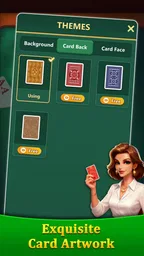
Before settling into a longer stretch of play, I would take a moment to inspect whatever options the game presents. Small choices around how a card game looks or responds can affect comfort, especially on a phone, but I would not assume that a particular control, table style, or rules adjustment is available until I see it in the app. The practical lesson is simple: check the actual settings once, choose what feels clear, and avoid spending every session searching for a shortcut that may not be there.
A repeatable habit matters more than a clever trick. I try to ask three questions before discarding: does this card complete anything, does it preserve a useful connection, and is it a card I would be reluctant to pass to the opponent? This check slows me down only slightly, but it prevents the common mistake of discarding a card just because it looks unhelpful at first glance. A card’s value can change as the hand develops.
Another useful pattern is to keep track of what has already appeared. You do not need to memorize every card perfectly; simply noticing repeated suits or ranks can help you judge whether a hoped-for connection is becoming less likely. This is a mental technique rather than a claim about a tracking feature. It also makes each hand more engaging, because the discard pile becomes part of the decision rather than background decoration.
For a casual player, I would recommend focusing on one decision at a time instead of trying to calculate every possible outcome. If I have a promising run and a separate pair, I consider which plan is more likely to improve with the cards still unseen. When neither option looks strong, I prioritize reducing the risk of being stuck with unrelated cards. That approach is especially handy when playing in short bursts, since it gives each turn a clear purpose without turning a relaxing game into homework.
The game is free, which makes it easy to try without committing to a purchase. It is marked for Teen audiences, so it may not be the right fit for every family or younger player; adults choosing a game for someone else should check that age guidance rather than assuming a traditional card game has no audience considerations. Its current version is 1.0.5, and the listed minimum operating system is 7.1, useful details to check before installing on an older device.
Where experience helps—and where the game may fall short
Experienced gin rummy players will recognize the central trade-off: building a hand efficiently while denying the opponent easy opportunities. One advanced habit I value is to avoid making a discard solely because it is currently unmatched. I first consider whether it sits near cards that could become a run, and whether keeping it blocks a more useful choice. This does not guarantee a good hand, but it reduces careless discards and makes losses easier to understand.
Another is to notice when a plan has stopped being realistic. If the cards needed to complete a particular sequence are not appearing, continuing to protect that plan can be worse than switching to a simpler combination. I find this willingness to abandon an attractive idea separates thoughtful play from stubborn play. The same principle applies to knocking or ending a hand when that choice is part of the rules in use: take account of the whole hand and the current risk, rather than waiting for a perfect arrangement by habit.
There is a limit to what a classic card-game format can offer. If you want a deep campaign, a stream of unlocks, elaborate multiplayer features, or a broad selection of different card games, this focused gin rummy title may feel narrow. I also would not choose it when I want a game that plays itself in the background; the fun depends on paying attention to the hand and accepting that luck can disrupt a sensible plan.
Compared with a physical deck, a digital game is convenient and removes the need to find another player or manage cards on a table. But a face-to-face game brings conversation and social cues that a phone session cannot replace. Compared with a broad card-game collection, this app has a clearer purpose, though that focus means less variety if you tire of gin rummy. If your main goal is learning the game with another person, a human opponent or a rules-focused guide may teach the social and strategic nuances more directly.
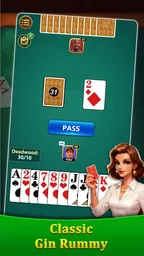
The developer is SATORISYS PLAY. I would judge the experience on the basic qualities that matter for this kind of game: whether the card layout is easy to read on your device, whether turns feel comfortable, and whether the pace lets you think. Those are practical checks to make during an initial session. If the presentation feels cramped or the interaction gets in the way of weighing a discard, even solid gin rummy decisions can become less enjoyable.
Who I would recommend it to
I would suggest Gin Rummy Classic to someone who already knows the rules and wants an uncomplicated place to play, as well as to a newcomer willing to learn through repeated hands. A useful first-session goal is not to win every round but to notice which discards create better choices later. After a few hands, you will have a clearer sense of whether you enjoy planning around incomplete information, which is the heart of gin rummy.
For everyday use, it fits a quiet commute, a short wait, or a brief pause at home—provided you have enough attention to follow the hand. I would not recommend it as a substitute for social time with friends, and I would steer players who crave constant novelty toward a broader card collection or a more varied game. It is also a poor match for anyone who finds turn-by-turn uncertainty frustrating; even sound decisions cannot control what gets drawn.
My verdict is that this is best approached as a focused, familiar card game rather than a feature-packed destination. Its free access and recognizable format make it easy to give a try, while the satisfaction comes from building a repeatable decision-making habit: assess your combinations, watch what has been discarded, and revise your plan when the hand changes. If that steady kind of thinking sounds relaxing to you, it is worth a look. If you need social interaction or a constant stream of new modes, I would choose something else.
What we like
- Familiar gin rummy rules make it easy to start playing.
- Short rounds suit quick breaks.
- Adjustable difficulty offers a challenge for different skill levels.
- Offline play is useful without an internet connection.
- Clear card layouts help keep melds easy to follow.
What could be better
- The interface may feel dated compared with newer card games.
- Repeated play against computer opponents can become predictable.
- Ads may interrupt the flow between games.
- Limited game variety may reduce long-term appeal.
- Small cards can be difficult to read on compact screens.







