




Gear Fight! review
 Analysis by Appsdrops
I like arcade games that explain themselves in a moment but still leave room to improve, and Gear Fight! is built around that simple appeal: turn gears and take on enemies. The idea is easy to grasp, which makes it approachable when I have only a short break. The more important question is whether that straightforward loop stays interesting once the novelty wears off. My impression is that it works best as a quick, focused diversion, rather than as a deep game to settle into for a long session.
Getting a feel for the gear-focused action
Gear Fight! is a free arcade game from VOODOO, with an Everyone 10+ age rating. It has an average rating of 4.2 from around 87,000 ratings, and more than 5 million installs. Those figures suggest it has found a broad audience, but they don’t tell me whether its central interaction suits every player. That depends on how much you enjoy short bursts of action built around manipulating gears to fight enemies.
The appeal of the premise is that the gears are not just decoration: turning them is the action the game asks you to focus on. That gives the play a more tactile identity than a conventional arcade game where the main task is simply tapping rapidly or steering around hazards. I’d approach each encounter by watching how the gear arrangement relates to the enemy, then making deliberate adjustments rather than treating every moment as a reflex test.
That distinction matters if you are deciding whether to try it. If you like seeing a simple mechanical idea turn into a compact challenge, the concept has an immediate hook. If you want a story, a large world to explore, or a long list of mechanics to master, the basic premise may feel narrow. The game’s strength is focus, and that same focus places a ceiling on how much variety I would expect from it.
Small goals make the opening approachable
In the early part of a game like this, the most useful goal is often simply understanding what a successful gear turn does. I recommend resisting the urge to make rapid, unfocused moves. Pause long enough to read the arrangement and the enemy in front of you, then use a change with a clear purpose. That small habit makes the central interaction easier to understand and gives each attempt a more satisfying sense of cause and effect.
Gear Fight! is a reasonable choice for a commute break, a wait between errands, or a few minutes before moving on to something else. In those situations, a clear objective is more valuable than an elaborate setup. I can pick it up without needing to remember a complicated story, while the gear-based action gives me something specific to concentrate on. It is also the sort of game I would try when I want a light challenge but don’t want to commit to a longer arcade run.
There is a trade-off in that quick accessibility. A game that gets to its core interaction quickly has less time to build anticipation through a long introduction or detailed world. Players who enjoy learning layers of rules may find the initial appeal too direct. I would treat the opening as a test of whether the gear manipulation itself feels rewarding; if that action does not click, simply waiting for a more complex premise is unlikely to change the basic appeal.
Reading progress without assuming a deep system
Progress feels most meaningful when I can connect it to a choice I made, not just to time spent playing. In Gear Fight!, the clearest way to judge my own improvement is to pay attention to whether I’m becoming more intentional about turning gears and handling enemies. That is a practical progress signal even when a player is not focused on unlocking a particular reward: a cleaner decision or a better-timed adjustment can make the same core idea feel more controlled.
I would avoid treating every encounter as a prompt to move as fast as possible. A useful personal workflow is to look first, make one considered adjustment, and then reassess what changed. That approach helps separate a genuine tactical improvement from lucky movement. It also makes the game easier to evaluate during a short session: I can tell whether I’m learning to use the gear interaction more effectively, rather than merely repeating actions without a plan.
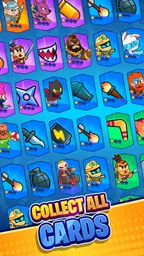
Players often want to know whether a game offers a large collection of unlocks or a long-term progression ladder. I wouldn’t recommend installing this one on the assumption that those systems are the main attraction. Its verified core appeal is the gear-and-enemy arcade loop, so the safer expectation is a focused experience rather than an expansive progression game. If visible collections, character-building, or a substantial campaign are what keep you playing, another arcade title organized around those elements may fit better.
Challenge is most enjoyable when I stay deliberate
The challenge in a gear-based encounter comes from making the interaction count, not from having a complicated control scheme to memorize. That makes the game accessible, but it can also make the difficulty feel closely tied to how clearly the player understands what each turn is doing. When I feel stuck, my first adjustment would be to slow down and inspect the situation, not to assume that faster inputs are automatically better.
This is also where the game may divide players. People who enjoy a compact problem and the satisfaction of solving it through a small mechanical action may find the premise engaging. Players who prefer a steady stream of new controls, environments, or objectives may want more variety than a narrow arcade loop can naturally provide. I would judge the challenge by whether each encounter asks me to think a little more carefully, rather than expecting a broad range of modes or a dramatic difficulty curve.
For younger players, the Everyone 10+ rating gives families a straightforward age guide, though I would still consider a child’s own preferences. The concept is easy to explain, but a child who dislikes repeated attempts or action-focused challenges may not enjoy it for long. For adults, the same simplicity is a benefit when there is no time or patience for a tutorial-heavy game.
Where retention helps—and where it can feel like pressure
Arcade games are naturally suited to repeat visits: the action can be brief, and a player can return when there is a spare moment. Gear Fight! fits that pattern better than a game that asks me to maintain a long session. Still, short-session convenience is not the same as meaningful long-term progression. If I keep coming back, I want that to be because I enjoy the gear-focused challenge, not because I feel compelled to protect a streak or chase a reward schedule.
There are in-app purchases, priced from $0.99 to $99.99 per item. That range is worth knowing before downloading, especially if you plan to let a child play or prefer games with no optional spending. I would start by playing without buying anything and decide whether the core loop is enjoyable on its own. If a purchase is offered during play, it is sensible to pause and consider whether it adds something I actually want rather than treating it as necessary to enjoy the game.
That advice is particularly useful for a casual arcade game. A quick session can make an optional purchase feel like a small shortcut, but repeated small decisions can add up. I’d keep spending deliberate, use device-level purchase safeguards where appropriate, and avoid buying anything just because I am impatient with an encounter. The best test is whether the game remains fun when I play at my own pace.
How it compares with familiar arcade choices
Compared with a typical endless runner, Gear Fight! puts its identity in turning gears to confront enemies rather than simply moving forward and avoiding obstacles. Compared with a score-chasing reflex game, its central interaction gives me a more mechanical focus. That makes it appealing if you want an arcade game with a recognizable idea at its center, but less compelling if your favorite part of the genre is fast movement, elaborate level layouts, or a large roster of distinct modes.
I would choose it over a busier arcade alternative when I want a clean premise and a short session that does not demand much setup. I would choose something else when I want extensive customization, a clear campaign to work through, or multiple styles of play. That is not a criticism of the game so much as a useful boundary: Gear Fight! is easier to recommend to someone who likes its particular gear-driven action than to someone shopping for the broadest possible arcade package.
The current version is 6.27.0, and the minimum operating system requirement is Android 8.0. If you are checking compatibility, that system requirement is the practical detail to consider before installing. The game is free to download, with optional purchases, so it is easy to try the basic experience and decide whether the central mechanic earns a place among your regular short-break games.
My verdict on its staying power
Gear Fight! has a clear, distinctive starting point: use gears as the focus of arcade combat. I find that more memorable than a generic promise of quick action, and it suits players who want an easy-to-grasp challenge in small doses. My strongest practical tip is to make deliberate turns and treat each encounter as a chance to understand the interaction, rather than rushing through the motions. That gives the game its best chance to feel like a small test of judgment instead of repetitive tapping.
Its limits are just as important. The compact premise may not provide the breadth that players expect from a progression-heavy game, and optional purchases deserve a little attention if spending is a concern. I would skip it if you need a story-rich adventure, a substantial unlock chase, or a wide range of arcade modes. But if you are curious about a focused gear-based action game and want something free to sample, Gear Fight! is an easy recommendation to try without expecting it to become your next long-term gaming obsession.
What we like
- Quick battles are easy to start and play in short sessions.
- Vehicle customization adds a personal touch to each fight.
- Distinct machine designs give battles a strong visual identity.
- Combat controls are straightforward for new players.
- Unlockable content provides goals beyond the opening matches.
What could be better
- Progress can feel slow without frequent play.
- Repeated battles may become predictable over time.
- Some upgrades may require substantial grinding.
- Small screens can make busy fights harder to follow.
- Performance may vary across older devices.







