




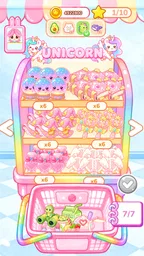

Cute Scoop DIY: ASMR Packing review
 Analysis by Appsdrops
The appeal of a packing game is easy to understand: choose things, arrange them neatly, and enjoy the little satisfaction of a finished order. Cute Scoop DIY: ASMR Packing builds its identity around that hands-on shop fantasy, asking you to imagine running a small DIY packing business rather than managing a complicated simulation. I find that framing inviting, especially when I want a low-pressure game with a clear task and a pleasing sense of completion.
It is a free simulation game from BLACKGEMS GLOBAL JOINT STOCK COMPANY, rated Everyone, and the store page shows an average of 4.2 from around 27,000 ratings, with over five million installs. Those figures suggest that its simple packing premise has found a sizeable audience. The more useful question for a new player, though, is whether the repeated process feels relaxing enough to return to—or too repetitive once the novelty wears off.
From choosing to packing: the first action
The central idea is to take on the role of a DIY packing-store owner. That gives each task a small bit of context: you are not just moving objects around for its own sake, but completing the sort of order that belongs in a cute, craft-focused shop. If you enjoy tidy arrangements and the feeling of making something presentable, that premise is an easy one to settle into.
The best way to approach a session is to treat each order as a short, self-contained project. Focus on the immediate packing job rather than expecting a sprawling shop-management experience. This is a useful distinction when choosing between this game and a conventional business simulation: the attraction here is the act of packing, not a promise of deep planning, staffing, or financial strategy.
That focused setup also makes the game a natural fit for small gaps in the day. I can imagine opening it while waiting for a kettle to boil or taking a brief break between other tasks, because the premise is built around completing individual bits of work. It is less suited to someone looking for a long narrative or a complex objective that needs careful attention over an extended session.
The title’s ASMR framing sets an expectation of sensory satisfaction. For me, that works best as an invitation to slow down and notice the feel of each action, rather than as a guarantee that every player will find the sound or presentation soothing. People who enjoy gentle, tactile game loops are the likely audience; anyone who prefers fast challenges may find the pace too mild.
Why the task can feel satisfying
Packing has a built-in before-and-after payoff. An order starts as a job to finish, and the goal is to leave it looking complete. That simple transformation is the game’s strongest idea: a small amount of attention turns an unfinished task into a neat result. It is the same appeal that makes sorting a drawer or wrapping a gift satisfying, translated into a game-sized activity.
A practical tip is to play when you want a calm break, not when you need a demanding distraction. The more you approach each order as a miniature craft task, the more the theme makes sense. If you are waiting for a game to surprise you with layered mechanics, dramatic stakes, or a broad simulation, this one is probably not the right pick.
The feedback rhythm, and what keeps it moving
The loop can be understood as action, feedback, reward, and a fresh start: take on a packing task, see it reach completion, enjoy the sense of having finished something, then decide whether another order sounds appealing. That rhythm is familiar, but it suits the subject. A packing game needs a clear signal that the job is done; otherwise, arranging items would feel like busywork.
What I like about this kind of structure is that it gives the player an uncomplicated reason to continue. You do not need to remember a long chain of instructions or keep a complicated plan in your head. The task itself supplies the focus, while the finished order supplies the immediate payoff. It is a small reward, but small rewards are exactly what make a casual game easy to pick up again.
The trade-off is equally clear: if the action stays similar from one order to the next, the loop can become predictable. That is not automatically a flaw. Repetition can be calming when you choose a game for routine and tactile satisfaction. It becomes a limitation when you want every session to introduce a new challenge or change the way you play.
For a fair comparison, think of it less like a full shop tycoon game and more like a focused alternative to casual organizing or crafting games. A tycoon title is a better fit if you want to make strategic decisions about an expanding business. A puzzle game is better if you want each level to demand a different solution. Cute Scoop’s distinctive appeal is the packing-shop fantasy and the compact completion loop.
Reward without a complicated commitment
The reward is best judged by whether finishing an order feels pleasant enough to invite one more. This is a different kind of motivation from chasing a long campaign or competing against other players. The value lies in the moment of completion and the possibility of repeating that moment when you have a little spare time.
That makes the game approachable for people who do not want to study a tutorial-heavy system before they can enjoy themselves. It may also suit younger players and families looking for a gentle simulation theme, with the important caveat that an Everyone age rating describes the store’s content classification, not whether every child will enjoy the pace or understand in-app purchases.
There is a sensible spending consideration, too. The game is free to download, while in-app purchases range from $1.99 to $5.99 per item. I would start by playing without spending and decide whether the core packing loop is genuinely enjoyable first. If a game’s basic activity does not hold your attention, optional purchases are unlikely to fix that; if it does, you can make a more informed choice about whether any paid item is worth it to you.
For parents, that is a useful everyday rule: let a child try the free experience with purchase settings managed appropriately, then judge the game on whether the activity itself is a good fit. For an adult player, the same approach avoids confusing a free download with a commitment-free experience if optional purchases become tempting.
When a session ends—and why another may begin
A session reset is part of the appeal of a short-loop game. You finish the task in front of you, take the satisfaction, and can stop without feeling that you have abandoned a sprawling story. If you have only a few minutes, that sense of closure matters. It makes the game easier to fit around real life than a simulation that expects you to keep track of a large, ongoing operation.
The same reset can also expose the main limitation. If what you enjoy is a fresh challenge every time, a repeated packing routine may not provide enough variety. I would not choose it as my only mobile game if I wanted long-term strategic depth, a strong narrative, or a competitive goal. In those cases, a puzzle game with changing rules or a management sim with more decisions would likely hold attention better.
Version 1.0.03.01.01 is listed as the current version, and the minimum operating-system requirement is Android 8.0. Those practical details are worth checking before installing, particularly on an older device. The game is available at no upfront price, but anyone comparing options should weigh the simple premise against how much they value a calm, repeatable task.
One useful way to test whether it suits you is to notice your own reaction after completing an order. Do you feel a small urge to take on another, or are you already looking for a different kind of activity? That answer is more revealing than the cute theme alone. If the tidy finish feels rewarding, repetition may be exactly what you came for. If it feels like the same job again, the game’s central loop may not have enough variation for your taste.
Who I would recommend it to
I would recommend it to players who enjoy gentle simulations, crafting themes, and completing small tasks without a lot of pressure. It is particularly easy to picture as a short break during a commute wait, a quiet moment at home, or a pause between more demanding games. The appeal is not a giant world to explore; it is having one approachable job to focus on and a clear endpoint.
I would steer away from it if you need constant novelty, detailed business decisions, or a demanding skill curve. It is also not the strongest choice for someone who dislikes repetition even when it is presented in a soothing way. Those players will probably get more from a puzzle game that changes its rules or a deeper business simulation that asks them to plan beyond the next order.
The audience response is encouraging but not a substitute for personal taste: the game has a 4.2 average and 220 written reviews. Ratings can tell you that many players have tried it, but they cannot tell you whether its particular pace suits your routine. I would use the premise as the deciding factor: if packing and arranging sound relaxing, it is worth trying; if you want strategic complexity, look elsewhere.
My verdict on the loop
Cute Scoop DIY: ASMR Packing is most compelling when I see it as a tiny, repeatable craft break. The action gives you a concrete job, the feedback comes from seeing that job completed, and the reward is the neat sense of closure. Then the game resets the choice: take on another small task or put it down and return later.
That loop is clear and approachable, but its simplicity is both the selling point and the constraint. It should suit someone who wants a cute packing-focused simulation that can fit into short sessions, especially if tidy, tactile activities are already relaxing. It is a weaker match for players who expect a broad management game, significant strategic choices, or a steady stream of new challenges.
Developed by BLACKGEMS GLOBAL JOINT STOCK COMPANY, it is free to start and rated Everyone, with optional purchases priced from $1.99 to $5.99 per item. I would give it a try for the calm completion rhythm, keep expectations centered on packing rather than deep shop management, and decide after a few sessions whether the repeated order cycle still feels satisfying. If it does, that small reason to come back is the whole point.
What we like
- Easy tap controls make packing tasks simple to learn.
- Short levels suit quick play sessions.
- Cute visuals give the game a cheerful style.
- ASMR sounds add a relaxing touch to packing.
- Creative packaging tasks offer a change from routine puzzles.
What could be better
- Gameplay may feel repetitive after several levels.
- Some actions can require precise tapping.
- Progress may depend on watching ads.
- The relaxing sound effects may not appeal to everyone.
- The game offers limited challenge for experienced players.







