

Crazy Office — Slap & Smash review
 Analysis by Appsdrops
Crazy Office is an arcade game built around turning workplace frustration into deliberately silly chaos. Its appeal is easy to understand: it promises quick, exaggerated action rather than a serious simulation of office life. I’d recommend it to someone who wants a light game to dip into for a few minutes, especially if the idea of kicking office characters around sounds funny. I wouldn’t pick it for deep strategy, a carefully paced story, or a calm experience. The joke is the point, and how long it stays amusing depends on how much you enjoy that kind of slapstick.
Why the office setting works
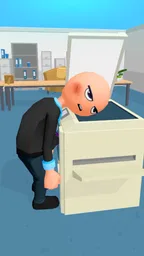
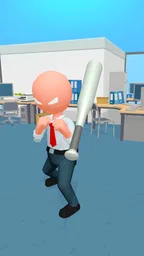
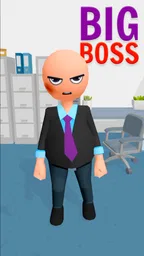
The workplace theme gives the mayhem a recognizable backdrop. Instead of asking me to learn a complicated world before anything happens, the game frames its action around familiar office characters and a boss. That simple setup makes it easy to grasp what kind of mood it is aiming for: mischievous, cartoonish and not especially concerned with realism.
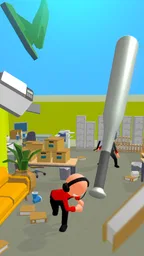
That clarity is a strength in an arcade game. Arcade play tends to work best when the basic appeal is apparent quickly, and Crazy Office has a premise that needs little explanation. Its store description points to kicking buddies, facing a boss and making a mess of the office; taken together, those ideas establish an over-the-top comedy rather than a workplace-management game. If you are expecting meetings, spreadsheets or thoughtful career choices, this is plainly the wrong kind of office game.
What I like most about that premise is how tightly it sets expectations. The setting is not just decoration for a generic action game: office tension is the comic setup, while the exaggerated physical antics provide the punchline. That makes it a better fit for a quick laugh than for anyone looking for a realistic story about work or a nuanced cast of characters.
A quick game for small breaks
I can picture opening it while waiting for a friend, taking a short break between tasks, or handing the phone to someone who wants to see what the office chaos is about. The concept is easy to explain without a tutorial-style speech: it is a comic game about causing trouble in an office. That makes it more immediately shareable than an arcade title whose appeal depends on a long explanation of its controls, setting or backstory.
There is a practical trade-off here. A game designed around fast, broad comedy can be convenient when I have only a little time, but it may not hold my attention during a long session if its central gag stops landing. I would treat it as a snack-sized diversion, not as a game I need to reserve an evening for. That expectation helps avoid judging it by the standards of a lengthy action adventure.
One useful way to decide whether it suits you is to consider what usually makes you laugh in games. If you enjoy exaggerated physical comedy and playful disorder, the workplace backdrop gives the jokes an easy target. If you prefer clever dialogue, subtle humor, or a story that changes the meaning of its characters over time, the broad premise may feel thin. This is a choice about comedic taste as much as it is about genre.
What the audience response tells me
Freeplay Inc developed the game, and its reach suggests that the central idea has found a substantial audience: it has passed 50 million installs. It holds an average rating of 4.4, drawn from around 42,000 ratings, with roughly 1,800 written reviews. Those figures make it look like a well-established casual pick, but popularity alone cannot tell me whether its particular style of humor will work for you.
I read the audience response as evidence that the premise is approachable, not as a guarantee that every player will want to keep playing. A short, easy-to-understand game can attract plenty of downloads while still being a poor match for someone seeking layers of progression or a precise competitive challenge. For this title, the more important question is whether its office-themed slapstick feels amusing after the first few encounters.
That distinction matters when comparing it with familiar arcade alternatives. A reflex-focused game usually makes timing and improving a score its main satisfaction. A puzzle arcade game asks me to spot patterns or plan a sequence. Crazy Office instead puts its workplace troublemaking front and center. Choose it for the comic scenario; choose a more conventional score-chaser if you want the satisfaction of refining a skill or beating your own best performance.
The limitation behind the joke
The same premise that makes the game easy to approach also creates its biggest risk: a narrow comic idea can wear out its welcome. Office chaos is a strong opening hook, but a hook is not automatically enough to support every player’s interest over repeated sessions. If I find the kicking-and-smashing style amusing, the premise can carry a casual visit. If I do not, there is little reason to expect the office setting alone to change my mind.
That is not a flaw I would try to disguise as a feature. The game is not the choice I would make for a focused, meditative break, since its entire identity is built around disruption. Nor would I suggest it to someone who finds slapstick violence unpleasant, even when it is presented as comic game action. The Teen age rating is worth keeping in mind for families deciding whether its tone suits a younger player.
There is also a difference between a game being simple to understand and being satisfying for every kind of player. The first is useful for quick pick-up-and-play sessions; the second depends on what you want from an arcade game. I would not go in expecting deep tactical decisions, a serious office storyline, or the steady sense of mastery that comes from a demanding score-based challenge. Those are reasonable preferences, but they point toward a different game.
How I would approach a first session
I would start with a short session and judge the core joke on its own terms. Does the workplace setting make the physical comedy funnier for you than the same antics might feel in a less specific setting? Do you enjoy the idea of creating comic trouble, or does it become repetitive as soon as the premise is clear? Those are more useful questions than assuming that a large audience means you ought to enjoy it.
A small but helpful decision is to think of this as a game for a particular mood rather than a permanent staple. Keep it in mind for a light, mischievous pause, and switch to another type of arcade game when you want a clear score target, a tougher reflex test or a puzzle to solve. That way, its narrow focus becomes a strength: it serves one kind of break without needing to satisfy every gaming mood.
If you are choosing it for a shared moment, the recognizable office setup also makes it easy to explain to a friend before passing over the phone. That is a better use case than expecting a new player to follow a complicated plot or learn a large set of systems first. Just be aware that the humor is the main attraction, so the game is best shared with someone who likes that broad, chaotic tone.
Cost, version and device fit
Crazy Office is free to download, with in-app purchases listed at $2.99 per item. I would begin without spending: first see whether the game’s style holds your interest. The existence of purchases is worth knowing before playing, but it does not by itself tell me what a particular item changes, so I would make that decision only after checking the purchase details shown in the app.
The current version is 1.56.1, and the listed minimum operating-system requirement is 7.0. The game was released on January 25, 2022, so it is not a brand-new arrival. If you are deciding whether to install it on a device you already use, check that your operating system meets the requirement and that you are comfortable with the Teen content rating. Those simple checks are more useful than assuming every phone or family situation is the same.
Its free entry point makes it easier to try than a paid arcade game, but “free” should not be mistaken for a promise that every optional purchase will suit your budget. I would treat purchases as optional decisions rather than part of the reason to try it. For anyone who is cautious about in-app spending, it is sensible to review the available choices before letting a younger player explore them.
Who should choose it—and who should pass
I would put this on the shortlist for players who want a cheeky arcade diversion, enjoy overblown physical comedy, and do not need a long narrative to make a game worthwhile. It can also suit someone looking for a casual title to introduce to a friend, because its central office premise is immediately understandable. Its popularity and free download make it a low-commitment option to sample, though neither guarantees that the humor will click.
I would skip it if your idea of a good arcade game is a demanding reflex test, a puzzle with room for careful planning, or a long-term challenge built around improving a score. I would also choose something else for a quiet, soothing break or for a player who dislikes slapstick action. These are not minor differences in preference: they go directly to what the game is trying to do.
Overall, Crazy Office makes the most sense when you want a short burst of silly office trouble rather than a deep or polished alternative to every other arcade game. I like the clarity of its comic premise and the fact that I can decide quickly whether its style is for me. Its narrow humor is also the reason it will not suit everyone. Try it for a playful break, keep spending optional, and move on if the central joke stops being funny; that is the fairest way to judge this particular game.
What we like
- Quick rounds make it easy to play in short breaks
- Simple controls are easy for newcomers to pick up
- Comedic slapstick gives the action a lighthearted tone
- A variety of office settings helps keep stages visually fresh
- Offline play is useful when an internet connection is unavailable
What could be better
- Repeated slap-and-smash actions can become monotonous
- Ads may interrupt the flow between rounds
- Progression can feel repetitive after several stages
- The humor may not appeal to players who dislike slapstick
- Limited strategic depth may not satisfy players seeking a challenge







