

Cell to Singularity: Evolution review
 Analysis by Appsdrops
The first thing I like about Cell to Singularity: Evolution is how it turns an enormous subject into a game of small, satisfying steps. You begin with the simplest form of life and gradually build a branching account of biological and technological change. It is a simulation, but not the kind where I’m managing a farm, a city, or a collection of workers. The pleasure here comes from watching a broad timeline take shape and deciding what to develop next.
That premise makes it an easy game to dip into, yet it also gives each session a sense of direction. I can check in for a short stretch, make progress, and leave the larger story to continue unfolding. If you enjoy science-flavored games and gradual growth more than fast action, this is an appealing fit. If you want a tightly scripted story or demanding hands-on strategy, its measured pace may feel too passive.
A living timeline built for short visits
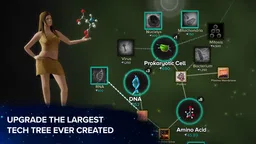
ComputerLunch has made the central idea unusually approachable: evolution and technology become a sequence of developments that you can explore at your own pace. The game’s appeal is less about mastering a complicated simulation model and more about seeing how one stage leads into another. That gives it a clear identity among mobile simulation games, many of which focus on optimizing a place or keeping a busy cast of characters satisfied.
The structure also makes curiosity part of the reward. Rather than treating the subject as a lesson with a fixed route, it invites you to follow the next available possibility and see how the broader picture grows. I found that works best when I approach it as an interactive overview, not as a rigorous scientific reference. It can prompt questions and give a satisfying sense of progression, while players who want detailed explanations or strict realism should pair it with a more focused source.
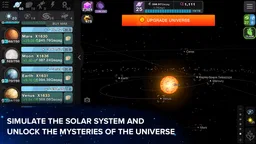
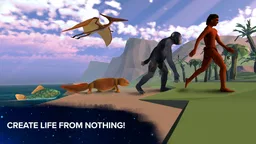
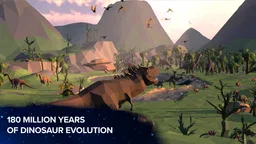
Its scale is striking without making the opening feel like homework. The game starts small, then points toward a much wider history involving dinosaurs, technology, and what comes beyond. That contrast is one of its strongest hooks: a tiny beginning gives way to a subject far larger than a single play session. The gradual reveal helps the game feel like a journey rather than a menu of disconnected upgrades.
What the current version means in practice
The current version is 51.75, and the game has been available since April 6, 2020. Those details show that this is an established title rather than a brand-new experiment, but they do not by themselves tell me what changed in each update. I’d treat the version number as a sign of ongoing product history, not as proof of a particular feature or improvement. The sensible expectation is to judge the game by what it offers now and check its in-game notes or app-store information when you want specifics about a fresh update.
For someone returning after a break, the main benefit of an established game is that its core loop has had time to settle into a recognizable shape. You can return to the gradual development fantasy without needing to learn a completely different genre. At the same time, a higher version number is not a promise that every old frustration has disappeared. I would still make a brief first session after updating, especially if you care about how the latest build behaves on your device.
The minimum operating-system requirement is Android 7.0. That gives many older Android devices a possible route in, though compatibility and smoothness can still depend on the individual device. On iOS, check the app store’s compatibility details for your device before downloading rather than assuming that the Android requirement applies there too.
How progression feels for returning players
For existing players, the game’s long view is both a strength and a trade-off. Progress is framed as a continuing climb through an immense subject, so returning can feel rewarding even if you only have time for a quick check-in. But that same gradual structure means a short session is unlikely to deliver the immediate drama of a level-based action game. The payoff is accumulation: each visit adds to a larger picture.
A useful way to play is to give each visit a small purpose. I might focus on the next development that is available, look at how it connects to what I have already built, and stop once I’ve made a clear bit of progress. This keeps the game from turning into aimless tapping and makes it easier to fit into a commute break or a quiet moment at home. It also helps set expectations: the title is better as a recurring hobby than as something I’d expect to finish in one sitting.
Another practical trade-off is attention. Because the game’s appeal comes from watching a system grow over time, it suits players who like checking progress and making incremental decisions. It is less compelling if you want every action to demand constant tactical judgment. I would not choose it as my main game for an intense, uninterrupted session; I would choose it when I want a low-pressure activity that gives me a reason to come back.
What it costs, and how to approach spending
The game is free to download, with in-app purchases ranging from $0.99 to $99.99 per item. That is a wide spread, so I recommend starting without spending and deciding first whether the basic rhythm is enjoyable. The central question is whether you like gradual progress and returning to see a wider evolutionary picture. If you do, you can judge any optional purchase on its own merits rather than feeling that you need to pay before you know what the game is like.
I’d also be deliberate about purchases if you prefer games where progress is entirely separate from spending. The presence of optional paid items may matter even when you never buy them, particularly if you dislike seeing purchase prompts or prefer a one-time-price model. The most comfortable approach is to set your own boundary early and treat purchases as optional, not as the default way to make the game worthwhile.
The game is rated Everyone 10+, which is useful context for families considering it. Its subject matter makes it a natural conversation starter about life and technology, but I would still let a child try it and see whether the incremental style holds their interest. A broadly accessible rating does not guarantee that every child will enjoy a game whose main satisfaction is gradual development rather than constant action.
Where it stands among simulation games
Compared with a typical city-building or management simulation, this is a more abstract experience. Those games often ask me to balance resources, layouts, and competing needs in a bounded space. Here, the draw is the sweep from simple life toward increasingly complex possibilities. That makes it easier to pick up, but it also means players looking for detailed control over a working world may find less to manage than they want.
It also differs from a conventional science game. A reference app is usually built around finding a precise fact, while this game uses progression to make a large subject feel engaging. I would choose it when I want science-inspired entertainment and a sense of discovery; I would choose an educational reference or documentary when I need careful depth, citations, or an answer to a specific scientific question. The game’s best use is to spark interest, not to replace study.
There is a similar distinction with idle games. If you enjoy watching numbers rise and returning to a growing system, the slow-burn appeal may suit you. But if your favorite part of an idle game is aggressive optimization or a constant stream of new tactical decisions, this may feel more like a relaxed tour than a competitive puzzle. Knowing which kind of satisfaction you want is the simplest way to tell whether it will hold your attention.
Small habits that make it more enjoyable
My first tip is not to rush through every available step simply because it is there. Pause long enough to notice the connection between the new development and the larger evolutionary arc. That little bit of attention makes the theme feel more coherent and prevents progress from becoming a blur of taps. It is especially helpful if you are playing in brief bursts and want each visit to leave a distinct impression.
Second, use a short-session routine. Open the game with one goal in mind, make the progress you came for, and close it when you are done. This is a better match for its measured pace than leaving it open while expecting a constant stream of active decisions. It also gives you a fair test of whether the game’s recurring check-in style fits your daily habits.
Third, separate curiosity from accuracy. When an idea catches your attention, note it and explore it elsewhere if you want a deeper scientific account. That approach lets the game do what it does well—make a vast subject inviting—without asking it to function as a textbook. For a player who likes learning through broad themes, this is a useful balance; for someone who needs authoritative detail inside the game itself, it is a meaningful limitation.
Who should skip it, and what to watch next
I’d recommend it to players who like patient progression, big-picture science themes, and games that can be enjoyed in short visits. It is also a reasonable choice for someone curious about evolution and technology who wants an interactive introduction rather than a dense lecture. The average rating is 4.5 from around 400,000 ratings, and it has more than 10 million installs, which suggests that its particular mix has found a large audience. Neither figure guarantees that its pace will suit you, so a free download is a practical way to find out.
I’d skip it if you need a strong plot with character-driven scenes, close control of a simulated world, or frequent bursts of action. I’d also look elsewhere if you want a strictly factual reference tool or dislike games built around gradual accumulation. Those are not small preferences: they concern the main way this title delivers satisfaction, so no amount of patience is likely to turn it into a different kind of game.
When considering future updates, I would watch for clearly described changes to the experience rather than assuming that a larger version number means a particular new system. For returning players, useful update notes can explain what has changed and whether it affects an established routine. For newcomers, the more important question is still whether the current game’s pace, tone, and purchase options feel comfortable.
My recommendation is to try it if you want a calm, science-themed simulation that rewards curiosity more than quick reflexes. It gives a huge subject an inviting sense of scale and works especially well as a small recurring ritual. I would keep expectations grounded: it is an engaging game about progress, not a detailed scientific course or a high-pressure management challenge. If that distinction sounds appealing, the free entry point makes it easy to see whether its slow, expansive journey is for you.
Cell to Singularity: Evolution is ultimately at its best when I let it be what it is: a relaxed, playable panorama of change. ComputerLunch has built a clear concept that can draw players back without demanding that every visit become a major event. I’d happily recommend it to a friend who likes watching a world unfold one step at a time, while steering anyone seeking deep simulation controls or textbook-level explanation toward a better-matched alternative.
What we like
- Offline play lets you earn progress without a steady internet connection.
- Regular updates add new content and keep the simulation evolving.
- The science-themed progression can make complex ideas more approachable.
- Short sessions make it easy to check progress between other activities.
- Optional rewarded ads can provide useful boosts without requiring payment.
What could be better
- Progress can slow considerably at later stages.
- Frequent taps may feel repetitive during active play.
- Some upgrades and boosts are tied to in-app purchases.
- The large number of menus and systems can overwhelm new players.
- The game’s science is simplified and should not be treated as a textbook.







