


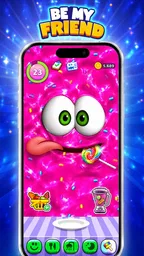
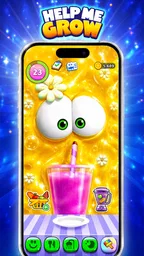
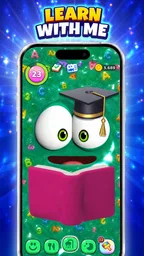
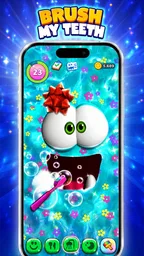
Bruno – My Talking Slime Pet review
 Analysis by Appsdrops
Bruno is the kind of virtual-pet game I’d open when I want a small, low-pressure diversion rather than a goal-heavy game. Its appeal rests on caring for a slime companion and seeing how it reacts as you spend time with it. That makes the first few minutes easy to understand, but the longer-term question is whether those simple interactions feel pleasant enough to return to. In my view, Bruno works best as a casual routine you dip into, not as a deep simulation to master.
Getting started with a slime companion
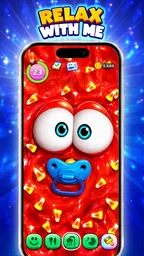
The first useful way to approach Bruno – My Talking Slime Pet is to treat it like a little check-in, not a challenge. You meet Bruno, try the available interactions, and learn through his responses what feels entertaining. The game’s central idea is straightforward: spend time with a cute virtual friend, care for him, and enjoy the playful feedback. There’s no need to study a complicated rule set before you can begin.
That simplicity is a real advantage if you’re introducing a younger player to mobile games or want something that doesn’t demand sustained concentration. It also suits short breaks: you can open the game, interact for a while, then leave without needing to remember a complex plan. The experience is more about attention and amusement than competition, so players looking for rankings, difficult levels, or tactical decisions should look elsewhere.
Bruno is a free simulation game from Dramaton, with optional in-app purchases priced from $0.99 to $5.99 per item. The game is rated for Everyone, and its broad, gentle premise makes it approachable for a family setting. I’d still treat purchases as something to discuss with a child before handing over a device: free to start does not mean every optional item is included.
One practical tip is to explore the interaction options slowly instead of tapping everything at once. In a character-centered game, noticing the difference between one response and another is part of the fun. A few deliberate actions make Bruno feel more like a companion with reactions and less like a screen you’re simply prodding. That small change in pace can make the game’s core idea land better.
How the feedback keeps the loop moving
The basic rhythm is action, response, and another action. You do something with Bruno, watch what happens, and decide whether you want to try a different interaction or continue the same kind of play. This is a modest loop, but it gives the game its immediate charm: the reward is often the reaction itself, rather than a complicated achievement system.
That makes the game particularly suitable for a quick mood break. If I have a few idle minutes between tasks, I can enjoy the character’s responses without needing to get invested in a long story or remember where I left off. For a child, the same rhythm can encourage curiosity: “What happens if I try this?” The best use is playful exploration, not expecting every action to unlock a major new development.
There is a trade-off, though. A simple interaction loop can become repetitive if you want a steady stream of new goals or increasingly demanding play. Bruno’s friendliness is a strength, but it also means the experience may feel light once you’ve tried the interactions that interest you. If your ideal pet game involves a detailed routine, extensive customization, or a long progression path, compare options in that direction before settling on this one.
I also wouldn’t use Bruno as a substitute for a real pet-care lesson. The game can make caring for a character feel approachable and fun, but its purpose is entertainment. It is better framed as imaginative play than as a realistic guide to responsibility. That distinction helps set expectations for both adults and younger players.
Small rewards and what they’re worth
The reward in Bruno is mainly the pleasure of seeing your companion react and having a lighthearted place to return to. That’s different from games where the main payoff is collecting powerful equipment or clearing a sequence of hard stages. If you enjoy expressive characters and small moments of feedback, that softer reward can be enough. If you need a clear objective every time you play, the game may not give you the structure you’re looking for.
Because optional purchases are available, I’d make a simple decision before spending: is the item likely to add something you’ll actually enjoy, or does the game already give you the sort of casual interaction you wanted? Keeping that question in mind is more useful than treating every purchase as a necessary step. The free entry point lets you see whether Bruno’s style suits you first.
A second practical tip is to make the game a short, intentional activity rather than leaving it open while expecting constant novelty. Open it when you want to play with Bruno, enjoy the responses, then close it once the interaction stops being fun. That keeps the experience on its own terms and prevents a gentle virtual-pet loop from turning into an obligation.
For a parent or caregiver, the straightforward concept can make it easy to understand what a child is doing: playing with a virtual slime rather than navigating a competitive game. Still, it’s sensible to check the device’s purchase settings and agree on boundaries around paid items. The age rating is Everyone, but family rules about spending and screen time remain useful regardless of rating.
Returning after a break
The reset is part of the appeal. Since Bruno is built around casual interaction rather than a demanding campaign, you can come back after a pause and start playing again without needing to reconstruct a complicated strategy. That makes it a comfortable choice for people who don’t want another game that nags them to keep up with a schedule or remember a long chain of objectives.
At the same time, a relaxed return is not the same as a deep reason to return. The loop works when you enjoy the character’s responses and want another brief visit; it may not hold your attention if you need fresh challenges to keep each session distinct. I’d think of it as a companion-style diversion, not a game that promises constant escalation.
In everyday use, I can imagine opening Bruno while waiting for an appointment or taking a short break at home, trying a few interactions, and putting the phone away when the moment has passed. That scenario fits the game better than expecting it to fill an entire evening. It’s also a useful distinction from many conventional simulation games, which often lean on planning, resource management, or elaborate systems. Bruno’s appeal is lighter and more immediate.
The game has a 4.5 average from around 189,000 ratings, with roughly 1,000 written reviews, and more than 50 million installs. Those figures suggest it has found a broad audience, but popularity alone can’t tell you whether its specific style will suit you. I’d use them as context, then decide based on the kind of play you actually want: gentle character interaction or a more structured simulation.
Who will enjoy Bruno, and who may prefer another game
I’d recommend Bruno to people who like cute virtual characters, short sessions, and uncomplicated play. It can be a pleasant fit for a child who enjoys interacting with a friendly digital companion, or for an adult who wants a small, cheerful distraction. If you are comparing it with a traditional pet simulator, the key question is whether you want easy, expressive interaction or a more elaborate sense of managing a pet’s day.
I’d skip it if you usually lose interest without levels, strategic decisions, or substantial customization. Players seeking a demanding simulation will likely get more from a game designed around planning and progression. Likewise, if you want a story-driven adventure, Bruno’s central pleasure is too focused on the companion interaction to replace one.
On the technical side, the current version is 5.02 and it requires Android 7.0 or later. It was released on March 19, 2023. Those details are handy to check before installing, especially if you’re setting it up on an older Android device. The game is free to try, with optional purchases, so you can judge the feel of its interactions before deciding whether it deserves space on your phone.
My verdict on the action-feedback-reset loop
Bruno’s loop is easy to describe: interact with the slime, enjoy the response, take the small reward of a playful moment, and return later when you want another. Its strongest point is that this cycle asks very little from you. Its main limitation is the same simplicity: without a taste for character-based repetition, the interactions may not stay engaging for long.
I’d recommend it as a casual virtual-pet game, particularly for short breaks and players who value a cute, low-pressure companion over a deep simulation. I wouldn’t choose it for a challenging, goal-driven gaming session, and I’d keep optional spending in mind when sharing it with children. If Bruno’s reactions make you smile, the straightforward loop is exactly the point; if you’re waiting for a larger system to unfold, another kind of simulation will be a better match.
Overall, Bruno – My Talking Slime Pet is best approached as a small source of playful company. The game’s light structure makes it easy to pick up and put down, while the same structure sets a clear limit on how much depth it offers. For the right player, that balance is a welcome change from games that constantly demand attention.
What we like
- Bruno’s reactions make routine check-ins feel lively.
- Mini-games add variety beyond feeding and cleaning.
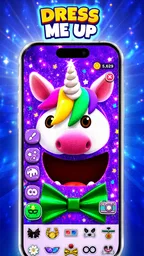
- Customization lets players give Bruno a personal look.
- Simple touch controls suit younger players.
- Short activities work well for quick play sessions.
What could be better
- Frequent care tasks may feel repetitive over time.
- Some features may require in-app purchases.
- Ads can interrupt play depending on the version.
- Progress may depend on regular visits to the game.
- Young players may need guidance with purchase prompts.







