Block World 3D: Craft & Build review
 Analysis by Appsdrops
I find Block World 3D: Craft & Build most appealing when I treat it as a relaxed place to make my own goals, rather than a tightly guided arcade challenge. It brings exploration, gathering, crafting, building, and survival together in an online sandbox, so a short session can mean scouting a spot or collecting materials, while a longer one can be spent shaping a base. That flexibility is the main reason I’d recommend it to someone who likes setting their own pace. It is also the central trade-off: players who want clear objectives and constant direction may find an open-ended world less satisfying.
What you are paying for—and what you are not
The game is free to download, and Funburstgame LTD is its developer. It has a 4.5 average from around 98,000 ratings, with over 10 million installs. Those figures suggest a well-established audience, but they don’t tell me whether its particular mix of building and survival will suit you. The useful question is whether you want a block-based world where your own plans provide much of the momentum.
There are in-app purchases, with items priced from $0.99 to $99.99. I would keep that range in mind before handing the game to a young player or starting without purchase controls in place. The price range alone does not explain what each purchase offers, whether it affects progress, or how prominently the game presents spending. I wouldn’t assume that paying is necessary—or that it is irrelevant—without checking the purchase choices in the app store and in the game itself.
The age rating is Teen, an important point for families deciding whether it fits a particular player. The game was released on May 5, 2021, and its current version is 12.1.43. It requires at least OS 7.1. These details help with basic compatibility and suitability decisions; they do not promise that every device will deliver the same feel or performance.
A sandbox that asks you to make the plan
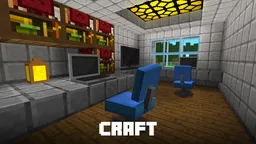
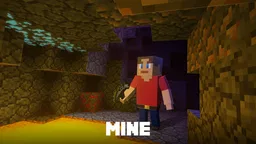
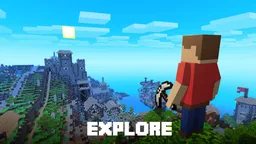
The best way I can describe its appeal is that it gives you several connected reasons to keep moving. Exploring can reveal places worth developing; gathering feeds into making things; building gives materials a longer-term purpose; and survival adds pressure to choices that might otherwise feel purely decorative. Rather than treating these as separate modes, I see them as a loop: look around, decide what would help, collect what you need, and use it to make the next stretch of play more manageable.
That loop works especially well for players who enjoy turning a loose idea into a project. I might begin with the simple intention of finding a suitable place to settle, then shift to collecting what a basic shelter needs, and later decide that the area deserves a more thoughtful layout. The game’s open structure makes those changes of plan feel natural. It also means I shouldn’t expect the experience to spell out a perfect next step whenever I finish one task.
A useful habit in any survival sandbox is to separate a session into one immediate objective and one longer-term objective. In this game, that could mean spending a short visit securing what you need for the next stretch of survival, while keeping a larger construction idea for later. That approach helps prevent a common sandbox frustration: wandering with a vague ambition, then logging off without feeling that anything came together. The game’s connected systems reward a little self-direction.
Progress without a fixed finish line
Because exploration, crafting, building, and survival all contribute to the experience, progress is less about racing through a single clearly defined track and more about making your world work better for you. That can be liberating. A player who enjoys experimenting with a base can focus on construction; someone who prefers setting out and seeing what they find can lean into exploration. I appreciate that the same broad premise can support different moods without requiring a new game.
The trade-off is that self-directed progress can feel slow or unfocused if I arrive expecting constant rewards, a detailed quest trail, or a strong story pulling me forward. I would not choose it as my first pick for a quick arcade hit built around immediate rounds and sharply defined objectives. Its arcade classification is less useful as a promise of rapid-fire action than as a broad store category; what matters in practice is the sandbox structure and the freedom it puts in the player’s hands.
When survival is part of the loop, it can change how I think about building. A structure is not just an artistic project if it also supports staying in the world; materials become decisions instead of mere decoration. My practical tip is to avoid spending every early resource on a grand design. Prioritize what helps you keep playing, then expand once you have a better sense of what your chosen area and routine demand. That is a general planning approach, not a claim about a specific recipe or feature.
Playing online and judging fairness
The game is described as an online open-world sandbox, which makes its social context relevant even for players mainly interested in making things. The word “online” does not, by itself, tell me what multiplayer activities are available, how matchmaking works, or how progress is handled across sessions. I would check those details in the game before choosing it specifically for a group of friends. If your main goal is a private, predictable building session, confirm that the available play options fit that expectation rather than relying on the broad online label.
On fairness, I can responsibly say that the game offers in-app purchases in the stated price range, but I can’t conclude from that alone whether spending affects competitive strength, access to content, convenience, or appearance. There is no sound basis here to call it pay-to-win or to promise that purchases are purely cosmetic. If fairness matters to you, especially when playing alongside others, inspect what each purchase does and whether it changes the experience you care about before buying.
That uncertainty is not a reason to assume the worst; it is a reason to make a deliberate choice. I would start free, learn what the ordinary play loop feels like, and only consider a purchase if its purpose is clear and worth the cost to me. The upper end of the listed range is substantial enough that I’d treat any high-priced option as a considered purchase, not an impulse. For a younger player, I’d also set expectations about spending before the first session.
Where it fits among block games
Compared with a conventional arcade game, this one asks for more patience and imagination. There is no reason to approach it as a sequence of short, polished challenges when its defining draw is an open world built around survival and making things. Compared with a pure creative building tool, the survival element gives resource choices more weight, while exploration gives you a reason to move beyond the space you are shaping. That blend is its particular niche.
It may be a better fit than a structured action game for someone who likes choosing their own projects, but a less satisfying choice for someone who wants a clear campaign or immediate competitive matches. Likewise, players who only want unrestricted construction may prefer a building-focused alternative if they find survival obligations distracting. The important distinction is not simply “blocks or no blocks”; it is whether you want building to sit alongside exploration and survival, rather than stand alone.
For an everyday scenario, I can imagine opening it after school or work with only a little time available. Instead of starting a huge construction project, I’d pick a nearby, manageable task: explore a small area, gather what seems useful, or make one practical improvement to a base. On a quieter day, I could return to the bigger project with a clearer plan. This makes the game easier to fit around an uneven schedule, as long as I’m comfortable supplying my own short-term goals.
What to check before settling in
There are a few sensible questions I would answer before making it a regular game. First, does the survival side make building more rewarding for you, or does it interrupt the creative flow you want? Second, are the online options appropriate for how you expect to play? Third, do the available purchases offer something you genuinely value, and are they optional for the kind of progress you want? Those questions are more useful than assuming every open-world block game handles these things the same way.
I would also check that your device meets the minimum OS requirement and that you are happy with the age rating. The minimum listed system version is 7.1, but that is a compatibility threshold, not a guarantee that every supported device will feel equally smooth. If you are choosing for a family member, combine that check with a look at the purchase controls and the game’s online context. Those are practical steps, not reasons to dismiss the game outright.
One small but useful way to judge whether it suits you is to set a modest first-session test: can you find a reason to explore, make a useful item, and decide what you want to build next? If that sequence feels satisfying, the open-ended structure is probably doing its job for you. If you finish that session wanting clearer instructions or a more directed reward path, the same freedom may become a drawback rather than a strength.
My verdict: a good fit for self-directed builders
I’d recommend Block World 3D: Craft & Build to players who like making their own plans and enjoy the connection between exploring, collecting, crafting, constructing, and surviving. Its appeal is not a single spectacular feature; it is the way those activities give a player room to turn a vague idea into a personal project. The large audience and strong average rating make it worth considering, but they should be a starting point for your own judgment, not a substitute for it.
I’d skip it if I wanted a tightly directed arcade experience, a guaranteed private building space, or confirmed purchase fairness without inspecting the options myself. I’d also hesitate if I disliked survival pressure or preferred a game that tells me exactly what to do next. For everyone else, the free entry point makes it reasonable to try with sensible spending boundaries. My trust verdict is measured: the purchase range is clear, but its effect on fairness is not something I’d infer from price alone. Go in for the sandbox freedom, check the details that matter to your play style, and spend only when a purchase makes sense to you.
What we like
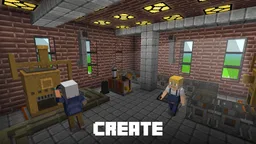
- Creative mode lets players build without resource limits.
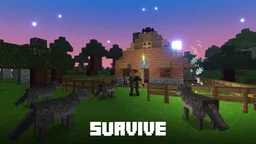
- Survival mode adds goals through gathering materials and crafting.
- Block-based controls are easy to learn on a touchscreen.
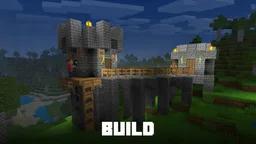
- The open world supports free exploration and building.
- A wide selection of blocks encourages varied designs.
What could be better
- The visuals may feel dated compared with newer sandbox games.
- Large builds can be tedious on a small touchscreen.
- Survival play may feel repetitive after the core crafting loop.
- The interface can take time to navigate on mobile.
- Performance may vary on older devices.







