

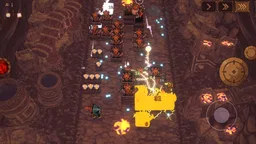
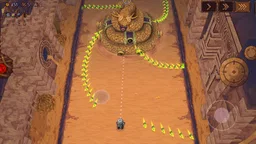
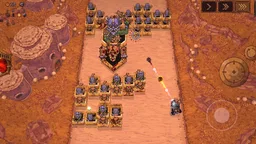
BALL x PIT review
 Analysis by Appsdrops
I’m drawn to arcade games that ask for more than a quick reflex test, and BALL x PIT caught my attention because its bouncing-ball action is tied to fusing balls, building a base, and surviving roguelite runs. That mix gives each attempt a longer arc than a straightforward brick-breaker: you’re not only aiming at targets, but also weighing how the choices in a run might support your next attempt. I find that a promising fit for players who enjoy action with a layer of planning, though it may be less satisfying if all you want is a simple, predictable arcade score chase.
Getting comfortable with the loop
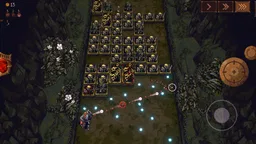
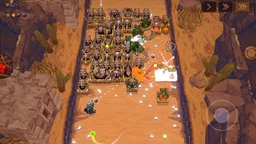
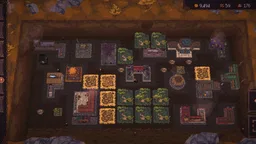
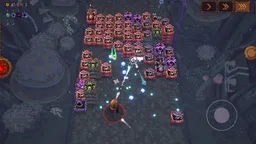
The game comes from DevolverDigital and is an arcade game, but its survival and base-building elements make the label only a starting point. A useful way to approach it is to treat a run as a sequence of decisions rather than a test of aim alone. The brick-breaking action is the immediate draw; ball fusion and base development give you reasons to think beyond the next shot.
That combination can also be where a new player gets stuck. When a game puts several systems in the same loop, it is tempting to chase every option at once. I’d resist that at first. Pay attention to what the current run seems to reward, and make choices that support a clear direction instead of trying to build a perfect all-purpose setup. That makes it easier to understand why a run succeeds or falters.
The core appeal is the tension between immediate and longer-term priorities. A shot has an obvious, near-term purpose, while the broader survival and building elements invite you to consider what will matter later. I like that kind of trade-off, but it also means the game is not necessarily ideal for someone who wants every session to be effortless background play. If you’re in the mood to make small decisions and adapt, the layered structure should feel engaging; if you want an uncomplicated reflex game, a traditional brick-breaker may suit you better.
Why a run can feel harder than expected
In a brick-breaker, it’s easy to assume that better aim alone will solve every problem. Here, that mindset may leave you overlooking the other parts of the experience. The game is also about combining balls and developing a base, so progress is shaped by more than what happens on the immediate playfield. If you hit a rough patch, it’s worth considering whether your choices are working together, rather than treating each difficult moment as a pure aiming failure.
A practical tip is to change one part of your approach at a time. If you experiment with a different fusion choice and a different base-building priority in the same attempt, it becomes difficult to tell which change helped. Keeping one familiar element in place gives you a clearer comparison. That’s a small habit, but it can turn a frustrating run into useful feedback.
Another trade-off is variety versus consistency. A roguelite structure encourages experimentation, while survival rewards choices that hold up under pressure. I’d use early attempts to learn what kinds of combinations feel comfortable, then become more deliberate once you have a preference. There’s little value in copying a strategy that looks clever if it makes your own moment-to-moment play harder to follow.
Before you install
On Android, the minimum requirement is version 6.0, so I’d check the operating-system version before downloading rather than discovering a compatibility problem at the last moment. The current version is 1.308. If an install or launch goes wrong, first check that the device has enough free storage, that the download has completed, and that the operating system meets the requirement. Those basic checks are more useful than immediately assuming the game itself is broken.
The game is free to download, with optional in-app purchases priced from $6.99 to $14.99 per item. I’d go in with a simple spending rule: try the core game first, then decide whether any purchase is worth it to you. The existence of purchases doesn’t tell me whether someone needs them to enjoy a run, so I wouldn’t treat spending as a necessary part of getting started. If you’re managing purchases on a shared device, it’s sensible to review the device’s usual purchase controls before handing it to someone else.
Its Teen content rating is another useful setup check for families. I’d look at that rating before installing for a younger player and make the decision based on the person who’ll actually play, rather than assuming that an arcade presentation automatically makes a game suitable for every age. The rating is a practical signal, not a substitute for a parent’s own judgement.
For storage, connection, and download problems, I’d keep troubleshooting modest: confirm the device is online if the store download is still in progress, close and reopen the store if its download appears stuck, and restart the device if the game won’t launch after installation. These are general checks, not special fixes for this game. I’d avoid repeatedly reinstalling before checking the simpler causes, especially if the device has little spare space.
Recovering your rhythm after a bad run
A run ending badly can make it tempting to restart immediately and repeat the same choices. I’d pause long enough to identify one concrete cause: did I struggle with the action itself, make a combination that didn’t suit my approach, or fail to give enough thought to the broader survival and building decisions? That short review helps you choose a useful adjustment instead of making several changes in frustration.
For example, if your shots feel unreliable, focus your next attempt on reading the playfield and making deliberate shots before experimenting with a new fusion direction. If the action feels manageable but the larger run still comes apart, pay closer attention to how your choices connect to survival and base growth. That separation is one of the more valuable ways to learn the game: it stops you from blaming aim for a problem that may come from planning, or vice versa.
I’d also avoid treating a restart as wasted time. In a roguelite, an attempt can teach you which decisions are comfortable and which ones make the rest of the run harder to manage. The important thing is to carry forward a specific lesson. “I’ll prioritize a clearer plan this time” is more actionable than “I need to do better,” and it gives you a fair way to judge whether your next attempt improved.
If progress seems interrupted or the game behaves unexpectedly, first distinguish between a gameplay setback and a technical issue. A difficult run is not by itself evidence that anything failed. For a genuine launch or download problem, the basic checks—connection, available storage, a completed install, and a restart—are sensible first steps. I wouldn’t assume a particular recovery feature or account workflow; instead, check what the game and your device actually show before taking further action.
When the device, not the game, is the issue
Performance and installation problems can have causes outside the game. An older operating system, low free space, an interrupted download, or a temporary store issue can all get in the way before you reach the play itself. Checking those points first saves time and avoids changing settings unnecessarily. If other apps are also having trouble, that’s another reason to investigate the device or connection before blaming this title.
There’s also a difference between a game feeling demanding and a device malfunctioning. The layered decisions can make a run mentally busy, particularly if you’re trying to learn the ball-fusing and base-building sides at the same time. That is a question of fit, not a technical fault. I’d give yourself a few attempts with a consistent approach before deciding whether the game’s mix of action and planning is for you.
On the other hand, if the game repeatedly fails to open after a clean installation and the device meets the minimum operating-system requirement, it’s reasonable to consult the support options available through the app store or device maker. I’d describe the issue plainly and include what you already checked. That’s more productive than repeatedly trying random changes, and it keeps the troubleshooting focused on what can actually be observed.
Who will enjoy the trade-offs
I’d recommend it to players who like arcade action but want choices that reach beyond a single volley. The combination of brick-breaking, fusing balls, survival, and base development gives you several angles to consider, which can make a familiar genre feel more involved. It’s also a good candidate for someone who enjoys learning through repeated attempts and adjusting a plan as they go.
I’d be more cautious if you prefer a pure score attack, dislike restarting after a run ends, or find layered systems distracting when you’re trying to relax. In those cases, a conventional brick-breaker—with its emphasis on immediate aiming and fewer strategic concerns—may be a better match. Likewise, if you want a game that asks nothing of you beyond quick reactions, the survival and building elements may feel like extra mental work rather than a benefit.
Its audience response is encouraging: the game has a 4.7 average from around 15 thousand ratings, and it has been installed over a million times. I take that as a sign of broad interest, not a guarantee that every player will enjoy its particular blend. A strong rating can’t tell you whether you personally want a roguelite layer wrapped around arcade play, so the more useful question is whether that combination sounds appealing to you.
My practical verdict
For a free game, BALL x PIT is an appealing choice when I want an arcade session with decisions to think about between shots. DevolverDigital has put the focus on more than breaking targets: the game asks me to consider ball combinations, survival, and the growth of a base as parts of one broader run. That extra structure is its best quality, and it is also the main reason it won’t suit everyone.
I’d install it on a compatible Android device if I were curious about arcade games that borrow the repeat-and-adapt rhythm of roguelites. Before starting, I’d confirm the operating-system requirement, check storage, and remember that optional purchases are separate from the free download. During play, I’d make one strategic change at a time and use a failed run to learn something specific. Those habits won’t remove the challenge, but they can make the game easier to understand and more rewarding to return to.
Released on March 11, 2026, it is still a focused recommendation rather than a universal one: choose it for the mix of bouncing-ball action and longer-term planning, not simply because it carries an arcade label. If you enjoy experimenting and can accept that a run may not go your way, I think it’s worth a try. If you want a straightforward, low-commitment brick-breaker, I’d pick a simpler alternative instead.
What we like
- Distinct weapon combinations make each run feel different.
- The compact runs suit short play sessions.
- Unlockable characters add variety to the combat style.
- Enemy waves reward careful positioning and timing.
- The pixel art gives the arena a clear visual identity.
What could be better
- Busy effects can make crowded fights harder to read.
- Random upgrades may not match your preferred strategy.
- Runs can feel repetitive after many attempts.
- Progress depends on replaying earlier stages.
- The fast combat may be challenging for casual players.







