

Airport Empire - Idle Tycoon review
 Analysis by Appsdrops
I like airport management games most when they make a busy place feel understandable rather than turning every decision into a spreadsheet. Airport Empire - Idle Tycoon aims for that approachable middle ground: it is a free simulation game about building an airport business, with idle progression intended to let the operation keep moving between visits. My first impression is of a game built for short check-ins, not a demanding, minute-by-minute management shift. That makes it easy to try, though players looking for intricate airline logistics may find the lighter approach limiting.
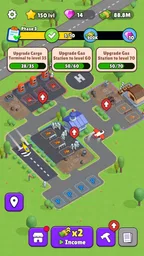
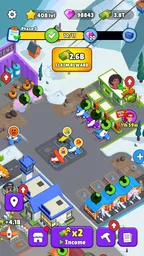
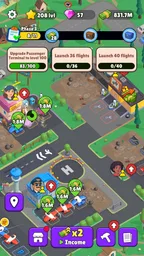
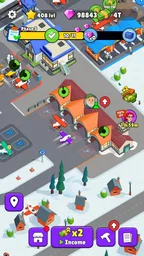
A small airport with a clear visual language
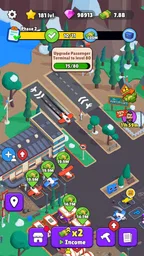
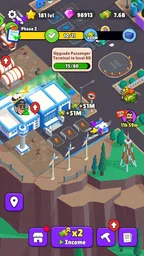
The airport setting gives the management loop an immediate sense of purpose. Rather than running a generic shop or factory, I’m thinking about an operation where airlines, passengers, and business growth belong together. The name promises an empire, but the appeal is in watching a manageable airport develop over time, one decision and return visit at a time. HYPERCELL is the developer, and the game’s identity is straightforward: make the airport feel like a business I can steadily expand.
That clarity matters in an idle game. A screen full of tiny systems can make progress feel abstract, but an airport is easy to read as a place: activity should support growth, and growth should make the operation feel more substantial. I find that setting a useful backdrop for casual play because it gives upgrades a theme without requiring me to learn real-world aviation procedures. The trade-off is that anyone hoping for a detailed airport-management simulation should keep expectations measured; the premise is more approachable than technical.
The game’s overall mood is geared toward accessible progress. It is rated Everyone, so it is a natural candidate for players who want a low-pressure management game rather than a tense challenge. That does not mean every player will enjoy the pace. If you like making several consequential choices in a single sitting, idle progression can feel too hands-off. If you prefer checking in, making a few decisions, and leaving the operation to build, the format makes more sense.
Why the airport theme works for short sessions
A useful way to approach the game is to treat each visit as a brief management round. Before spending, look at what seems to be holding back the business, then focus on the next improvement that addresses that pressure. This is more satisfying than tapping upgrades simply because they are available: it gives a short session a purpose and makes the airport’s growth feel connected to a decision I made.
That habit is especially handy in an idle game, where it is tempting to collect progress and immediately spend everything. I’d pause long enough to compare the options on screen, decide what would help the operation most, and then let it run again. The game’s broad airport-business framing supports that kind of simple planning. It is a practical rhythm for a commute break or a few minutes between other tasks, rather than a reason to keep the phone open all afternoon.
Sound, pacing, and the feeling of progress
The strongest mood choice here is the contrast between an active airport setting and an idle structure. Airports suggest constant movement, but the player’s role is to make decisions at intervals rather than supervise every moment. That contrast can be pleasant: I can think of the business as carrying on while I’m away, then return to consider its next step. It also creates the game’s main pacing limitation. The most engaging part is likely to be deciding what to do next; waiting for progress itself is not the same as actively solving a management problem.
I would judge the sound and presentation by whether they make those brief visits feel inviting without distracting from the choices. For this kind of game, a coherent atmosphere matters more than a dramatic soundtrack: the airport setting should support the sense of ongoing activity, while the interface needs to keep the management loop legible. I would not pick it primarily for audio or visual spectacle. Its appeal is the combination of a recognizable setting and an easy-to-return-to pace, not a promise of a complex audiovisual simulation.
For a realistic everyday use case, imagine opening the game during a short break, checking how the business has progressed, choosing a sensible next investment, and closing it again. That is where the idle format can fit neatly into a routine. It is less suited to a long session if you expect a steady stream of fresh tactical decisions. If you have only a few minutes, the loop has a clear purpose; if you want sustained hands-on play, the pauses between meaningful actions may stand out.
Progression choices without turning it into a spreadsheet
The most useful decision-making tip is to avoid treating every upgrade as equally urgent. In a business-building game, a visible improvement can be tempting even when it does not address the current bottleneck. I would first identify what is slowing the airport’s growth, then spend toward that need rather than spreading resources across unrelated options. This keeps the loop deliberate and helps prevent the familiar idle-game feeling of tapping through upgrades without understanding why the business is improving.
A second practical point is to decide how often you actually want to check in before committing to a strategy. Idle games reward returning, but a casual player does not need to turn that into a rigid schedule. A few purposeful visits are a better fit than repeatedly opening the app just to see whether something has changed. If you enjoy setting a goal and letting time pass, that pacing is part of the appeal. If you want immediate control over every aircraft or passenger flow, this is probably not the right style of game.
There is also a useful distinction between “airport” as a theme and airport management as a specialist simulation. This title is framed around managing airlines and growing a business, not around making the player master detailed real-world operations. That makes it easier to enter, but it also sets a ceiling on the kind of depth simulation fans may want. Compared with management games that demand constant staffing, routing, or crisis decisions, an idle tycoon is more convenient and less demanding, but typically gives up some hands-on control.
Who will enjoy it, and who may want another kind of game
I’d recommend it to someone who likes incremental business games, enjoys seeing a themed operation develop, and wants progress that can fit around a busy day. The airport premise gives the routine a distinct identity, while the idle structure makes it approachable for people who do not want to dedicate a long uninterrupted session. With an average rating of 4.5 from around 35,000 ratings and over a million installs, it has attracted a substantial audience, though those figures cannot predict whether its particular pace will suit you.
I would steer away from it if your main attraction is deep airline planning, realistic terminal operations, or constant strategic pressure. A more hands-on simulation is a better choice when you want to actively manage systems throughout a session. I’d also think twice if you dislike progression that depends on returning over time: the idle format is central to the premise, not a small side feature. The game is free to start, but it includes in-app purchases ranging from $0.99 to $49.99 per item, so I would treat optional spending cautiously and decide in advance whether you are comfortable buying convenience or extra progress.
For device context, the current version is 1.7.0 and the minimum operating-system requirement is version 7.0. It was released on October 2, 2025. Those details make it easier to check basic compatibility, but the more important question is whether you want a light airport business loop or a more involved simulator. The free entry point makes trying the former straightforward, while the purchase range is a reason to keep a clear budget if you continue playing.
A measured verdict on the airport atmosphere
What I like about Airport Empire - Idle Tycoon is the match between its recognizable setting and its low-pressure structure. The airport gives the business a coherent identity, and the idle rhythm suits quick visits better than prolonged micromanagement. My advice is to play with a small goal in mind, such as choosing the next improvement that best supports growth, then leave the game alone until you genuinely want another check-in. That makes the pacing feel intentional rather than like a demand for constant attention.
Its main limitation is also its clearest design choice: a game built around idle progress will not satisfy everyone who sees “airport simulator” and expects detailed operational control. I find it most appealing as a casual tycoon, not as a substitute for a deep aviation-management game. If that distinction sounds right for you, it is an easy one to sample. If you want a steady stream of complex decisions, look for a more actively managed simulation instead.
Overall, HYPERCELL has a setting with enough personality to make routine business growth feel more specific than a generic idle loop. The game is best approached as a relaxed, repeatable check-in, with the airport atmosphere supporting rather than overshadowing its management choices. I’d give it a try if you enjoy gradual progress and can be content with a lighter touch; I’d skip it if you need detailed systems and continuous control to stay engaged.
What we like
- Idle progression lets the airport earn money while you are away.
- Simple controls make airport management easy to pick up.
- Upgrades provide clear goals as the airport expands.
- Short play sessions suit casual mobile gaming.
- The tycoon theme offers a change from standard city builders.
What could be better
- Progress can slow considerably without frequent upgrades.
- Waiting for earnings may make gameplay feel repetitive.
- Some upgrades may require substantial in-game currency.
- Ads or purchases may affect the pace of progression.
- The idle format offers limited direct control over airport operations.







