
1945 Air Force: Plane Shooter review
 Analysis by Appsdrops
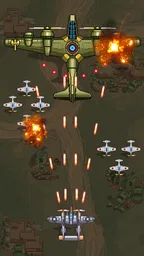
The first thing I’d tell a friend about 1945 Air Force: Plane Shooter is that it is built around a clear, old-school arcade pleasure: take control of a fighter, keep moving, and shoot through waves of aircraft. It is an easy idea to understand, which makes the game approachable when you want a quick action session rather than a long tutorial or a complicated simulation. My first useful goal would be modest: get comfortable steering while keeping my attention on what is directly ahead.
That simplicity is also the main trade-off. This is a vertical-scrolling arcade shooter, not a realistic flight game. If you enjoy dodging and attacking in compact bursts, its focus is appealing. If you want free-roaming skies, detailed cockpit controls, or a slower tactical experience, I would look elsewhere. Developed by 1SOFT, it sits firmly in the pick-up-and-play side of mobile arcade games.
What to expect from a classic arcade approach
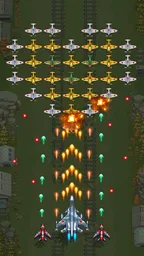
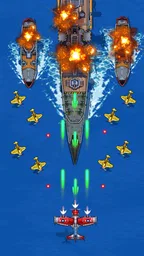
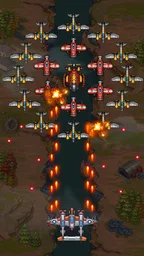
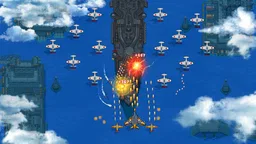
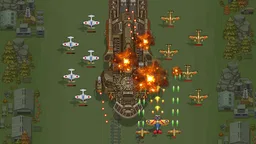
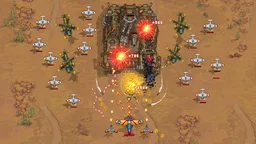
The game’s premise puts you in the role of a pilot facing enemy aircraft, with shooting and survival at the heart of play. That direct loop is useful for first-time players: you do not need to learn a long chain of systems before you can understand what a successful run feels like. The challenge is in responding to incoming threats and staying composed as the screen fills with action, rather than in mastering realistic aircraft procedures.
Its arcade format makes it particularly suitable for short breaks. I can imagine opening it while waiting for a meal or taking a quick pause between errands, playing a focused stretch, then putting my phone away without needing to remember a complicated story thread. The game is free to download, and its broad reach—over 100 million installs, alongside an average rating of 4.8 from around 4.3 million ratings—suggests that this straightforward style has found a large audience. Those figures are useful context, but they do not guarantee that its pace will suit every player.
One practical expectation to set is that “plane shooter” does not mean a hands-off experience. The screen may be busy, and you need to keep watching the action rather than simply holding a button and waiting for a result. I would approach early attempts as practice in reading movement: notice where hazards appear, avoid making unnecessary corrections, and give yourself room to react. That mindset is more helpful than expecting to clear every encounter on the first try.
The age rating is Everyone 10+, and the game is categorized as arcade. It was released on March 5, 2019, and requires Android 7.0 or later. Those details make it easier to judge basic compatibility before installing, though the most important question for an individual player is still whether fast, screen-focused action sounds enjoyable. On iOS, check the app store’s compatibility details for your device before downloading.
Start with control, not a perfect run
When I first open a shooter like this, I resist the urge to treat the opening session as a test of skill. Instead, I use it to learn how the plane responds to my input and how much attention dodging demands. Keep your thumb movements deliberate. If you constantly sweep across the screen, you may lose track of the aircraft’s position and make it harder to respond to a threat. Small, purposeful adjustments are a better starting habit.
I also recommend playing the first session somewhere you can give the screen your full attention. A noisy commute or a moment when you keep glancing away can make a visually busy shooter feel unfair, even when the real issue is divided focus. For a first attempt, a quiet five-minute break at home is a more forgiving test. You can learn the basic rhythm, stop when you want, and decide whether the action feels satisfying rather than stressful.
There is no need to make a purchase before deciding whether the core play works for you. The game is free, while in-app purchases range from $0.99 to $199.99 per item. I’d treat those purchases as optional and first see how far the basic experience holds your interest. If you do consider spending, check the exact item and price shown in the app before confirming anything, and use your device’s purchase controls if you share it with a child.
Your first meaningful success is staying in control
For a newcomer, a “good run” should not mean reaching a particular stage or beating every enemy. A more useful first milestone is finishing a stretch of play while maintaining control: keep the aircraft where you intend, notice incoming danger early enough to respond, and avoid panicked movements. That gives you a repeatable skill to build on. Once this feels natural, you can focus more on attacking rather than spending all your attention on steering.
A concrete way to practice is to divide your attention into two jobs. First, keep track of your plane and the space around it. Then, when there is a safe moment, focus on attacking. Trying to watch every object equally can be overwhelming; prioritizing immediate threats gives the screen a clearer order. If a run ends quickly, remember what caused the trouble—late reactions, drifting into danger, or looking away—and change just one habit on the next attempt.
This is a small but important distinction from more deliberate strategy games. In a turn-based game, you can stop and weigh options. Here, hesitation can cost you room to maneuver, but frantic input is not automatically better. The satisfying middle ground is to stay alert without overcorrecting. I find that advice especially useful for players who are new to mobile shooters and assume that faster fingers alone will solve every problem.
For an everyday scenario, imagine you have a short wait before an appointment. Start one session with the goal of learning the movement, not chasing a high score. If the action clicks, use the next session to pay attention to enemy patterns and your positioning. If you are interrupted, the game’s arcade structure makes it a more natural fit for brief play than a title that expects a long uninterrupted story session. Still, I would avoid starting a run when you know you will need to look away repeatedly.
Common sources of confusion for new pilots
The first confusion is expecting the game to behave like a flight simulator. Its appeal comes from arcade action, so realism is not the standard I would use to judge it. If you want to manage instruments, navigate an open map, or learn authentic aircraft handling, this is the wrong kind of game. If you want immediate shooting action and a clear survival challenge, the simpler premise is a strength.
Another easy mistake is interpreting every difficult moment as a need to spend money. The presence of purchases does not mean a new player has to buy something to understand whether the game is enjoyable. I would first build basic control habits and decide whether repeated arcade runs are fun for me. The wide purchase range makes it particularly sensible to pause and review an item carefully instead of tapping through a purchase just because a run went badly.
It can also be tempting to judge the game from a single frustrating attempt. Mobile shooters often ask you to learn by noticing what went wrong, and the first few minutes may be more about finding a comfortable way to steer than about feeling powerful. Give yourself a fair comparison: try a few focused sessions, then ask whether you are reacting more confidently and enjoying the rhythm. If you still find the action stressful rather than entertaining, that is a good sign to choose a slower game, not a reason to force yourself to continue.
Finally, remember that popularity is not the same as personal fit. With around 49,000 written reviews and a substantial player base, there is clearly broad interest in the game, but your preferred pace matters more than a crowd’s opinion. I would recommend it to someone who likes compact arcade challenges and is happy to improve through repeated play. I would skip it if my priority were a calm experience, a strong narrative, or detailed control over a plane’s flight.
When to keep playing—and when to choose something else
Compared with many arcade alternatives, this game’s strongest case is its recognizable shoot-and-dodge structure. It gives a newcomer an easy entry point without asking them to learn the conventions of a complex role-playing game or a competitive team shooter. That makes it a sensible choice for someone who wants action with a clear central task. The trade-off is that players who need a lot of variety in the basic moment-to-moment activity may find the core loop repetitive over time.
I would keep playing if each attempt gives me something concrete to improve: steadier movement, earlier threat recognition, or more confidence handling a crowded screen. I would move on if I notice that I am repeating the same mistakes without enjoying the process, or if I want exploration and long-term narrative progression more than arcade survival. A puzzle game may be a better option when I want a gentler break; a flight simulator is more appropriate when aircraft handling itself is the attraction.
The game is best approached as a focused burst of action rather than background entertainment. Its visual demands reward looking directly at the screen, and a comfortable grip matters because small steering decisions can affect how well you respond. If touch controls feel awkward on your device, give yourself a short adjustment period before deciding; if they remain uncomfortable, there is little benefit in pushing through just because the game is popular.
A practical next step after the first run
After your first attempt, take a moment to identify one thing that felt under your control and one thing that did not. On the next run, keep the successful habit and work on only the weak point. This is more useful than changing everything at once, especially in a fast arcade game where it is easy to confuse a lucky result with genuine improvement. Over time, you can decide whether you enjoy the challenge enough to make it part of your regular short-session routine.
My recommendation is to try it if you want uncomplicated airplane-shooting action and are comfortable learning through quick attempts. Its free entry makes that trial easy, while optional purchases are a reason to be deliberate rather than a prerequisite for getting started. 1945 Air Force: Plane Shooter is not a flight sim or a story-led adventure, and it does not need to be: its value is in giving arcade fans a direct, demanding task they can pick up for a short break. If that is what you are after, start with control, celebrate a clean stretch of play, and let your own enjoyment—not the install count—decide whether to keep going.
What we like
- Aircraft upgrades give you clear goals as you progress.
- Different planes support varied combat styles.
- Short missions suit quick play sessions.
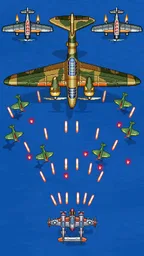
- Boss encounters add variety to standard stages.
- Offline play lets you enjoy missions without a connection.
What could be better
- Repeated enemy waves can make later stages feel repetitive.
- Upgrade costs may slow progress without grinding.
- Some missions can feel difficult without stronger aircraft.
- Frequent action may overwhelm players seeking relaxed gameplay.
- Ads and in-app purchases may interrupt the experience.







