






1 2 3 4 Player Games - Offline review
 Analysis by Appsdrops
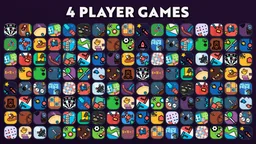
When friends are together and everyone wants a quick game, a phone can turn into a surprisingly handy shared console. 1 2 3 4 Player Games - Offline is built around that idea: it brings multiplayer games to one device, with options for two, three, or four players. I like the simplicity of the pitch. Instead of needing everyone to install a separate game or bring another screen, the group can gather around one phone and play.
A straightforward party-game idea
The game sits in the arcade space, where quick rounds and easy-to-grasp play are a natural fit. Its central appeal is not a sprawling campaign or a complicated competitive ladder; it is the chance to start a shared game with friends. That makes it easy to imagine using during a break, at a casual get-together, or whenever a group needs a low-effort way to settle who wins the next round.
The title says what matters most: the experience is designed for one, two, three, or four players. That flexibility gives it a useful place in a group’s collection, since the number of people playing can change from one occasion to another. I find that practical focus more appealing than a game that only works well with a fixed group size.
JindoBlu is the developer, and the game is free to play. It is rated for Everyone, which suits the broad, social framing. The store description also presents it as an offline game, making the idea of picking it up for a shared session especially clear: the emphasis is on playing together on the same device rather than coordinating a room full of separate screens.
What the current release tells players
The current version is 3.4.1, and the game was released on December 14, 2022. Those details give players a clear snapshot of its present release without turning the review into a promise about what might come next. The game has also built a substantial audience: it has over 100 million installs, with a 4.6 average from around 179,000 ratings. That reception suggests the one-device party-game concept has found plenty of people looking for accessible shared play.
For someone considering a download today, the important point is that this is an established arcade game rather than a brand-new experiment. Its current version provides the relevant marker for the release people can find now, while its audience indicates that the concept has continued to attract players. Those facts are useful context, but they do not tell you exactly how any particular session will feel; the appeal still depends on whether your group enjoys quick, face-to-face competition.
How the format works for a group
One-device multiplayer changes the social rhythm of a game. Everyone is physically close, the screen becomes a shared focus, and players can react to one another in real time. That setup can make even a short match feel lively because the fun comes from both playing and watching. In my view, that is the best reason to consider this title: it aims to make the phone part of the gathering rather than pull each person away into an individual screen.
The player-count range also makes the concept adaptable. Two people can make a quick head-to-head contest, while a larger group can join when the occasion calls for it. It is a small but meaningful design choice: a party game is more useful when it can accommodate the people who happen to be present, instead of requiring a particular number before it becomes enjoyable.
There is a trade-off, of course. Sharing one device means the group’s comfort and attention are part of the experience. People need to be able to see the screen and take turns or play together in a way that suits the game. That is not a flaw unique to this release; it is simply the nature of local multiplayer. If your friends prefer separate devices or longer solo sessions, the central premise may be less compelling.
Evolution and what it means for returning players
The version number gives returning players a straightforward way to distinguish the current release from earlier ones. Beyond that, it is best to keep expectations grounded: a version label by itself does not explain which mechanics or content changed along the way. I would treat 3.4.1 as a current-release reference, not as proof of a particular feature overhaul.
That distinction matters for existing users. A returning player can see that the game has a later numbered version available, but should judge the experience by what appears in the game itself rather than assuming a specific change from the number alone. New players, meanwhile, can approach it as the current edition of an established shared-play concept, without needing to know its full release history to understand the main attraction.
The game’s scale is another part of its evolution story. More than 100 million installs and roughly 1,900 written reviews indicate broad reach, while its rating reflects a generally positive reception among people who have scored it. These figures help explain why it remains visible to players searching for offline multiplayer games or a casual party game for friends. They do not guarantee that every group will enjoy it, but they show that the format has proved appealing to a large audience.
Who is likely to enjoy it?
I would point this game toward people who want a shared activity with minimal setup. It is a natural match for friends who are already in the same place and are happy to pass one phone around or gather around its screen. Families and casual players may also appreciate that the game is rated for Everyone, though the best measure of suitability is always whether the people playing are comfortable with the specific experience on screen.
It is also a reasonable option for anyone searching for 1 2 3 4 Player Games because the title and store summary make the player-count idea unmistakable. If you are specifically seeking a deep single-player adventure, a competitive online environment, or a game built around a long progression system, this is not the pitch that stands out here. Its appeal is much more immediate: get people together, choose a shared activity, and enjoy a short burst of arcade-style competition.
Compatibility is worth checking before installing. The game requires Android 6.0 or later, so devices running an older Android version will not meet the stated minimum. That is a practical detail for groups planning to use an older spare phone as their shared screen. The game is free, which lowers the initial barrier to trying it, and players can decide for themselves whether its format fits their gatherings.
Where expectations should stay modest
The core idea is easy to understand, but a simple premise does not automatically suit every player. Some people prefer games with a single-player challenge or a more elaborate sense of progression. Others may find that the shared-screen format works best only when the group is in the right mood. I would think of this as a convenient social option rather than an all-purpose replacement for every kind of arcade game.
It is also sensible not to infer specific gameplay details from the broad player-count description alone. The clearest promise is that the game offers multiplayer play on one device for groups of different sizes. Players should approach it for that overall experience, rather than expecting a particular collection of modes or mechanics based only on the title. Keeping that expectation in check makes the game’s strengths easier to appreciate.
For the same reason, version history should be treated carefully. The current release is identifiable, but the release date and version number do not by themselves reveal the exact changes made between updates. If you already play, explore the current build and see how it fits your group now. If you are new, focus on the shared-play concept and decide whether that sounds like fun for the people you want to play with.
What to watch as you play
For new players, the most useful test is simple: does your group enjoy gathering around one phone for a quick arcade session? If yes, the game’s main idea is already a good match. Pay attention to how comfortably everyone can participate and whether the shared format keeps the group engaged. Those are the things that will determine whether it becomes a regular choice or an occasional novelty.
For returning players, the current version number is a helpful reference point when checking the app store for updates. Beyond that, I would look at the experience itself rather than assume that future releases will add any particular feature. A healthy expectation is to welcome improvements when they arrive, while judging the game on what is available in the version you are actually playing.
Players comparing options can also weigh the basic practicalities: it is free, supports one-device multiplayer for up to four players, and targets a broad age group. Those are straightforward reasons to give it a try if your usual gaming moments happen with friends nearby. They are less persuasive if your preferred style is individual play, but that is a matter of taste rather than a problem with the game’s stated purpose.
My take
1 2 3 4 Player Games - Offline makes a clear case for itself as an easy-to-understand shared arcade option. Its best feature is the format: several people can play together on a single device, with support for groups of two, three, or four. I like that it is direct about who it is for, and the free price makes trying the idea feel low-commitment.
It will not be everyone’s first choice, because the one-screen approach is specifically social and works best when players are together. But if you want a casual way to bring friends into a quick game without handing everyone a separate device, it is a sensible pick. With a 4.6 average and a large player community, it has clearly resonated with many people who enjoy this kind of local play. I would recommend giving it a try when your group wants something simple, shared, and easy to start.
What we like
- Offers several local multiplayer options on one device.
- Works offline for convenient play without an internet connection.
- Simple controls make many games easy to pick up.
- Suitable for quick rounds during breaks or travel.
- Can provide shared entertainment for small groups.
What could be better
- Some modes may feel repetitive after repeated play.
- A shared screen can feel crowded with four players.
- Players may need to take turns depending on the game mode.
- The collection may lack depth compared with dedicated games.
- Ads may interrupt play depending on the version.







