

Waymo review
 Analysis by Appsdrops
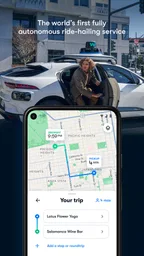
Waymo is an app built around a very specific promise: helping people get where they are going with the Waymo Driver, which the company describes as “The World’s Most Experienced Driver™.” That makes it different from a general-purpose navigation app. Its appeal is tied to Waymo’s driver service, so the central question is not simply whether the app looks useful, but whether that service fits your needs and is available where you want to travel.
What the free price does—and does not—tell you
Waymo is free to download, which makes trying the app an easy first step for anyone curious about its driver service. The listing also shows more than one million installs and an average rating of 4.9 from around 66,000 ratings, alongside roughly 5,000 written reviews. Those figures suggest strong interest and positive reception, but they do not tell you what a particular ride costs or whether the service will be useful for your trip.
It is important to separate the app’s download price from the cost of using a ride service. Free access to the app does not mean rides are free, and I would not treat the download price as a promise about fares. If cost is the deciding factor, check the fare presented for your own journey before making plans. That is the sensible way to compare a Waymo ride with other transport options available to you.
In practical terms, the free app lowers the barrier to exploring the service: you can install it without paying for the download. The actual value, though, depends on what the app lets you do in your location and the price of the journey you want. For me, that distinction is the key to judging Waymo’s value fairly. The app can be free to get while the transportation itself remains a separate purchase decision.
A service-focused navigation app
The Maps & Navigation category gives a useful starting point, but I would not confuse Waymo with a conventional map app designed primarily to provide directions for any trip. Its short description is simply “Waymo,” while its broader pitch centers on getting there with the Waymo Driver. The clearest way to understand it is as an app connected to a driver service, rather than as a replacement for every map or navigation tool.
That focused purpose can be a strength. If your interest is specifically in Waymo’s service, an app devoted to that experience has a clearer reason to exist than a crowded collection of unrelated travel features. On the other hand, people looking for a general map for walking, driving their own car, or exploring unfamiliar places should not assume this is the right fit merely because it appears in the navigation category.
I find the positioning easy to understand: Waymo asks users to consider a different kind of driver experience. The phrase “World’s Most Experienced Driver” is a confident brand promise, not a substitute for deciding whether the service suits your route, schedule, and budget. As with any transport choice, the practical test is whether it is available and convenient for the journey you actually need to make.
Where the value comes from
The potential value is less about collecting navigation tools and more about access to Waymo’s driver service. If that is the experience you want, the app’s free download gives you a straightforward place to start. If you only need directions or a broad travel planner, its central purpose may not line up with your expectations, and another app could be a more natural choice.
That means the strongest reason to install it is curiosity about, or an intention to use, Waymo itself. The app’s popularity and high average rating can be encouraging signs, but ratings cannot guarantee that every person will find the same value. A rider’s view depends on the circumstances of their own trips, including whether the service suits the destinations they care about and whether the ride price makes sense to them.
I would also avoid treating a polished brand message as proof that the app will transform every journey. A transportation app earns its place by being useful for real plans, not just by sounding futuristic. The promise is compelling, but the value remains personal: it is strongest when the service is relevant to your travel and its cost works for you.
The tradeoffs to consider
The main tradeoff is the app’s focused purpose. A user who wants a flexible, all-purpose navigation companion may find that a service-specific app does not answer every travel need. Conversely, someone who is interested in Waymo may appreciate that the app keeps attention on that service rather than trying to be a universal toolbox.
Availability and price are also important parts of the decision. A free download is convenient, but it cannot by itself tell you whether Waymo is a practical option for a particular trip. Before relying on it, consider whether the service can meet your needs and review the fare for the ride you have in mind. This is especially important when comparing transport choices, because the app’s cost and the ride’s cost are not the same thing.
Another tradeoff is expectation. The slogan about the Waymo Driver may lead some people to expect a fully hands-off, effortless experience in every situation. It is better to approach the app as an invitation to explore the service, then judge the experience through the details shown when you use it. Strong ratings offer useful context, but they should not replace your own assessment of convenience and value.
Who is likely to get the most value?
Waymo makes the most sense for people who are interested in its driver service and have a reason to consider it for their travel. The free download makes initial exploration accessible, while the high average rating and substantial number of ratings show that many users have taken the time to respond to the app. Those signals may help a curious user decide that it is worth looking into, without guaranteeing a particular result.
It may be less compelling for someone who simply wants a general-purpose map or who is choosing an app based only on the word “navigation.” In that case, the best question is whether the app’s service-oriented purpose matches the task. If your priority is broad route planning rather than using Waymo, a different navigation option may better fit what you are after.
For budget-conscious users, the distinction between free access and paid transportation deserves special attention. Installing the app costs nothing, but that alone does not establish that a ride is an affordable choice. I would compare the displayed fare with the alternatives for each journey rather than judging value from the download price or rating alone.
Compatibility and basic details
The app was released on April 20, 2021, and its current version is 26102602.1013137503-release. It requires Android 8.0 or later and carries an Everyone content rating. Waymo LLC is the developer. These details are useful if you are checking whether the app suits your device or simply want to know who publishes it.
At the same time, compatibility is only one part of whether an app is worth keeping. A supported device does not automatically make a service convenient for your plans, and a strong rating does not settle the question of ride costs. I would use these basic details as a quick eligibility check, then focus on the more personal questions: whether the service suits your trip and whether the fare is acceptable.
My verdict: install, then judge the ride
For anyone curious about Waymo, the free download makes it worth exploring. The app has a clear identity, a substantial audience, and an exceptionally strong average rating, while its core proposition is easy to grasp: getting where you need to go with the Waymo Driver. Those are good reasons to take a look if the service interests you.
My recommendation is a qualified yes rather than an unconditional endorsement. Install it if you want to investigate Waymo’s driver service, but make the ride decision separately. Check whether it works for the journey you have in mind and assess the fare before treating it as a regular option. The app’s free price is a genuine convenience; it is not evidence that transportation through the service is free or automatically the best value.
Overall, Waymo is best judged as a gateway to a specific transportation experience, not as a universal navigation solution. If that experience matches your needs, the app is easy to justify trying. If you mainly need general directions or are comparing travel costs, keep your expectations focused and decide based on the trip itself. For the right user, that makes it a worthwhile app to explore; for everyone else, its value depends on whether Waymo’s service is relevant to their everyday journeys.
What we like
- Rides can be requested through the Waymo app.
- The vehicle handles navigation without a human driver.
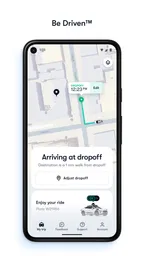
- Live trip tracking helps riders follow the route.
- In-car support is available if a ride needs assistance.
- The service offers a distinct option for short urban trips.
What could be better
- Service is limited to selected cities and coverage areas.
- Wait times can vary with demand and vehicle availability.
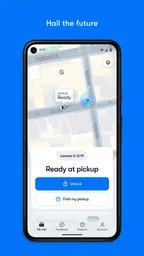
- Some trips may require walking to a pickup point.
- The app may not offer every destination within its service zone.
- Riders may find driverless travel unfamiliar at first.





