
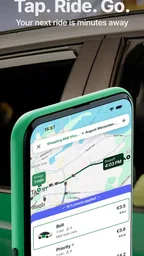

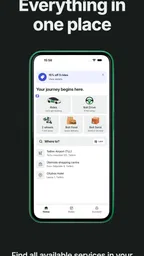
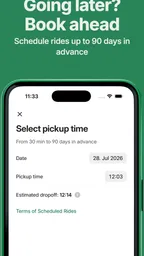

Bolt: Request a Ride review
 Analysis by Appsdrops
I think Bolt makes the most sense when a ride is a practical household task rather than a big planning exercise: one person needs to get across town, another is arranging the pickup, and everyone wants to know which car to look for. It is a ride-hailing app from Bolt Technology, in the maps and navigation category, and it is free to download. Its appeal is straightforward, but using it well still depends on setting clear expectations about who is requesting the ride, who is travelling, and how the pickup will be coordinated.
One phone, several people, one ride to arrange
For a shared-device situation, I would treat the app as a tool for the person managing a particular trip, not as a household account that everyone should casually share. If I am arranging a ride for someone else, I would confirm the passenger’s pickup point and destination before placing the request, then make sure they know the relevant vehicle and pickup details shown in the app. That small handoff matters: the person who booked the ride may not be the person standing at the curb.
This kind of arrangement can be useful when a family member is busy, a visitor does not know the area, or someone needs help getting from a familiar pickup point to a destination. It is less convenient if the person ordering and the passenger cannot communicate once the ride is underway. I would avoid assuming that a shared phone automatically makes coordination easy; the booking device, the passenger, and the person waiting at the destination may all be in different places.
In an everyday example, I might arrange a trip for a relative leaving a busy building. Before requesting, I would agree on a recognisable entrance rather than a vague address, and ask them to wait somewhere safe where a driver can reasonably stop. Then I would keep the phone used for the booking available long enough to handle any pickup confusion. The app can help with the request, but clear instructions between people do much of the work.
Keep the account and the device arrangement clear
On a phone used by more than one person, I would be deliberate about whose account is open and who is responsible for each request. A ride-hailing account is tied to actions such as requesting a trip, so casually passing a logged-in phone around can blur who made the booking and who should deal with a change. I would not treat Bolt as a general family profile or assume it has household controls; the sensible approach is to use the account holder’s own device and keep the booking responsibility explicit.
That boundary is especially useful when different people have different destinations or need to travel at different times. Rather than leaving a request half-finished for the next person, I would complete one trip at a time and check that the destination belongs to the passenger who is actually travelling. If another household member needs a ride, having them make their own request where practical is a cleaner arrangement than mixing trips under one person’s phone use.
There is also a practical privacy angle. A shared screen can expose trip information to whoever picks up the device, while a personal phone keeps the journey details with the person managing the ride. I would use a shared device only when everyone involved understands that arrangement and the phone can stay with the person coordinating. If the passenger needs to manage changes independently, their own device is usually the less confusing option.
Coordination begins before the car arrives
The pickup point is often the part of a ride that needs the most thought. In a crowded street, a large venue, or a complex building, the address alone may not distinguish the correct entrance from several nearby ones. I would agree on a specific side of the road or a recognisable landmark beforehand, and have the passenger stay there rather than walking around to search for the car. This reduces the chance of two people missing each other while each assumes the other is in the right place.
When I am arranging a ride for someone else, I would also share the important details in plain language rather than saying only, “The car is coming.” The passenger should know where to wait and which information in the app to use to identify the ride. If the booking phone is with someone else, that person should remain reachable during pickup. These are simple steps, but they are particularly valuable when the traveller is unfamiliar with the neighbourhood or has limited time.
There is a trade-off in making another person’s booking: it can save them effort, but it can also make the trip harder to manage if plans change. For that reason, I would avoid arranging a ride remotely when the passenger cannot confirm the destination or communicate about the pickup. If the traveller can use the app themselves, letting them manage the request is usually clearer. If they cannot, agree on a straightforward plan before the booking rather than trying to solve every detail at the curb.
For regular household journeys, I would not assume that the same pickup spot works equally well at every time of day. Traffic, access restrictions, and the activity around a building can make a familiar entrance awkward. A quick check of the surroundings before requesting can prevent a needless wait. Bolt is most useful here as the ride-request tool; it does not replace local judgement about whether a stopping point is safe and practical.
Age, supervision, and realistic trust
Bolt is rated for Everyone, but that content rating should not be confused with a judgement that every child can independently arrange or take a ride. I would make decisions based on the traveller’s age, confidence, local rules, and the circumstances of the journey. For a younger passenger, an adult should take responsibility for the plan and confirm who is meeting them at the other end. The app’s age label is not a substitute for supervision or a family agreement.
For an older teenager who is travelling independently, I would still establish a routine: confirm the destination, agree on where the pickup will happen, and decide how they will contact someone if the plan changes. That is not a special family feature; it is ordinary coordination around a ride. If the young person is not comfortable identifying the correct vehicle or handling a change, I would choose another arrangement rather than rely on the app alone.
Trust also means being honest about what the app can and cannot solve. A ride request gives a way to arrange transport, but passengers still need to pay attention to their surroundings and confirm that the ride they are entering matches the booking information. I would not encourage anyone to get into a car just because it is near the agreed spot. A calm, deliberate check is more useful than rushing because the driver has arrived.
Where Bolt fits beside other ways to travel
Compared with a taxi called by phone, a ride-hailing app can make the request process more convenient for someone who prefers handling the trip on a screen. Compared with public transport, it offers a direct ride rather than requiring the traveller to follow a route and timetable, though it is not automatically the best value or most dependable choice for every journey. I would compare the options in the moment: a familiar bus or train route may be simpler for a confident traveller, while a direct car may be more practical when carrying bags or travelling between places that are awkward to connect.
It is also not the right fit for every household. Someone who rarely needs rides may prefer calling a local taxi or using public transport rather than installing another app. A person who wants everyone in the family to manage trips through one shared system should not assume this app provides that kind of household arrangement. And if a journey depends on a guaranteed pickup time, I would make a backup plan instead of treating any ride-hailing request as a promise that everything will go exactly to schedule.
The scale of the app is notable: it has more than 100 million installs, around 11 million ratings, and an average rating of 4.8. Those figures suggest broad use, but they do not remove the need to check whether rides are available and suitable where you live. The service can only help with a trip when it works for the particular location and moment, so I would keep another option in mind if the journey is important.
What to expect from the app itself
Bolt was released on July 19, 2013, and its current version is CA.233.0, with Android 7.0 as the minimum operating system requirement. I would check that an older phone meets that requirement before relying on it for a trip. The app is free to download, but that does not mean each ride is free; the cost of transport is a separate consideration, and I would review the trip details before confirming a request.
Its large audience and high average rating make it easy to understand why many people keep it available for occasions when they need a ride. Still, ratings are not a substitute for checking the actual trip information on your own screen. For a household, the most useful habit is to treat every request as a fresh decision: confirm who is travelling, where they will be picked up, where they are going, and who will keep track of the booking.
A practical household choice, with clear boundaries
I would recommend Bolt to someone who wants a convenient way to request a ride and is comfortable managing the trip through an app. It is especially useful when a household member needs help arranging transport, provided the passenger and the person booking can coordinate clearly. The strongest use case is not simply “a car instead of a bus”; it is reducing the effort of organising a direct journey while keeping the pickup plan understandable to everyone involved.
I would skip it as the main solution for a household that expects shared accounts, built-in family supervision, or guaranteed arrangements for younger travellers. Those expectations need a different plan, and the app should not be asked to provide controls that have not been established. Used with sensible account boundaries, a clear pickup point, and a backup option for important journeys, it can be a handy part of everyday transport. My overall view is that Bolt is worth having for occasional or regular ride requests, but good coordination—not the app by itself—is what makes shared household trips work smoothly.
What we like
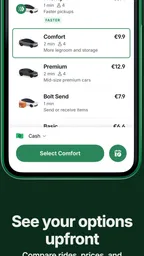
- Upfront fare estimates help you compare ride options before booking.
- Live driver tracking makes pickups easier to follow.
- Trip sharing lets trusted contacts monitor your journey.
- Multiple vehicle categories suit different group sizes and budgets.
- In-app payments reduce the need to carry cash.
What could be better
- Ride availability can vary significantly by location and time.
- Surge pricing may raise fares during busy periods.
- Pickup estimates can change with traffic or driver delays.
- Cancellation fees may apply after a driver accepts the request.
- Some features and payment methods differ by country.





