


inDrive. Rides with fair fares review
 Analysis by Appsdrops
I would look at inDrive differently from a typical map-first navigation app. Its central appeal is arranging a ride on terms that feel fair to both sides, rather than simply following a fare set without your input. That makes it worth considering if you often need a car ride and want a say in what you offer. It is less of an obvious pick if your main need is turn-by-turn directions or a predictable, hands-off booking process.
What to decide before you install
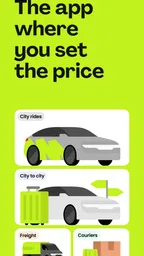
Start with the kind of trip you take most. If you drive yourself and need help finding a route, a dedicated navigation app is the more direct fit. If you want someone else to make the trip, inDrive belongs in the ride-hailing conversation: it is a free Maps & Navigation app from ® SUOL INNOVATIONS LTD, built around finding a ride at a price you propose or consider fair.
That distinction matters in everyday use. A negotiated or offered fare gives you more agency, but it also asks you to think about the amount instead of tapping through a completely automatic checkout. If your priority is to get a car with as little decision-making as possible, that extra choice may feel like friction. If you dislike being shown one take-it-or-leave-it amount, it can be the reason to try the app.
Before relying on it for a particular journey, check that the service is available where you are and that the app can cover the trip you have in mind. Availability and practical coverage are local questions; an app’s popularity does not guarantee the same experience in every neighborhood. I would make a first booking when I have a little flexibility, rather than testing a new option for the first time when I am already late.
There is broad evidence that many people have found it useful: inDrive has a 4.8 average rating from around 17 million ratings, and more than 100 million installs. Those figures suggest it is well established, but they cannot tell you whether a car will be easy to arrange on your particular route at your particular time. Treat them as reassurance about its reach, not as a promise about an individual trip.
What the fare choice changes
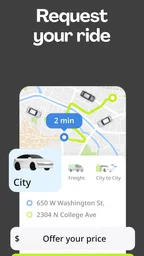
When price is part of the conversation, your offer is not just a number; it is a decision about convenience and flexibility. For a routine trip, I would think about what feels reasonable before opening the app, then avoid making a rushed offer simply because I want the first available car. A fare that works for one journey may not make sense for another, so the useful habit is to judge each trip on its own rather than assume there is one universally right amount.
This approach can be especially helpful when you already have a rough sense of what a trip is worth to you. It can also be awkward if you have no idea what to offer and want the app to do all the comparison work. In that case, take a moment to consider the distance, the time pressure, and how important it is to leave immediately. The point is not to guess with false precision; it is to make an informed choice instead of treating the first figure as automatically fair.
Where inDrive has a useful edge
The strongest reason to choose inDrive is the role it gives the passenger in setting the tone of the transaction. Many familiar ride-hailing alternatives center on accepting a fare presented in the booking flow. Here, the idea of proposing a price makes the interaction feel more negotiable. That can suit someone who wants a little control over what a ride costs, especially when comparing the value of a quick pickup with the value of saving money.
A practical example: imagine you are leaving a regular appointment and are not in a hurry. You can decide what you are comfortable offering, see how the arrangement develops, and choose whether the result works for you. That is a different mindset from tapping a single button and treating the quoted amount as final. If the trip is optional or you can wait, the extra involvement may be worthwhile.
Another useful workflow is to separate the price decision from the urgency decision. Before you request a ride, ask yourself whether you need to leave now or can allow time for the process. If you have room to wait, you can be more deliberate about your offer. If you have a tight appointment, convenience may matter more than negotiating. Recognizing that trade-off in advance helps prevent the app’s defining choice from becoming a last-minute source of stress.
It may also work well for people who take similar trips often. After a few experiences, you can build your own sense of what feels reasonable for the journeys you actually make, without assuming that every route or time should be priced the same. That personal reference point is more useful than copying someone else’s offer: your tolerance for waiting, your schedule, and the value you place on the ride are your own.
Its scale can make the app feel like a serious option rather than a niche experiment. It has been available since May 18, 2015, and its content rating is Everyone, so it is presented for a broad audience. I would still judge it by the actual ride options and booking experience in my area, not by its longevity or broad audience alone.
When another kind of app makes more sense
For a self-drive journey, a conventional navigation tool is the clearer choice. inDrive’s ride-focused proposition is not a substitute for route guidance, traffic planning, or the other functions you might expect from a dedicated map app. If you already have your own car and need directions, choose the tool built around that job instead of expecting a ride service to solve it.
For a passenger who values a simple, fixed-feeling booking above all else, a more conventional ride-hailing app may be a better match. The benefit of less negotiation is also a limitation: you give up some say over the fare, but the process may feel more straightforward. Which is better depends on whether you value control or speed of decision more on that particular day.
Public transport or walking may also be the sensible alternative for a short, familiar journey, especially if you do not need a car. A ride app is not automatically the best answer just because it is available. I would compare the convenience of a door-to-door trip with the cost and effort of the other realistic options, rather than opening inDrive by habit for every outing.
The app is less appealing when you are under pressure and do not want another decision, or when you are uncertain what price to offer and have no time to think it through. It may also be a poor fit if the service is thin in your area. In those situations, having a familiar backup matters more than insisting on one app’s pricing approach.
Making the first trip less stressful
For a first use, choose a journey where you can afford a little uncertainty. Open the app before you need to leave, think through your offer, and give yourself time to see whether the arrangement suits you. This is a small but practical way to learn how the app fits your local routine without turning a new booking method into an emergency experiment.
Keep your own priorities clear while choosing. If your biggest concern is arriving promptly, decide how much flexibility you really have before focusing on the fare. If cost matters more and the trip can wait, you can weigh the offer more carefully. That simple order—urgency first, price second—helps make the app’s central idea useful rather than distracting.
It is also worth keeping a backup plan for important appointments. That does not mean the app is unreliable; it is sensible planning whenever a trip has consequences. If you have to be somewhere at a fixed time, leave room for the possibility that your preferred arrangement may not be the one you get. For casual errands, you can be more relaxed and see whether the approach suits you.
The cost of changing your routine
Trying inDrive does not require paying for the app itself: it is free to install. The real cost of switching is time and attention. You need to learn whether the offer-based approach feels natural, what you personally consider acceptable, and whether it works for the routes you commonly take. If you already use another ride app, there is little reason to abandon it immediately; compare them on a couple of ordinary trips before deciding which deserves a place in your routine.
That side-by-side test should focus on your experience, not on a broad claim that one model always wins. Notice how much effort booking takes, whether you are comfortable choosing a fare, and whether the available arrangement suits your timing. A cheap-feeling choice is not a good deal if it makes you anxious about getting where you need to go, while a quick booking may be worth more when your schedule is tight.
There is a small learning curve in deciding how to use the flexibility. I would not treat every ride as a negotiation challenge or spend too long trying to optimize an offer. Set a reasonable limit for the time and effort you are willing to put in, then choose another option if the process no longer feels worthwhile. That keeps price control in perspective: it is a tool for making a better decision, not a guarantee that every ride will be cheaper or faster.
My recommendation
I would recommend inDrive to passengers who want more involvement in the fare decision and are comfortable trading a little simplicity for that control. It is particularly worth trying if you have flexible trips, know roughly what feels fair to you, and want an alternative to accepting a presented price without thought. Its popularity—along with around 11,000 reviews—makes it a well-known option, though local usefulness still matters more than reputation.
I would skip it as my primary choice if I needed driving directions, wanted the quickest possible one-tap routine, or had no room to wait and think about a fare. In those cases, a navigation app, a more automatic ride service, or another transport option may fit better. The fact that it is free and rated for Everyone makes trying it accessible, but neither fact changes the question that matters most: do you actually want a say in how your ride is priced?
For me, the best way to judge it is to start with one low-pressure trip, compare the experience with the alternative I already use, and keep whichever option suits that journey. inDrive is at its most compelling when its price flexibility matches your priorities; when certainty and speed matter more, choosing something simpler is a perfectly reasonable call.
What we like
- Passengers can propose a fare instead of accepting a fixed price.
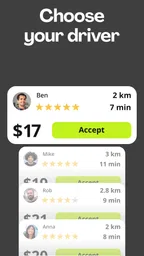
- You can compare driver offers before choosing a ride.
- Driver profiles and ratings help you make an informed choice.
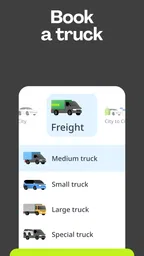
- Multiple ride categories may suit different budgets and needs.
- The app supports cashless payment in many locations.
What could be better
- Availability and ride options vary by city.
- A proposed fare may be declined by nearby drivers.
- Finding a driver can take longer during busy periods.
- Some areas may have limited payment methods.
- Fare negotiations may feel less convenient than fixed pricing.





