

Uber Eats: Food and Grocery review
 Analysis by Appsdrops
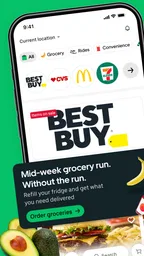
I think the most useful way to understand Uber Eats is as a flexible ordering app, not simply a digital takeaway menu. Its central strength is bringing prepared food, groceries, and everyday essentials into one place, with the option to request an Uber ride as well. That range can make it handy when plans change: I might open it intending to order dinner, then use the same app later when I realize I need a few household items.
That convenience is real, but it has a trade-off. One app can simplify the search, yet it does not guarantee that every nearby shop is available, every item is in stock, or every order is the best value. I would use it as a practical way to compare and place orders, while still checking the final basket and delivery details before committing.
One place for several kinds of errands
Uber Eats is a Food & Drink app developed by Uber Technologies, Inc. Its broader appeal comes from treating a meal and a small essentials run as related needs rather than forcing me to switch between separate services. In day-to-day use, that can be useful when I am short on time or would rather make one decision inside a familiar app than start searching from scratch elsewhere.
The app is free to install and is rated for Everyone. Its average rating is 4.6, from around eight million ratings, and it has been installed over 100 million times. Those figures suggest that it has become a familiar option for a large audience, though popularity alone does not tell me whether a particular restaurant or store will suit my needs.
The key capability is the breadth of ordering choices. For someone who already thinks of Uber as a way to arrange transport, being able to request a ride from the same app can make it feel like a broader local-services tool. I would not assume that every function is equally useful in every location, but the combination is a meaningful convenience when it is available.
Why combining food and essentials matters
Food delivery apps often work best when I know exactly what I want from a restaurant. Grocery and essentials ordering solves a different problem: filling a gap without turning it into a full shopping trip. Bringing both into one app gives me a choice between a finished meal and ingredients or household basics, depending on what the evening requires.
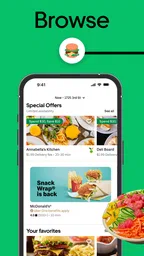
The benefit is less about novelty than reducing small bits of friction. I can check restaurant options when I want dinner made for me, or browse essentials when I have run out of something. That distinction helps me decide whether delivery is worth using at all. If I only need one item and a nearby shop is easy to reach, going in person may be simpler; if I am already staying home, the app can be a reasonable alternative.
How I would use it without rushing the order
I would begin by deciding what problem I am solving: a ready-to-eat meal, a handful of groceries, or a household essential. That sounds obvious, but it keeps browsing from becoming aimless. Once I have a goal, I can compare relevant options rather than being distracted by a broad selection that may not fit the occasion.
For a food order, I would check the menu carefully and make sure the basket reflects the meal I actually want. For groceries, I would think about whether the items are flexible substitutes or things I need exactly as listed. A missing ingredient can matter much more than a missing snack, so it is worth reviewing the selection before placing an order and having a backup plan for anything essential.
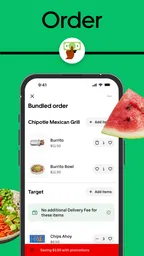
A useful habit is to compare the full order, not just the item that first caught my eye. A tempting dish or a small essentials basket may look straightforward, but the final decision should account for the complete basket and the delivery information shown in the app. This is a practical check rather than a claim that every order has the same fees or timing: what matters is reviewing the actual checkout screen for the order in front of me.
I would also avoid treating a grocery order like a restaurant order. Restaurant choices are often about taste and portion; essentials shopping is more about whether the right products are available and whether delivery is worth the effort. Keeping those expectations separate makes the app easier to use and helps prevent disappointment when a quick top-up does not behave like a carefully planned supermarket shop.
A realistic evening use case
Imagine getting home late and discovering that dinner plans have fallen apart. I could use the app to look for a prepared meal, then decide whether ordering groceries makes more sense because I have something at home to cook. If I also need a basic household item, the essentials option may save me an additional errand. The value is that I can assess these alternatives in one place rather than committing immediately to takeaway.
For this scenario, I would make the choice based on urgency and flexibility. If dinner needs to be ready with little effort, restaurant food is the obvious route. If I have time to cook and only lack one or two things, groceries might be more appropriate. If the missing item is critical and a nearby store is accessible, shopping in person could still be faster and give me certainty about what I am buying.
This is where the app’s range feels most useful: it gives me options, not a reason to order everything through delivery. I like that distinction. A good ordering tool should help me choose the convenient route when it makes sense, while leaving room to decide that a normal shop or another service is better for a specific errand.
Where the convenience has limits
The biggest trade-off is that browsing and ordering do not remove the uncertainty that comes with relying on local selection. The choices that appear useful depend on what is available to me, and grocery items can be less predictable than a restaurant menu. If I need a particular product rather than a general substitute, I would not build an important plan around an item until I have checked what is actually offered for the order.
There is also a temptation to confuse convenience with value. Delivery can save time and effort, but it may not be the economical choice for a small basket or a meal I could collect easily. I would compare the completed order with the alternative of cooking, walking to a shop, or using a specialist grocery service. The right choice depends on the moment, not on the app being available.
Another limitation is that the combined experience can encourage one-stop thinking even when separate tools might be better. A dedicated grocery service may be a stronger fit for someone planning a substantial weekly shop, while a restaurant’s own ordering channel may suit someone who wants a particular place and already knows its menu. Uber Eats is more compelling when flexibility matters more than having a single specialist focus.
I would also keep expectations grounded around the app’s multiple roles. The presence of food, essentials, and ride requests does not mean every need is handled in the same way. I would use the relevant part for the task at hand and review the details for that action rather than assuming that familiarity with one feature tells me everything about another.
Who is likely to get the most from it
I would recommend trying Uber Eats to people who value choice and regularly move between meal delivery and small essentials orders. It is especially suited to busy evenings, unexpected gaps at home, or situations where staying put matters more than visiting a store. If you already use Uber for rides, having food and essentials in the same app may also make it easier to keep everyday tasks in one familiar place.
It is less suited to someone who mainly wants the lowest-cost way to eat or shop. Cooking from what is already at home, collecting an order, or visiting a supermarket directly can be better choices when budget or exact product selection is the priority. Likewise, someone who needs a carefully planned, large grocery shop may prefer a service designed around that routine rather than treating the app as a quick convenience option.
For people who are unsure, I would start with a low-stakes order: something flexible for dinner or a few non-urgent essentials. That gives you a chance to see which options are available locally and whether the checkout details work for your situation. Once you know how it fits your routine, it is easier to decide when the added convenience is worth choosing again.
A flexible tool, best used selectively
My overall view is positive because the app’s range has a clear everyday purpose. It can connect the decision to order a meal with the separate need to replenish essentials, and it also sits alongside Uber’s ride-request function. That breadth makes it more useful than a food-only app for some routines, especially when I want to compare different ways of solving an immediate problem.
Still, I would not make it my default for every meal or shopping trip. The strongest approach is selective: use it when the saved effort matters, check the whole order before confirming, and consider collection or a specialist alternative when price, exact products, or a larger shop matters more. Its real advantage is having several practical choices in one place, not making every choice automatically convenient.
With a 4.6 average and more than 100 million installs, Uber Eats is clearly a widely used option, but my recommendation is based on the way its different ordering needs can fit together. If you want a flexible app for occasional meals and essentials, it is worth considering. If you want the cheapest route or a dedicated solution for one specific kind of shopping, another option may serve you better.
What we like
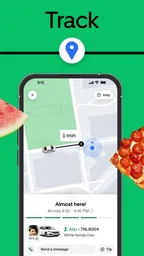
- Order tracking shows the courier’s progress in real time.
- Scheduled delivery helps you plan meals ahead.
- Restaurant ratings and reviews support informed choices.
- Group ordering makes it easier to coordinate shared meals.
- Pickup options can help avoid delivery fees.
What could be better
- Delivery fees and service charges can raise the total cost.
- Busy periods may lead to longer delivery estimates.
- Menu availability can differ from what restaurants show in person.
- Refunds for missing or incorrect items may require support contact.
- Some restaurants set minimum order amounts.





