






ReciMe: Recipes & Meal Planner review
 Analysis by Appsdrops
I like recipe apps most when they solve a small, familiar problem: I see something appetizing in a social post, but later I cannot remember where it was or how to make it. ReciMe is built around that gap. It is a free Food & Drink app from ReciMe for collecting recipes found across Instagram, TikTok, Facebook, and other places, rather than relying on a single recipe library. In my view, its main appeal is making inspiration easier to retrieve when it is time to cook.
From saved posts to a usable recipe collection
Social platforms are convenient places to discover food, but their saves are not a dependable cookbook. A saved video can disappear into a long list beside unrelated posts, and the useful details may be split between a caption, on-screen text, and spoken instructions. ReciMe’s central purpose is to turn that scattered inspiration into a more intentional recipe collection.
That distinction matters. I would not choose it primarily to browse a huge, professionally edited catalogue or to learn cooking from scratch. I would choose it if I already encounter recipes while scrolling and want a better way to keep track of the ones I may actually make. The app’s value depends less on how many recipes I can collect than on whether I can find the right one again without reopening several social apps.
The current release is version 6.0.4, and the app has been available since May 1, 2023. Those details give a useful snapshot of a product that has had time to develop beyond a newly launched idea, but a version number alone does not tell me which screens or tools changed. I treat it as evidence of an actively versioned app, not proof that every part of the recipe-saving process is seamless.
ReciMe has a 4.7 average from around 119,000 ratings, with more than 1 million installs. That level of adoption suggests the social-recipe problem resonates with many home cooks. It is still worth judging the app by your own habits: someone who rarely saves food posts may gain little, while someone who regularly sends recipes to themselves or bookmarks videos may appreciate having a more food-focused place to organize them.
What changes when a recipe is saved
The useful shift is from remembering a post to building a personal cooking reference. A social video is designed to catch attention; a saved recipe needs to support a different moment, when I am standing in the kitchen and want to check what comes next. Keeping recipes gathered in one app can reduce the mental work of retracing where I saw an idea.
A practical workflow is to save selectively rather than treating every interesting clip as a recipe worth keeping. I would add meals I can imagine cooking, then revisit the collection before planning a grocery trip. That simple habit prevents a library of attractive but impractical dishes from becoming another place to scroll. It also makes it easier to notice whether I have saved several versions of the same meal and choose the one that suits my ingredients or time.
There is a trade-off in using a dedicated collector instead of a platform’s built-in bookmarks. Social saves keep the original post close at hand, while a recipe app aims to make food-related items easier to retrieve as a group. If I mainly want to watch a creator’s videos again, the original platform may be enough. If I want a growing set of cooking ideas separated from everything else I save, ReciMe has a clearer role.
A realistic weeknight test
Imagine I have saved a few quick dinner videos over the weekend, then reach a busy evening without a plan. Instead of searching through a social feed and hoping to remember the creator or caption, I can start from my recipe collection and choose an idea I already liked. The important benefit is not that the app cooks dinner for me; it is that it can shorten the gap between “that looks good” and “I know what I’m making.”
For this kind of routine, I would save recipes at the moment I discover them, not wait until shopping day. I would also be selective about what qualifies: a clip with clear ingredients and steps is a better keeper than a polished video that shows the finished dish but leaves the method vague. This is a small but meaningful limitation of social-first recipes. The app can organize what I capture, but it cannot make an incomplete or unclear source recipe more reliable by itself.
Another useful habit is to think of the collection as a shortlist, not an archive of every food idea. If I save only dishes I might genuinely cook, the app can support meal decisions instead of adding another backlog. That approach is particularly helpful for people who collect recipes faster than they try them; otherwise, the same discovery-and-forget cycle can simply move from a social app into a recipe app.
Who is likely to get the most from it
I would recommend ReciMe to people whose recipe discovery already happens on Instagram, TikTok, Facebook, or similar feeds. It is especially relevant if you often send yourself links, screenshot ingredients, or rely on memory to find a dish again. A dedicated collection can make those scattered habits feel more deliberate, without asking you to stop browsing the places where you find inspiration.
It may also suit households where one person does most of the idea gathering and wants a food-specific stash to consult later. The strongest use case is not elaborate meal management; it is reducing the friction of choosing something to cook from recipes you have already noticed. If your cooking is spontaneous and you rarely revisit saved posts, however, organizing them may feel like extra work rather than a benefit.
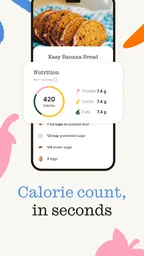
I would look elsewhere if my priority were a structured cooking course, dependable nutritional analysis, or a carefully tested editorial cookbook. ReciMe is centered on saving recipes from social content, so I would not assume every saved dish has been reviewed for accuracy or adapted to my kitchen. A traditional cookbook or a recipe source with detailed, tested instructions is a better fit when consistency and precise technique matter more than collecting inspiration.
What version and growth tell existing users
For existing users, the move to version 6.0.4 is a sign that the product is being maintained through successive releases. That can be reassuring if you rely on a collection over time, because a recipe-saving app needs to remain useful as social platforms and everyday habits change. Still, I would separate that reasonable expectation from a confirmed claim about specific improvements: the version number does not, by itself, establish what has changed in the interface or how any particular feature behaves.
The app’s scale and strong average rating may help a new user feel that this is not an obscure experiment, but neither should be treated as a guarantee that every import will work perfectly. Social posts vary widely. Some are clear recipes; others depend on a creator’s narration, fast edits, or details in a caption. I would keep the original post in mind as the source of truth when an ingredient or step seems incomplete, rather than assuming that saving a recipe removes the need to check it.
That is the most important expectation to set: ReciMe can help with organization, while the quality of the recipe still begins with the material being saved. For a regular user, that means checking a recipe once it is collected and making a note of any detail that would matter at cooking time. It is a little extra care, but it is better than discovering halfway through dinner that a video never showed an oven temperature or an amount.
Cost, access, and practical limits
ReciMe is free to download, with in-app purchases ranging from $6.99 to $69.99 per item. I would start by deciding whether the basic collecting workflow fits my routine before considering a purchase. The spread between those prices is broad, so I would check the app store’s purchase details carefully and compare them with how often I expect to use the app. A casual saver may not value paid options in the same way as someone who builds a recipe collection every week.
The app is rated Teen, which is worth knowing for families choosing what can be installed on a shared device. It requires iOS 12 or later. Before installing, I would check that the device meets that minimum, especially if it is an older phone kept for kitchen use. These practical details are easy to overlook when the main question is whether a recipe collector sounds useful.
One friction point is that an organized collection still requires a little upkeep. If I save an idea and never return to it, the app cannot tell me whether it is suitable for my schedule, ingredients, or cooking confidence. I would periodically remove recipes I no longer intend to try and keep the collection focused. That is not unique to ReciMe, but it is central to whether this particular app remains a helpful tool rather than another pile of saved content.
What I would watch as I use it
Before making ReciMe part of my routine, I would test it with a handful of different sources: a clear recipe post, a video with most instructions spoken aloud, and a post where important details sit in the caption. That gives a realistic sense of how well it handles the kinds of recipes I personally encounter. I would also check the saved result before relying on it at the stove, especially the ingredient list and any timing or temperature information.
I would then judge the app by retrieval, not just capture. Can I find a particular dinner idea when I need it? Does the collection make choosing easier, or do I still return to the social feed? If saving is easy but browsing later remains cumbersome for my own habits, the app may not solve the problem I have. That is a useful test to make before paying for anything or investing time in a large collection.
My overall view is positive but specific: ReciMe is a sensible companion for people who discover recipes socially and want their cooking ideas to live somewhere more focused than a general bookmark list. Its current version, 6.0.4, shows a product that has continued through multiple releases, while its free entry point makes it easy to try the core idea. I would recommend it to a friend who regularly loses track of food videos, with one caveat: it organizes recipe inspiration; it does not replace careful instructions or your own judgment in the kitchen.
If you prefer tested recipes presented in a conventional cookbook format, or you seldom save food posts in the first place, I would skip it and use a source that better matches how you cook. But if your phone is already full of scattered meal ideas, ReciMe offers a more purposeful home for them. For me, that is a modest, practical promise—and a worthwhile one when it turns a saved clip into dinner instead of another post I never find again.
What we like
- Save recipes from social media and websites in one place.
- Organize saved dishes into collections for easy access.
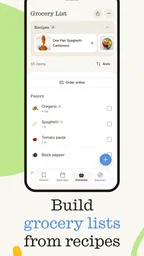
- Build a grocery list from selected recipes.
- Meal planning helps map out dishes for the week.
- Recipe import can reduce time spent entering ingredients.
What could be better
- Some features may require a paid subscription.
- Imported recipes may need checking for accuracy.
- The recipe library may not suit every dietary preference.
- Meal plans may require manual adjustments to fit your schedule.
- A stable internet connection may be needed for some features.





