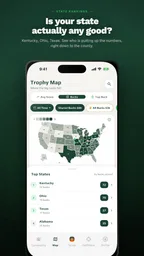
rackline.ai - AI Deer Scoring review
 Analysis by Appsdrops
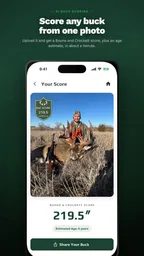
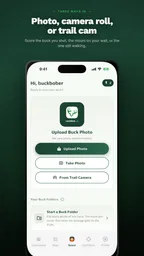
I can see the appeal of turning a deer photo into a Boone & Crockett score estimate without reaching for a tape and a scoring sheet. rackline.ai is a focused sports app from rackline.ai, built around that one task: using photos to estimate antler scores. In my view, it is most compelling as a quick reference for hunters and other people already interested in antler scoring—not as a replacement for careful, formal measurement.
From the first photo to a useful estimate
The first-week attraction is easy to understand. A promising rack can lead to a lot of “what do you think it scores?” talk, and a photo-based estimate gives that conversation a practical starting point. Rather than relying entirely on a quick visual guess, you can use the app to get an estimate tied to the Boone & Crockett scoring framework. That makes it more specific than a general wildlife photo app or a notes tool.
I would treat the result as an informed estimate, not a certified score. A photograph can hide or distort details that matter: the angle, distance, lighting, and how clearly the antlers separate from the background all affect what can be judged. A steep side view, for example, may make some points easier to see while concealing others. If the image is poor, the output should not carry more confidence than the image deserves.
For a fair test, I would choose a clear, well-lit picture with the rack visible and as little perspective distortion as possible. Keep the antlers away from the edge of the frame, and avoid a shot where one side is much closer to the camera. These are not special app tricks; they are practical ways to give any photo-based scoring tool a better chance of producing a useful estimate.
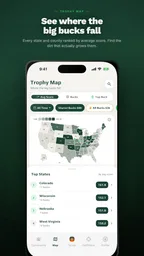
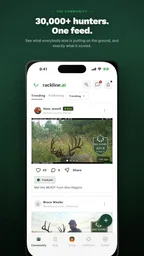
The app’s early appeal is also its main constraint: it is deliberately narrow. It is a sports app, but not a broad collection of hunting resources. If your immediate question is about antler scoring, that focus feels useful. If you want maps, trip planning, a hunting journal, or a community feed, you will still need other tools.
When a quick estimate helps—and when it doesn’t
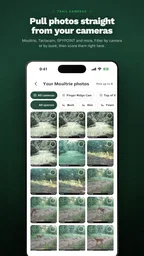
A realistic everyday use is sorting through photos after a hunt or a visit with friends. You might have several rack pictures on your phone and want to compare them before deciding which one is worth a closer look. An estimate can help organize that discussion and point out which image merits a more careful measurement session. It is less useful when the decision depends on exact scoring, eligibility, or a formal record. In those cases, direct measurement and the applicable official process matter more than a phone-based estimate.
That distinction is important because a number can feel authoritative even when the photo is not. I would use the app to narrow a range of possibilities or satisfy curiosity, then verify any result that has real consequences. It is a sensible companion to hands-on scoring, not a substitute for it.
The usual alternatives are straightforward: estimate by eye, measure the rack yourself, or ask an experienced scorer. A visual guess is fastest but subjective. Manual measuring takes more effort but gives you control over the measurements and lets you inspect the rack directly. Asking someone knowledgeable can add context, though it depends on finding the right person. rackline.ai sits between those choices: faster than a full measuring session, but less dependable than careful physical measurement when precision is essential.
What keeps it useful after the novelty
Whether this earns lasting space depends on how often you encounter racks worth scoring. If you regularly handle antler photos, compare potential scores, or talk scoring with other hunters, a specialist tool can keep serving a recurring purpose. If you only have one interesting photo every few months, the initial novelty may wear off quickly. The app does not need to become a daily habit to be worthwhile, but it does need to answer a question you actually revisit.
One useful habit is to keep the original photo alongside any estimate and note the conditions in which it was taken. A clear, square-on picture and a distant, angled one should not be compared as though they offer equally strong evidence. That simple discipline helps prevent an estimate from becoming detached from the image that produced it. It also gives you a sensible reason to retake a picture when the first one is poorly framed.
Another practical approach is to use the app as a screening step. If the estimate suggests a rack is worth a closer look, move to careful measurement rather than repeatedly submitting similar photos in hope of a more satisfying answer. Repeating the process without changing the image may create activity without adding meaningful certainty. The real value is in helping you decide what deserves your time next.
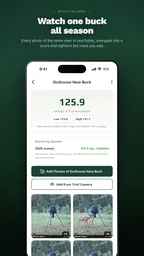
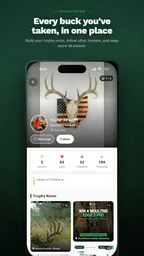
For people who collect observations across seasons, it can also be useful to keep a separate record of the photo, date, location details they choose to save, and any physical measurements they later make. I would not assume a photo estimate alone is a complete record. A personal note helps preserve context and makes later comparisons more grounded, especially if the original image is cropped or shared.
Keeping expectations—and the app—manageable
There is little maintenance in the ordinary sense of caring for a scoring tool, but there is a continuing need to use it thoughtfully. The current version is 3.0.34, and the minimum operating-system requirement is 7.0. If you are considering installing it on an older device, check that your device meets that requirement before planning around it. The app is free to download, while in-app purchases range from $4.99 to $499.99 per item. I would look carefully at what an optional purchase covers before spending, especially if you only need occasional estimates.
Its audience is broad in age terms, with an Everyone content rating, but that does not mean the result is suitable for every scoring purpose. The key question is not age; it is whether you understand the difference between an image-based estimate and a measurement made under the relevant scoring rules. For a casual enthusiast, that distinction is easy to keep in mind. For someone who needs defensible precision, it should guide the whole workflow.
There is also a modest trust question to weigh. The app has a 3.2 average from around 80 ratings, with 27 written reviews. That is a middling reception rather than a strong consensus, so I would approach it with measured expectations and judge it on your own images. It has passed 10,000 installs, which suggests a real audience for this niche, but popularity alone does not establish that an estimate will be accurate for every rack or photo.
Because the app has a single clear purpose, fatigue is less likely to come from an overloaded interface than from limited repeat need. If you do not regularly encounter antlers to assess, there may simply be little reason to open it. Another possible source of frustration is expecting a photo to contain enough information for a precise score when the view is incomplete. In those moments, the right fix may be a better photograph—or a tape measure—not another attempt to make an uncertain image yield certainty.
Who should keep it, and who can skip it
I would keep rackline.ai in mind if you are a hunter, wildlife enthusiast, or antler-scoring hobbyist who often wants a fast first estimate from photos. It is particularly suited to informal comparisons, sorting a batch of images, and deciding whether a rack deserves hands-on attention. The developer is rackline.ai, and the app’s narrow purpose is clear enough that you can judge its usefulness without adopting a whole new hunting workflow.
I would skip it if you rarely score antlers, expect a phone image to replace formal measurement, or are looking for an all-in-one hunting companion. A manual scoring method is the better choice when accuracy has consequences; a simple visual estimate may be enough when you only want casual conversation. This app makes most sense between those extremes, where a quick, structured estimate is helpful but not final.
With an average rating of 3.2, I would not recommend treating it as a guaranteed authority. I would recommend trying it with a clear photo if the scoring question comes up often enough to justify a dedicated tool. The app is free to get, though the range of optional purchases makes it worth checking the in-app choices before committing money. Its release date is October 24, 2025, so its long-term usefulness is best judged by whether it fits your actual routine rather than by assuming it will become essential.
My long-term verdict
For me, rackline.ai earns lasting space only for someone whose interest in antler scoring is already recurring. Its first-week appeal is strong because it addresses a specific question in a convenient way. Month to month, its value depends on having fresh photos and using the estimates as prompts for closer inspection, not as final scores. The best workflow is simple: take a clear image, use the estimate as a guide, and switch to direct measurement whenever precision matters.
I like the focused idea, but I would keep expectations restrained. Photo conditions place a natural ceiling on what any scoring estimate can establish, and a niche tool can feel unnecessary when the relevant occasion is rare. If antler scoring is part of your regular outdoor life, this is a practical shortcut worth testing. If it is an occasional curiosity, a manual check or an experienced scorer may serve you better—and may be all you need.
What we like
- AI scoring can help organize antler measurements.
- Digital records are easier to review than handwritten notes.
- A focused interface may suit hunters tracking deer scores.
- Saved entries can make score comparisons more convenient.
- The app may reduce calculation errors during scoring.
What could be better
- AI estimates may differ from official measurements.
- Poor photos can limit the accuracy of automated scoring.
- Some features may require an account or paid access.
- Results should be checked by an experienced scorer.
- The app is useful only to people interested in deer scoring.





