


Quran Pro - القران الكريم review
 Analysis by Appsdrops
When I want to read or listen to Quran passages without depending on a steady internet connection, Quran Pro - القران الكريم is the kind of app I look for: focused, practical, and built around the text and its recitations. Its main appeal is not a crowded collection of extras but the chance to keep reading and listening together in one place. In my view, that makes it worth considering for daily study, quiet reflection, or a commute, though the experience will suit some reading habits better than others.
Reading and finding your place
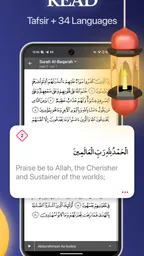
Quran Pro is a Quran app from Quanticapps FZ LLE, in the libraries and reference-app space. The central task is straightforward: open the Quran, read, or listen to recitations. Tafsir is also part of its offering, which matters because readers can move from the passage itself toward explanation rather than treating the app only as an audio player.
That combination is useful for a simple study routine. I might read a passage first, listen to it afterward, then consult Tafsir when I want more context. Keeping those activities within one app can reduce the small interruptions involved in switching between a reader, an audio service, and a separate reference source. It does not make interpretation effortless, but it gives a learner a more connected starting point.
The app is aimed at people who want Quran content available offline. That is a meaningful distinction from relying on a general audio or reading app, where access may depend on a connection or where Quran study is only one use among many. For someone who already knows what they want to read, a dedicated app can feel more direct. Someone who needs a broad Islamic learning library, extensive study tools, or a particular scholarly workflow may still prefer a more specialized alternative.
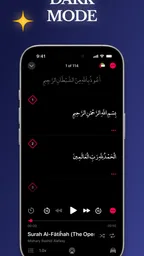
Reading comfort depends on more than whether text is present. A reader’s preferred script, display size, contrast, and page layout can make a major difference, especially during longer sessions. I would recommend trying a short passage on the device you plan to use before settling into a daily routine. Check whether the text is comfortable at your usual brightness and whether you can return to the right place without fuss. That small test is more informative than assuming every Quran reader presents text in a way that suits every reader.
Navigation also affects confidence. When I use a religious text app, I want to be able to move between reading and listening without losing the thread of what I was studying. A practical approach is to choose a passage before starting audio, then use Tafsir as a deliberate follow-up rather than jumping among sections without a goal. This makes the app easier to use for focused sessions and helps avoid turning a quiet reading period into a search through menus.
Audio as a second route into the text
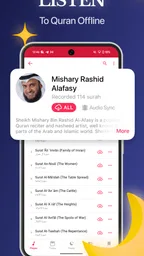
Recitation can make the app useful in situations when looking at a screen is inconvenient. It also offers a different way to revisit a passage: after reading, listening can help keep attention on pronunciation and rhythm. I would treat audio as a companion to reading, not a substitute for the kind of close study that requires checking a passage and its explanation.
One helpful habit is to use a short listening session with a clear purpose. For example, I could listen to a passage before reading it, then return to the text when I have a quiet moment. That two-step routine is easier to sustain than leaving audio running while trying to do something that competes for attention. If a reader is learning, listening while following the text may be more useful than audio alone, provided the screen is comfortable to view.
Different bodies, different ways to use the app
Quran Pro’s text-and-audio approach gives people more than one way to engage with the same material. A person who finds extended screen reading tiring can choose listening for some sessions; someone who cannot use audio at a particular moment can read instead. That flexibility is valuable, but it should not be mistaken for a guarantee that every interface detail will work for every motor, visual, or hearing need.
For readers with low vision, the practical question is whether the text can be made comfortable enough on their own device and whether the controls remain easy to identify. I would test it in the lighting where it will actually be used, not only in a bright room. If reading remains strained even after adjusting the device’s general display settings, a reader designed around stronger text customization or a dedicated large-print format may be a better fit.
For someone with limited dexterity, frequent small taps or precise navigation can turn a simple reading session into a frustrating one. A useful workaround is to prepare the intended passage before settling in, rather than repeatedly searching while holding the phone. Listening can reduce the need to interact with the screen during a session, although starting playback and choosing content still require some control. Anyone relying on screen-reader support or alternative input should test those interactions directly before making this their primary Quran app.
Audio also has limits for people who are deaf or hard of hearing, and a text-based session may be the more dependable route for them. Conversely, a reader with reading fatigue may find listening more comfortable. The important point is that this app’s two modes can complement one another, but they do not automatically remove barriers: the person’s device, preferred input method, and environment all shape the experience.
Using it at home, on the move, and offline
The offline focus is especially relevant in everyday settings where a connection is unreliable, costly, or simply unwelcome. I can imagine opening the app before a journey, choosing what I want to read or hear, and then using it during a quiet stretch without treating mobile coverage as part of the plan. It can also make sense at home for someone who prefers not to depend on streaming while listening.
There is a useful preparation trade-off here: offline access is most valuable when the desired content is ready before the moment you need it. I would open the app while connected, confirm that the reading and listening material I plan to use is available, and avoid assuming that every part of an offline workflow will behave identically. This simple check is worthwhile before travel or a period away from reliable service.
For a realistic daily example, a student could read a passage during a morning break, listen again on the way home, and return to Tafsir later when they have time to reflect. The same pattern works for someone building a personal reading habit: a brief text session on a lunch break, followed by audio while resting at home. The app supports these different moments because reading and recitation are both central to its purpose, rather than unrelated add-ons.
Shared or public settings call for a little care. Audio may be inconvenient when headphones are unavailable or when a quiet environment matters, so reading is the better choice in those moments. On the other hand, listening can be useful when handling the phone is awkward, such as during a walk, but I would avoid using it in any situation where attention needs to stay on surroundings. The right mode depends on the setting, not just on preference.
Where it sits among Quran apps
Compared with a general-purpose Quran website or audio player, a dedicated app can be easier to keep on hand and more suitable for an offline routine. Compared with a printed Quran, it adds listening and portable access but asks the reader to work through a screen, with all the usual concerns about glare, battery, notifications, and small controls. Neither format wins in every situation. I would use the app for flexible reading and recitation, while keeping a printed copy in mind for long, screen-free study.
It is also worth distinguishing a focused reader from a comprehensive study platform. Quran Pro includes Tafsir, but readers who need a particular translation, advanced comparative tools, detailed note-taking, or a highly customized learning plan should check whether the app meets those needs before building a routine around it. A specialist tool can be the better choice when a specific feature is essential; Quran Pro’s strength is the approachable pairing of Quran reading and recitation.
Its audience response is strong: it has a 4.7 average from around 124,000 ratings, and more than a million installs. Those figures suggest that many people find it useful, but they cannot tell me whether the text presentation or controls will suit a particular reader. I would treat them as a sign of broad interest, then make the decision based on an actual short trial.
Practical considerations before committing
The app is free to download and rated for Everyone. It also offers in-app purchases, with listed items ranging from $2.99 to $109.99, so I would check the purchase details in the app store before buying anything. A free starting point makes it relatively easy to see whether the reading and listening approach fits, while the range of optional purchases is a reason to make sure any upgrade matches a real need rather than tapping through quickly.
Quran Pro has been available since December 27, 2014, and its minimum operating-system requirement is version 9. Its long presence may reassure people looking for an established Quran app, but the most practical question is still whether it works well on their own device and supports the way they read. I would check compatibility before installing, particularly on an older phone or tablet.
The clearest friction is that “offline” and “accessible” do not mean the same thing for everyone. Offline reading helps when connectivity is the obstacle; it does not address text legibility, navigation precision, hearing access, or the need for a particular study method. Likewise, audio is a meaningful alternative to reading for some people but not for those who cannot use it. Thinking through the barrier you actually face will lead to a better choice than relying on broad labels.
Who I would recommend it to
I would recommend Quran Pro to someone who wants a dedicated place to read Quran passages and listen to recitations, especially if offline use is important and Tafsir is a useful part of their routine. It is also a reasonable option for people who like alternating between text and audio depending on the time and setting. Before making it a daily tool, I would test a passage, try a listening session, and check whether the navigation feels comfortable on the device I use most.
I would hesitate to recommend it as a first choice for someone who needs extensive text customization, a specific screen-reader workflow, advanced research tools, or a fully screen-free experience. In those cases, a specialized reader, another study app, or a printed Quran may be more suitable. That is not a flaw unique to this app; it is a reminder that a compact reading-and-listening tool cannot be the ideal solution for every form of study or every access need.
Overall, I find its appeal clearest when the goal is simple: keep Quran reading, recitation, and Tafsir close at hand, including in places where a connection is not dependable. Its flexibility across text and audio is a genuine strength, while comfort and control remain personal things to test. For a focused routine built around those core activities, Quran Pro - القران الكريم is a thoughtful option; for highly specialized access or study requirements, I would compare it with alternatives before settling in.
What we like
- Audio recitations make it easy to listen while away from the screen.
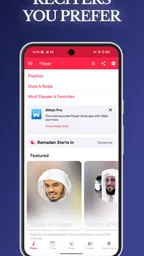
- Multiple reciter options let listeners choose a preferred voice.
- Surah and verse navigation helps users find passages quickly.
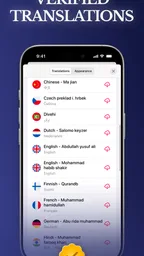
- Translation options can support readers studying Quranic meanings.
- A digital format keeps the Quran accessible while traveling.
What could be better
- Some audio features may require an internet connection.
- Ads may interrupt the reading or listening experience.
- Audio downloads can use substantial device storage.
- Translation wording may vary from the interpretation readers expect.
- The app's interface may feel crowded on smaller screens.





