

Jack in the Box® - Order Food review
 Analysis by Appsdrops
I’d treat Jack in the Box® as a practical companion to the restaurant rather than a general food-discovery app. Its purpose is straightforward: help me browse Jack in the Box food and arrange an order for pickup or delivery. That focus is useful when I already know I want the chain, but it also defines the app’s limits. It won’t help me compare nearby restaurants across brands or decide what kind of meal I’m in the mood for.
For someone who regularly orders from Jack in the Box, having the menu and ordering flow in one place can save a bit of effort. For an occasional customer, the main question is whether placing an order through an app is more convenient than using the usual alternatives. I find the answer depends less on the app itself than on the situation: a planned pickup can benefit from ordering ahead, while a quick walk-in meal may not need another step.
What the free access is worth
The app is free to download, so trying it does not require paying for the software. That is the clearest cost-related point: there is no purchase price for access to the app itself. Food orders are a separate matter, and I would judge their cost by what appears during checkout rather than assume that using the app makes a meal cheaper.
That distinction matters. A free ordering tool can still lead to a paid restaurant order, and choosing delivery instead of pickup may change the overall value of the experience. I’d compare the final order total and available options with what I would pay or do through another ordering route. The app’s free access is convenient, but it is not, on its own, a discount or a promise of lower food costs.
Jack in the Box Inc. is the developer, and the app sits in the Food & Drink category. It has an average rating of 4.8 from over 123,000 ratings, alongside around 22,000 written reviews. More than five million installs suggest it has found a substantial audience, though popularity alone cannot tell me whether a particular restaurant location or order will suit my needs.
The app is rated Everyone and is free. It first appeared on October 3, 2017, and its current version is 2026.19. Those details help set expectations about the product’s history and availability, but my practical recommendation still comes down to how often you visit the chain and whether ordering on a phone fits your routine.
Where convenience can turn into real value
The strongest case for using the app is reducing friction around a Jack in the Box meal you have already decided to get. Instead of arriving and beginning the order process at the counter, I can use the app to organize the order for pickup or delivery. That is especially helpful when coordinating a meal with other people: I can settle on the items before anyone is hungry enough to rush the decision.
One useful workflow is to think through the order before choosing how to receive it. If I’m already going past a restaurant, pickup may fit the trip better than delivery. If I’m staying in, delivery could be more convenient, but I’d check the checkout details before treating that convenience as good value. Separating the food choice from the handoff choice makes it easier to decide whether the extra ease is worth the final total.
Another practical use is ordering during a busy part of the day. For example, if I have a short break and know I want Jack in the Box, I can make the selection before leaving rather than spend the break figuring out the order at the restaurant. I would still leave room for the possibility that the handoff takes time; ordering through an app should not be mistaken for a guarantee that food will be ready at an exact moment.
For a shared meal, I’d use the quieter planning moment to confirm the whole order before sending it. That sounds simple, but it can prevent the familiar scramble of collecting everyone’s choices while standing in line or trying to order in a hurry. The app is most useful here as a place to assemble a decision, not as a substitute for checking what the group actually wants.
Tradeoffs that affect the experience
The biggest limitation is the narrow scope. This is an app for Jack in the Box, not a marketplace for comparing menus, restaurants, or cuisines. If I’m deciding between several nearby options, a broader restaurant or delivery service may be a better starting point. If I have already chosen Jack in the Box, however, going directly to its own app can feel more focused than searching through a wide catalog.
That focus also means the app is only useful when Jack in the Box is a realistic option for the order. Someone who rarely visits the chain may not gain much by installing a dedicated app, particularly if they prefer to make spontaneous choices in person. I would not keep it just for the abstract possibility of ordering someday; I’d use it when the chain is already part of my routine or when a specific pickup or delivery plan makes the app worthwhile.
Delivery and pickup solve different problems, and neither is automatically the better deal. Pickup makes sense when I am already nearby or can combine the stop with another errand. Delivery is more appealing when leaving home is inconvenient, but I’d weigh that comfort against the amount shown at checkout. The right choice can change from one meal to another, so I wouldn’t assume a single option is always best.
There is also a small planning tradeoff: ordering ahead asks me to decide earlier than I might at a counter. That can be a plus when I want a quick, deliberate order, but a drawback when I’m still choosing or expect plans to change. I’d avoid placing an order until I’m reasonably sure about the meal and how I want to receive it. A little forethought makes the app more useful; indecision can make a direct visit feel simpler.
As with any restaurant-ordering tool, the app’s usefulness depends on the actual choices presented during the ordering process and on whether the available handoff suits my plans. I’d review the order carefully before confirming, especially when arranging food for more than one person. A phone makes it easy to move through selections quickly, which is convenient, but that same speed is a reason to pause and check the final basket.
Who is most likely to get value from it
I’d recommend giving it a try to people who order from Jack in the Box more than occasionally, want to plan a pickup, or would rather decide on a meal before arriving. It may also suit someone coordinating an order with family or friends, since making the choices in advance can be calmer than collecting them in a rush. In those situations, free access lowers the barrier to trying the ordering workflow.
It is less compelling for someone who mainly wants to discover new restaurants, compare prices across chains, or browse many kinds of food in one place. A general delivery or restaurant app may be more useful for that purpose. Likewise, if I’m already at a Jack in the Box and the counter is convenient, opening a separate app may add steps rather than remove them.
My advice for a first order is to start with a meal you already know you want, choose pickup or delivery based on the day’s plan, and inspect the order summary before submitting it. That gives you a fair test of the app without confusing the experience with a complicated group order or an uncertain menu decision. Afterward, you can decide whether the time saved was meaningful enough to make it part of your routine.
The app’s broad adoption and strong average rating are encouraging signs that many customers find it useful, but they are not a substitute for that personal test. A good fit depends on how often you eat at Jack in the Box, whether the ordering route works for your location, and whether the final order makes sense for your budget. I’d treat the rating as context, not a guarantee of a perfect experience every time.
My verdict on installing it
I see Jack in the Box® as a sensible, free-to-download option for people who already know they want food from the chain and value arranging pickup or delivery from their phone. Its best value is practical rather than mysterious: it gives regular customers a direct way to plan an order, and it can make a rushed meal easier to organize. The app earns its place when that convenience fits a real habit.
I would skip it if you rarely visit Jack in the Box, want a single app for comparing different restaurants, or prefer deciding and ordering in person. I also would not install it expecting the app itself to lower the price of a meal. Check the total and choose the handoff that suits your circumstances; convenience is worthwhile only when it is worth what you pay for the food and delivery arrangement.
Overall, I’d recommend trying it if Jack in the Box is already one of your regular stops. For an occasional visit, the free download makes experimentation low-commitment, but there is no need to keep a dedicated restaurant app that you do not use. It is a focused tool, and that focus is both its main strength and the reason it will not be right for everyone.
What we like
- Order ahead to make pickup quicker.
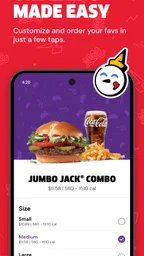
- Browse the menu and customize many items.
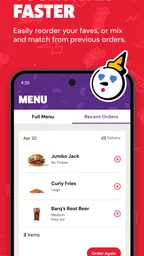
- Save favorite orders for faster reordering.
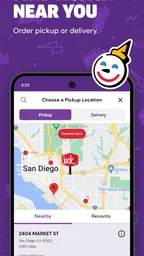
- Find nearby locations using the restaurant locator.
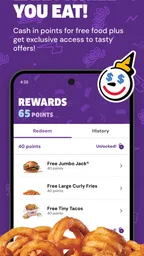
- Access app-exclusive offers when available.
What could be better
- Rewards and offers may vary by location.
- Some menu items may not be available at every restaurant.
- Pickup timing can change during busy periods.
- The app requires an internet connection to place orders.
- Payment options may differ between locations.





