





Instagram review
 Analysis by Appsdrops
I’d recommend Instagram to someone who wants one familiar place to follow friends, creators, local businesses, and visual interests. I find it most useful when I treat it as a flexible social feed rather than a complete record of my life: photos and short videos make it easy to keep up, while Stories and Reels offer quicker, more casual ways to share or browse. That convenience comes with a trade-off. The app can pull attention in several directions, and its best fit depends on whether you enjoy visual discovery and frequent updates.
What to weigh before you join
Instagram is a free social app developed by Instagram, and its main appeal is the combination of personal sharing and public discovery. It has been available since April 3, 2012, and has grown to more than five billion installs. Its average rating is 4.0 from around 170 million ratings, with about 4.5 million written reviews. Those figures suggest broad familiarity, but they do not tell you whether its pace or culture will suit you.
I’d start by asking what I want from a social app. If I mainly want to exchange short messages with a small circle, a messaging app may feel more direct. If I want to follow visual creators, share snapshots, and dip into short-form video, Instagram brings those activities together. It is categorized as a social app, but in practice it also works as a discovery feed, a lightweight portfolio, and a way to keep tabs on people or places I might otherwise forget to check.
The app is rated Teen, which is worth considering for families and younger users. That age label is not a substitute for a conversation about online boundaries, attention, or what someone may encounter while browsing. I’d set expectations early: decide what kind of accounts to follow, review privacy choices, and make sure a young user knows how to handle unwanted contact or content. The app’s social nature makes those habits more important than its simple camera-and-feed surface suggests.
There is no charge to install it, but in-app purchases range from about twenty cents to ten thousand dollars per item. That wide span is a reason to pay attention to what a purchase screen is offering rather than assuming every optional transaction is small. For ordinary browsing and posting, the free entry point is the most relevant detail; if a feature or promotion asks for payment, I’d pause and check the amount and purpose before proceeding.
A good match for visual routines
Instagram makes sense if I naturally think in pictures or short clips. A café can share its daily specials, a hobbyist can show work in progress, and a friend can post a quick update without composing a long message. The same account can follow all of those things, so I don’t need to switch between separate services every time my reason for opening the app changes.
That breadth is useful, but it asks for some curation. I get a better experience when I follow accounts for distinct reasons instead of adding everyone indiscriminately. For example, I might keep close friends and family in my social circle, follow a few practical local accounts, and use discovery for a hobby. When the feed starts feeling noisy, unfollowing or muting accounts can be more effective than trying to scroll faster.
Where it earns a place in daily life
A realistic use case is planning a weekend outing. I might look at a neighborhood café’s recent posts to see what it serves, check a friend’s Story for a casual recommendation, and save a creator’s short video with an idea for later. That sequence shows why the app can be more than a place to post selfies: it helps connect personal updates, visual references, and public-facing accounts in one browsing session.
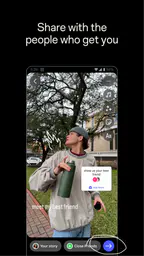
For someone sharing regularly, I’d use the formats with different expectations. A carefully composed photo can serve as a lasting profile post, while a Story suits an informal moment that does not need the same polish. Reels are a natural choice when movement, sound, or a quick demonstration matters. Choosing the format before recording helps avoid the common trap of making every update feel like a performance.
One practical workflow is to capture a few moments first, then decide which are worth sharing and where they belong. That small pause makes it easier to keep a personal archive separate from an update meant for an audience. I also find it useful to check the audience and privacy settings before posting something that includes friends, children, a location, or a private event. The app is easy to use quickly, but the consequences of sharing are not always easy to reverse.
Another useful habit is to treat saved posts as a temporary reference shelf rather than a permanent filing system. If I save a recipe, outfit idea, or place to visit, I should revisit it when I have time and remove items that no longer matter. Otherwise, saving becomes a way to postpone decisions and creates a collection I rarely use. This is a small but meaningful difference between passive scrolling and using the app with a purpose.
Where Instagram has an edge
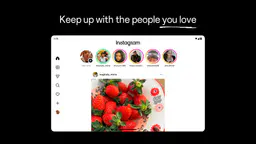
Its strongest advantage is the overlap between people I know and accounts I discover. A photo from a friend can sit alongside a creator’s tutorial or a local shop’s announcement, making the feed feel connected to everyday interests. Compared with a service focused mainly on text updates, Instagram gives visual context more room. Compared with a standalone short-video app, it can keep those clips alongside a broader profile and other kinds of posts.
That overlap also helps small creators and businesses show what they do without asking every visitor to read a long introduction. A baker can display finished work, a musician can share a performance excerpt, and a community group can show an event in progress. I would not assume that a polished profile automatically tells the whole story, though. A feed is a selection, not a neutral or complete account of a person or business.
Discovery is best when I arrive with a loose intention. Searching for a particular hobby, place, or style can surface accounts I would not have found through friends alone. But recommendation feeds can also encourage one more video, then another, even when I only opened the app to check a message or post a photo. I get more value when I choose a stopping point beforehand or open the app to complete a specific task.
When another kind of app is a better choice
If my priority is private conversation, a messaging service is usually the more comfortable home base. Instagram can support social interaction, but its visual feed and public discovery are not the same thing as a focused chat tool. For long explanations, detailed discussions, or information I need to find later, a forum, notes app, or group messaging service may be easier to manage.
If I mainly want to watch short videos, a video-first alternative may offer a more concentrated browsing experience. If I want a chronological stream of concise updates, a text-led social network may feel less visually demanding. And if my goal is to maintain a professional portfolio, a dedicated portfolio or business platform may provide a more deliberate presentation. I’d choose based on the task, not on which service has the most familiar name.
Instagram is also not ideal for someone who dislikes public-facing social habits or finds recommendation feeds hard to leave. The app’s variety can make it convenient, but variety is not automatically a benefit when I want a quiet, finite session. A simpler service with fewer content formats may be a better fit for someone trying to reduce screen time or avoid the pressure to keep posting.
Making the experience more intentional
My first adjustment would be to shape the feed deliberately. Following accounts that are useful, enjoyable, or genuinely meaningful gives the app a clearer purpose. I would also review the audience for each kind of post rather than assuming one privacy setting suits everything. This is especially sensible when sharing family moments, travel details, or content involving other people who may not want to appear publicly.
For creators, a manageable rhythm beats posting simply to stay visible. I’d choose a format that suits the material, write captions that add context, and avoid turning every ordinary moment into content. For a small business, the app can help make products or services visible, but it should not be the only place customers can learn essential information. A social profile is useful for discovery; it is less dependable as the sole home for details someone needs to keep.
For browsing, I’d decide whether I am there to catch up, look for inspiration, or share something. That simple distinction can prevent an open-ended scroll from taking over a spare moment. If the feed feels repetitive, I’d change who I follow and what I search for rather than assuming the entire service has stopped being useful. If it feels stressful even after that, taking a break or choosing a less discovery-heavy alternative is a reasonable response.
Switching away has a practical cost: the friends, creators, and businesses I follow may not be active elsewhere in the same way. I would not expect another social app to recreate my exact mix of contacts and visual interests immediately. A gradual approach works better than an abrupt move for many people: keep Instagram for accounts that are genuinely valuable, use another tool for the task it handles better, and share important updates with close contacts through a more direct channel.
My recommendation
I’d choose Instagram if I want a lively, visual social space where personal updates and creative discovery sit close together. It suits people who enjoy following a range of accounts, sharing photos or short videos, and checking in casually throughout the day. Its long-running presence, free access, and large community make it easy to find people and interests, but those strengths do not guarantee a calm or carefully organized experience.
I would skip it, or use it only occasionally, if I want private communication above all else, dislike algorithmic discovery, or find short-form feeds difficult to put down. In those cases, a messaging app, a text-centered network, or a focused video service may better match the reason I’m looking for an app. I would also avoid relying on Instagram as my only place to store important memories or essential business information.
Overall, I see it as a worthwhile social app when I use it with boundaries and a clear purpose. I’d follow selectively, check sharing settings before posting, and choose each format because it suits the moment rather than because it is available. That approach lets the app’s visual strengths shine without asking it to replace every other way I communicate or keep track of what matters.
What we like
- Stories make it easy to share casual updates that disappear after 24 hours.
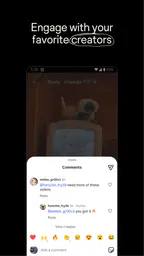
- Reels offer short videos with plenty of creative editing tools.
- Direct messages support private chats and group conversations.
- Saved collections help organize posts for later viewing.
- Business accounts provide tools to track audience engagement.
What could be better
- The feed can encourage frequent scrolling and consume a lot of time.
- Public profiles may expose posts to a wider audience than intended.
- Some features and settings can be difficult to find.
- Reels and high-resolution media can use substantial mobile data.
- Users may encounter misleading content or unwanted messages.




