





MeetMe: Go Live & Stream Now review
 Analysis by Appsdrops
I would choose MeetMe when I wanted a social app that puts live video and spontaneous interaction ahead of carefully curated profiles. Its appeal is the chance to drop into a stream, watch people talk or perform, and join the lively back-and-forth rather than simply scroll through posts. That makes it a different kind of social experience from a private messaging app or a photo-first network. It can be entertaining and easy to browse, but it also asks you to be comfortable with public, unpredictable conversations.
What to consider before you join a live community
MeetMe: Go Live & Stream Now is a free social app from MeetMe.com, available in its current version 238.1 for devices running iOS 12 or later. It has been around since July 1, 2010, and its scale is substantial: more than 100 million installs, a 4.0 average rating, and around 1.6 million ratings. Those figures suggest a familiar, established service, though they do not tell you whether its particular style of socializing will suit you.
The central question is what you want from a social app. If you enjoy watching live creators, reacting in real time, and discovering people through conversation, MeetMe has a clear reason to exist. If your main goal is keeping up with close friends, sharing polished photos, or having quiet one-to-one conversations, a more focused alternative may feel more natural.
I’d also think about how you feel in public online spaces. Live streaming is less predictable than browsing a profile: the people on screen, the tone of a room, and the pace of chat can change from one moment to the next. That spontaneity is part of the fun, but it means you may need to leave a stream that isn’t your scene rather than expect every interaction to feel comfortable or relevant.
The app is rated Mature 17+, an important consideration for both prospective users and families setting boundaries around social apps. The age label should shape your decision before you download it, not after you have already created an account or started watching. I would not treat a social live-streaming app as a substitute for a supervised space for younger users.
When the live format is the main attraction
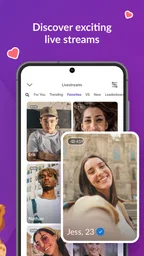
MeetMe is at its strongest when you open it with a little time to explore rather than a specific task to finish. A live room can give you a sense of someone’s personality more quickly than a static profile because you can hear them speak and see how they respond to viewers. The live-show and battle emphasis also gives browsing a more event-like quality: there is something happening now, not just a collection of posts waiting to be read.
A realistic use case is a quiet evening when you have ten minutes to spare but don’t want to commit to a long video or a planned call. You can look around, stay with a stream that catches your interest, and move on if the conversation is not engaging. That low-commitment discovery is a genuine strength. It is also a different kind of social contact from messaging a friend: the interaction may be entertaining without becoming a lasting connection.
One useful approach is to treat the first few sessions as sampling, not as a search for the perfect room. Notice which kinds of streams hold your attention, how much you enjoy the chat, and whether you prefer watching or participating. This helps you decide whether the app’s live-first rhythm works for you before you invest much time in it. It also makes it easier to recognize when you are browsing out of habit rather than because you are enjoying the experience.
Another practical tip is to set your own stopping point. Live content can make it easy to keep checking what is happening next, especially when a stream is lively. Deciding in advance that you are taking a short break or watching one session keeps casual entertainment from turning into an open-ended scroll. I find this kind of boundary more useful than expecting an app itself to provide a perfectly structured viewing routine.
What makes it different from familiar social apps
Compared with photo-centered social networks, MeetMe puts less emphasis on a finished image and more on a person’s presence in the moment. That can be a relief if you are tired of carefully staged posts. It also changes the social pressure: you are responding to a live conversation rather than composing a caption, but joining in may feel more exposed than leaving a reaction on a picture.
Compared with messaging apps, it is much less dependable as a place for private, purposeful communication. A messaging service is usually the better choice when you need to reach someone you know and want a direct reply. MeetMe makes more sense when discovery and public entertainment are part of the point. I would not choose it as my only way to stay in touch with friends, because live browsing and private conversation solve different problems.
It also differs from a conventional short-video feed. A feed is suited to quick, edited clips that you can watch on your own schedule. Live streams offer immediacy and the possibility of interaction, but they can be less predictable and may require more patience before you find something you like. If you value control over exactly what you watch and when, prerecorded clips may be a better fit. If you like the sense of a shared moment, the live format has an advantage.
That distinction matters when deciding whether to install it. MeetMe is not automatically a better choice just because it combines social connection with video. Its value depends on whether you enjoy meeting people in a public, live setting. If you prefer text, carefully chosen circles, or asynchronous posts you can revisit later, alternatives built around those habits may serve you better.
Where the experience can feel less comfortable
The same openness that makes live discovery appealing can also make the experience uneven. A stream may be welcoming, dull, noisy, or simply unrelated to what you wanted that day. You have to be willing to browse and make quick judgments about whether to stay. That is a real cost compared with a feed where you deliberately follow a narrow set of accounts or a group chat where you already know the participants.
Live socializing can also feel demanding if you are shy, distracted, or looking for a calm background activity. Watching quietly may suit some people, but the format is still built around other people being present and interacting. If you find that kind of atmosphere tiring, a podcast, a saved video, or a private community can be more comfortable because it does not depend on the mood of a live room.
There is also a difference between attention and connection. A busy stream can be compelling, but that does not guarantee meaningful conversation or a friendship that continues elsewhere. I would approach the app with modest expectations: enjoy a good exchange when it happens, but do not assume that every entertaining session will lead to a reliable relationship. That keeps the experience grounded and helps avoid confusing a lively room with a close social circle.
Because the app includes live interaction, basic personal boundaries matter. I recommend being thoughtful about what you disclose, especially in a conversation with someone you have just encountered. If a room or interaction feels uncomfortable, stepping away is a sensible response; you do not need to stay just because you entered. This is useful advice for any public social space, but it is especially relevant when conversations unfold in real time.
Think through spending before it becomes routine
The app is free to download, but it includes in-app purchases ranging from $0.99 to $249.99 per item. That wide span makes it worth checking the purchase screen carefully before paying for anything. I would start with the free experience and decide whether the app is genuinely part of my routine before considering extras. A purchase is easier to evaluate when you know what you use regularly and what you can comfortably do without.
For a casual viewer, there may be no reason to spend at all. For someone who becomes more involved in the live community, paid items may seem more tempting, so it helps to establish a spending limit early. I would also avoid making a purchase simply because a moment in a stream feels urgent. A pause gives you time to work out whether the item supports a lasting use you value or only the excitement of that one interaction.
Switching away from MeetMe is straightforward in one important sense: if you mainly use it for occasional entertainment, you can stop opening it without needing to replace a complicated workflow. The trade-off is that another app may not recreate the same blend of live discovery and audience interaction. If what you value is a particular kind of spontaneous room, a photo-sharing app or private messenger will not be a direct substitute. If what you value is simply passing time socially, there are many formats that may suit you better.
Who I’d recommend it to
I’d recommend MeetMe to adults who are curious about live social video, enjoy watching people interact in real time, and are comfortable moving between different public conversations. It is a reasonable pick if you want an informal way to discover streams and are happy for the experience to be hit-or-miss. Its history and broad user base make it easier to find an active social environment than a brand-new, empty service, though the size of a community alone cannot guarantee that you will like what you find.
I would steer someone toward a different kind of app if they want a dependable way to contact friends, a carefully managed feed, or content they can watch without any social atmosphere. People who dislike public interaction may also find a live-first app tiring, even if they enjoy video generally. And the Mature 17+ rating means it is not the right recommendation for younger users.
Overall, MeetMe is best understood as a place to spend time around live social entertainment, not as an all-purpose replacement for messaging or familiar social networks. Its main strength is immediacy: you can encounter a conversation as it unfolds and decide whether you want to stay. Its main limitation is the same openness, which brings uneven quality and requires personal boundaries. I’d try it if spontaneous streams sound fun, keep purchases deliberate, and move on without hesitation if a more private or predictable social experience is what you really need.
What we like
- Lets you discover live streams from other users.
- Supports real-time chat during live broadcasts.
- Offers virtual gifts for interacting with streamers.
- Includes profile tools to help you meet new people.
- Provides a way to share your own live video.
What could be better
- Some features may require in-app purchases.
- Live content can vary widely in quality.
- Public broadcasts may raise privacy concerns.
- You may encounter unwanted messages or interactions.
- A steady internet connection is needed for streaming.





