





Reddit review
 Analysis by Appsdrops
I think Reddit makes the most sense when you treat it less like one giant social feed and more like a collection of public conversation rooms. You can open it to follow a breaking hobby question, compare people’s experiences with a product, or simply read a thread where strangers are unusually specific about what worked for them. That variety is its biggest draw—and the main reason a first visit can feel a little chaotic.
As a social app from reddit Inc., Reddit is free to download and has a 4.6 average from around 4.9 million ratings. It has passed 100 million installs, and its Mature 17+ rating is worth taking seriously: conversations can involve adult themes, strong language, and topics that are not suitable for every reader. My advice is to arrive with one interest or question in mind rather than expecting the app to present a polished, universally friendly front page.
What you’ll find in its conversation rooms
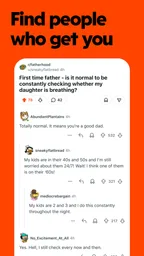
The basic unit is a community focused on a topic, with posts and comment threads underneath. Some communities are practical, where people troubleshoot a particular device or explain a process; others are built around news, entertainment, personal stories, or a niche pastime. The experience changes dramatically depending on which rooms you spend time in, so judging Reddit from a single thread is like judging a library by one shelf.
That focus makes it different from the usual social alternatives. A typical friend-centered network puts people you know and their updates at the center. Reddit is better when you want to find people who share a specific question, even if you have never met them. It is less suited to keeping up with a close circle, and it can feel impersonal if what you want is direct, familiar conversation rather than discussion organized around subjects.
There is a useful trade-off in the way conversations work. A good post can attract several perspectives, follow-up questions, and corrections in one place. But popularity is not the same as accuracy. A highly visible comment may be confident without being reliable, and a topic’s most useful advice can be buried further down the discussion. I read claims as suggestions to investigate, not as automatic proof.
Getting oriented without trying to follow everything
On a first session, I would look for communities connected to a real interest rather than browsing every recommendation. Search for a hobby, a place, a type of work, or a problem you are trying to solve, then open a few community pages and read their descriptions and recent posts. This small bit of scouting helps you see whether the tone is welcoming and whether the subject is actually active in the way you need.
You do not need to post immediately to get value. Reading a handful of recent discussions is a low-pressure way to learn each community’s norms: what belongs there, what people consider a useful question, and whether members prefer detailed context or quick exchanges. Choosing the right community matters more than collecting a long list of subscriptions. A focused selection makes the home feed easier to understand and less likely to become a stream of unrelated topics.
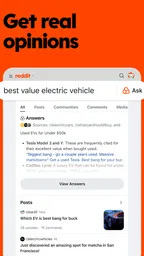
For a first-time user, the app is most rewarding when curiosity has a direction. If you are researching a purchase, for example, search for the product category and compare several people’s experiences instead of relying on one glowing post. If you are learning a craft, look for beginner discussions and note which advice is repeated by different contributors. These workflows make Reddit useful without requiring you to become a frequent poster.
Your first useful contribution
A realistic first success might be asking for help with a small, specific problem: explain what you are trying to do, what you have already tried, and what kind of answer would help. Before posting, search within the relevant community for similar questions. That can save you time, and it lets you build on an existing discussion rather than accidentally repeating one.
When you do write a post, useful context usually beats a clever headline. A question such as “What should I buy?” leaves readers guessing; explaining your intended use and the constraints you care about gives them something concrete to respond to. I also recommend reading the community’s rules before submitting. Different rooms have different expectations, and a post that is reasonable in one place may be off-topic or too vague in another.
Then give the discussion time to develop. Replies may disagree, ask for clarification, or point you toward a better question. That back-and-forth is part of the value, but it also means Reddit is not always the fastest route to a definitive answer. For urgent help or a decision that depends on professional expertise, I would not treat a crowd-sourced thread as a substitute for an appropriate expert or official source.
Making a busy feed easier to handle
Reddit can feel noisy when you follow too many subjects at once. I would begin with a small set of communities and adjust only after seeing what actually appears in the feed. If one topic overwhelms everything else, review what you follow rather than assuming the entire app is a poor fit. A little curation can change the experience more than simply scrolling longer.
Another helpful habit is to open a promising post and read the full conversation rather than reacting to the first visible comment. Replies can add context, challenge an assumption, or explain why advice that sounds simple may not work in a particular situation. This is especially important with personal recommendations, where people’s budgets, locations, and circumstances can differ from yours.
If you mainly want to observe, that is a perfectly valid way to use the app. You can learn a community’s style before deciding whether to participate, and there is no need to turn every interest into a public post. If you do engage, keep personal details out of a question unless they are genuinely necessary; a useful answer rarely requires sharing more than the relevant context.
Where new users can get confused
The first common confusion is assuming every community is moderated or written in the same way. Reddit is a collection of distinct spaces, not one consistent editorial voice. The same subject can have communities with different rules, levels of expertise, and conversational norms. When a thread feels hostile or simply unhelpful, it may be better to leave that room and look for another rather than conclude that every discussion will be like it.
The second is mistaking votes and visibility for a quality check. A popular response may be entertaining, timely, or aligned with the mood of a thread without being the most accurate. I look for explanations, relevant experience, and useful corrections. For health, legal, financial, or other high-stakes topics, I would use Reddit to discover questions and perspectives, then verify important claims through qualified sources.
It is also easy to confuse a busy comment section with a conversation that will reach a clear conclusion. Some threads wander, repeat familiar arguments, or attract jokes instead of answers. When that happens, search for a more focused discussion or refine your question. A precise post in a well-matched community is generally a better bet than asking a broad question to the whole platform.
The Mature 17+ age designation is a practical reminder to think about what might appear while browsing. Topic-focused communities can cover serious or adult subjects, and the tone may shift from one thread to the next. I would not hand the app to a younger user assuming its social format makes all content appropriate. For adults, the same variety is useful, but it does reward choosing communities deliberately.
Who will enjoy it—and who may prefer something else
I would recommend Reddit to people who like exploring specialist interests, comparing first-hand experiences, and learning from discussions that do not fit neatly into a short post. It is particularly handy when you have a question that is too specific for a general social feed but common enough that other people may have faced it. It can also be a pleasant way to follow a hobby without needing to know contributors personally.
I would skip it, or at least keep expectations modest, if you want a carefully controlled feed, consistent expertise, or a small social circle with familiar faces. Those needs are often better served by a private group, a dedicated support forum, a trusted publication, or a direct conversation with someone you know. Reddit’s breadth is not a guarantee that every niche has a helpful community, and its open-ended discussions may take more effort to sort than a tightly edited resource.
There is also a difference between wanting answers and wanting connection. Reddit can host warm, supportive exchanges, but its structure is not the same as a messaging app or a network centered on friends. If personal updates and one-to-one contact are your main reasons for installing a social app, another option will probably feel more natural.
A sensible next step after your first visit
Once you have found a few useful communities, save your attention for the ones that consistently help. Read before posting, check local rules, and make questions specific enough that someone can answer without guessing. When you encounter advice that matters, compare it with other replies and outside sources. Those habits help you get the best of Reddit’s collective experience while keeping its confident-but-unverified opinions in perspective.
The app is free, with in-app purchases listed from $1.99 to $199.99 per item; I would approach those as optional rather than a requirement for deciding whether the community experience suits you. It was released on April 6, 2016, and its scale is reflected in the 342,000 reviews alongside its millions of ratings. That reach means there is a lot to explore, but it does not remove the need to curate your own experience.
My overall view is that Reddit rewards patience and a little selectivity. For a first meaningful win, find one community that matches a real need, read enough to understand its style, and ask a clear question—or simply learn from a discussion already underway. If you enjoy that exchange of specific, varied perspectives, it can become a genuinely useful part of your social routine. If you want a quieter, more predictable feed or dependable answers without checking them, I would choose a more focused alternative.
What we like
- Communities make it easy to find people with shared interests.
- Voting helps surface useful posts and comments.
- Saved posts are convenient to revisit later.
- Custom feeds let you organize communities by topic.
- The search tool can find posts across many communities.
What could be better
- Community quality can vary widely.
- Some discussions attract hostile or unhelpful comments.
- Promoted posts appear alongside regular content.
- Useful features may be harder to find in busy menus.
- Browsing can make it easy to lose track of time.




