
Tumblr: Social Media & Art review
 Analysis by Appsdrops
The first thing I notice about Tumblr is how quickly it feels less like a stream of updates from people I know and more like a collection of interests I can wander through. One scroll might turn up fan art, photography, a personal essay, or a very specific joke passed around by a community. That variety is the draw, but it also means the app rewards curiosity more than a tightly organized social routine. I’d recommend Tumblr to someone who enjoys finding and sharing niche creative work; I wouldn’t choose it just to keep up with close friends.
Why the first week can be absorbing
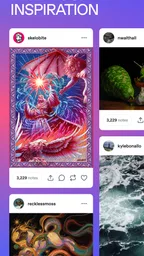
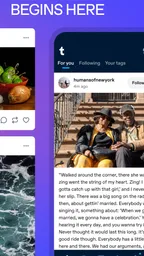
As a social app, Tumblr gives posts and creative material more room to be the point. Its mix of art, photo blogging, fandom, and personal writing can make browsing feel pleasantly unpredictable. Rather than relying only on a familiar circle, I can follow interests and discover the people who post about them. That makes the first sessions easy to fill, especially if I arrive with a few subjects I genuinely want to explore.
There is a useful distinction between following a topic and following a person. If I like a particular artist’s work, following that creator can bring more of their posts into my feed; if I’m mainly interested in a fandom or visual style, I can use that interest as a way to find a broader mix of voices. The trade-off is that a feed shaped by many interests can become uneven. Some days it feels like a lively collage; on others, the mix may not match what I’m in the mood to see.
For a new user, I’d spend the first few visits being deliberate rather than following every appealing account at once. Choose a handful of interests, notice which creators you actually want to see again, and let the feed develop from there. This is a small but meaningful habit: it gives Tumblr a better chance of becoming a personal discovery space instead of an endless assortment of posts.
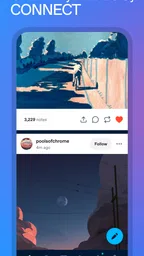
A realistic use case is a quiet commute or a short break when I want visual inspiration rather than urgent updates. I might browse photography, save a thought-provoking post in my own mental shortlist, and then find a new artist through the surrounding community. That kind of browsing is where Tumblr feels distinct from a messaging-first social network. It’s less useful if the goal is to coordinate plans quickly or see what a close group of friends is doing in real time.
Finding a comfortable way to participate
Not every visit has to turn into publishing. Tumblr can work as a place to follow creative work and read, while posting is there for people who want to keep a photo blog, share writing, or contribute to a fandom. I’d treat those as different modes: browsing is an easy entry point, while maintaining a public presence takes more intention. If you’re unsure whether you want to post, following a small set of creators first is a sensible way to see whether the community’s pace suits you.
The social experience depends heavily on what you choose to follow. A carefully shaped feed can feel personal without requiring every post to come from someone you know. But this also puts some responsibility on the user: if the mix becomes noisy, it may be more effective to adjust who and what you follow than to expect the app to guess your preferences perfectly. That hands-on quality is part of Tumblr’s charm and part of its work.
What keeps it useful after the novelty
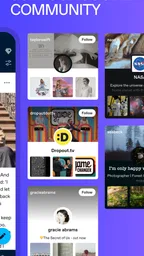
The month-to-month question is whether Tumblr continues to offer something I can’t get as easily elsewhere. For me, its strongest case is the overlap between creative discovery and community. A conventional photo-focused network may be simpler when I want polished visual updates, while a chat app is better for conversation with people I already know. Tumblr makes more sense when I want to follow an evolving interest and encounter a range of posts around it.
That value can last if my interests change or deepen. A new show, a design project, or a renewed interest in photography can give me a reason to revisit the app and find people sharing related work. It doesn’t have to become my main social destination to earn a place on my phone; it can be a specific tool for inspiration and fan culture. The important test is whether I still have a reason to open it once the novelty of discovering a new platform wears off.
One practical approach is to give each visit a purpose. I might open Tumblr to browse work connected to a project, check posts from a few creators I follow, or read what a fandom is discussing. This prevents casual browsing from swallowing more time than intended. It also makes it easier to recognize when the feed has stopped serving me: if I keep scrolling without finding anything I want to revisit, I can narrow my follows or take a break instead of treating habitual use as proof of value.
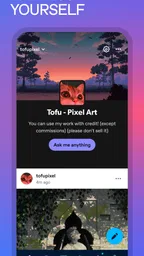
For people who create, Tumblr can also be a home for work that doesn’t fit neatly into a single visual format. Art, photos, and fan writing can sit within the same broader personal presence. That flexibility is attractive if you want your interests to coexist, but less compelling if you need a highly structured portfolio or a professional publishing workflow. I see it as a social space for sharing creative identity, not a replacement for every specialized tool a creator might need.
The upkeep behind a good feed
Tumblr is free to download, though it offers in-app purchases ranging from $0.99 to $149.99 per item. I would start with the free experience and decide later whether any purchase feels worthwhile for my own habits; the existence of purchases alone doesn’t make the app necessary for everyone. The more important ongoing cost is attention. A feed that reflects my interests takes occasional tending, and a social platform can become tiring if I follow more creators than I can comfortably keep up with.
Maintenance doesn’t have to mean a big cleanup. When a topic no longer interests me, or an account’s posts are no longer a good fit, unfollowing is a straightforward way to make the next visit more enjoyable. I’d also avoid following every account just because one post caught my eye. A single strong post doesn’t always predict a stream I’ll want to see regularly. That distinction helps keep a discovery-oriented app from turning into a pile of obligations.
There is a creator-side burden too. If I want Tumblr to be a place where people regularly find my work, I need to contribute rather than simply expect the platform to do the work for me. Sharing only when I have something I want to post is a perfectly reasonable approach, but it may not create a strong ongoing presence. I’d choose Tumblr for the pleasure of participating in a community, not because I expect it to function as a low-effort broadcast channel.
The app is developed by Tumblr, Inc. Its current version is 47.1.0.109, and it supports operating systems from version 8.0. It has a Mature 17+ age rating, a point parents and younger users should consider before making it part of a daily routine. Tumblr has been available since August 14, 2010, and its long-running identity is tied to the distinctive mix of fandom, art, photos, and personal expression that continues to make it recognizable.
When browsing starts to feel like work
The same openness that makes Tumblr interesting can also make it demanding. There is no guarantee that every session will offer a clean, consistent stream of exactly what I want. Interests overlap, communities have their own rhythms, and following a wide range of accounts can leave the feed feeling scattered. If I prefer a highly predictable experience, or want a platform that keeps my offline friendships at the center, another social app may be a better fit.
Content also matters. The Mature 17+ rating is a reminder that Tumblr is not a children’s social space. A user should be comfortable navigating a broad social environment and making choices about what they follow. If someone is seeking a carefully bounded, family-oriented feed, I would not recommend treating Tumblr as an automatic fit without considering that age guidance and the kinds of communities they intend to explore.
Another source of fatigue is the temptation to turn every interest into a feed to monitor. Following a community can be enjoyable; feeling obliged to keep up with every post is not. I’d use Tumblr in a way that lets me dip in and out, rather than trying to read everything. If the app begins to feel like a backlog, that’s a signal to simplify the follow list or reduce visits, not a reason to keep scrolling out of duty.
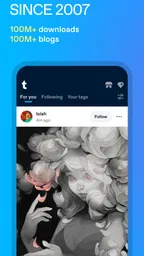
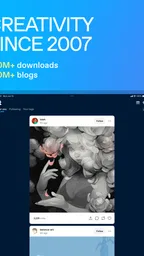
Its scale can be reassuring for someone seeking a broad community: Tumblr has over 100 million installs, with an average rating of 3.8 from around 3.7 million ratings and roughly 332,000 reviews. Those figures suggest a substantial audience, but they don’t tell me whether a particular corner of the app will suit me. The quality of the experience still depends on the people and subjects I choose to follow, so I’d judge it by my own feed rather than its popularity alone.
Who should keep it, and who can skip it
I’d keep Tumblr if I regularly look for fan stories, independent art, photography, or a place where several creative interests can meet. It is especially appealing when discovery matters more than maintaining a polished list of real-life contacts. Someone who enjoys finding a creator through a community and then seeing how their interests develop may get recurring value from it well beyond the first week.
I’d skip it if I mainly need direct communication, a straightforward personal update stream, or a tightly controlled source of news. In those cases, a messaging service, a more conventional social network, or a focused publication platform is likely to serve the need better. Tumblr can support personal expression, but its open-ended character is not automatically a benefit for someone who wants minimal browsing and predictable content.
For me, Tumblr earns lasting space only when I use it with a clear reason: to follow creative communities, discover work, or share something that belongs in that culture. It is free, but not costless in attention, and its best feed takes a little care. With that modest upkeep, it can remain a rewarding side destination; without a genuine interest to follow, the initial novelty may fade into aimless scrolling.
What we like
- Follow tags to discover posts on topics you enjoy.
- Save drafts and schedule posts for later.
- Customize your blog with themes and layout options.
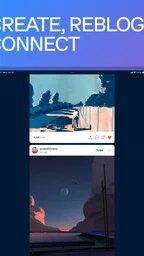
- Reblogging makes it easy to share posts with your own audience.
- Multiple blog formats support text images audio and video.
What could be better
- The interface can feel cluttered for new users.
- Search results may include content that is only loosely related.
- Some features and content vary by region or account type.
- Public posts can be copied or shared beyond your control.
- Frequent recommendations may interrupt browsing your followed blogs.





