



GO / Taxi app for Japan visit review
 Analysis by Appsdrops
When I plan a visit to Japan, I want a taxi app that makes the unfamiliar parts of a ride easier: getting started with a foreign phone number, arranging a pickup, and knowing what to expect before I commit. GO is a Japan-focused taxi app from GO Inc., and its recent support for non-Japanese phone-number registration makes it more approachable for visitors than an app that assumes everyone has a local number. I’d consider it a useful option to prepare before a trip, while keeping a second way to find transport in mind.
Trust starts with a clear use case
GO belongs in the Maps & Navigation category, but its role is narrower than a general map app: it is for arranging taxi journeys rather than exploring every route or transport mode. That distinction matters. I would not install it expecting a full travel planner, nor would I treat it as a substitute for checking a train route. I’d use it when a taxi is the practical choice and I want an app designed for that task in Japan.
The app is free, rated for Everyone, and developed by GO Inc. It has a 4.3 average from around 55,000 ratings and more than 10 million installs. Those figures suggest that it has seen broad use, but they are not a guarantee that every pickup will be smooth or that the app will suit every visitor. For me, the more important trust question is whether I can understand the steps that involve my phone number, location, and payment before relying on it.
The current version is 10.6.25, and the app was released on February 17, 2023. Its key change for an international visitor is that a non-Japanese phone number can now be used for registration. That removes a meaningful early hurdle, although it does not by itself answer every practical question about setting up an account or using the service in a particular part of Japan. I would register while I have a reliable connection and time to deal with any verification prompts, rather than waiting until I am standing outside with luggage.
What the foreign-number change does—and does not—solve
A phone number is often the first point where a travel app either welcomes a visitor or blocks them. Being able to register with a number from outside Japan is a helpful sign that GO has considered international users. It means I would not need to assume I must obtain a Japanese number just to begin registration. That is a concrete convenience, especially for a short trip where buying a local SIM solely to access a taxi app would be an unnecessary complication.
Still, registration is only one piece of a ride. A foreign number does not automatically tell me which payment methods will be accepted, how a pickup works at a busy station, or whether service is available at my destination. I’d check the app’s current setup screens and any instructions it presents, then keep enough flexibility to use a taxi stand or another transport option if the app cannot complete the journey I need.
Handle account and location choices deliberately
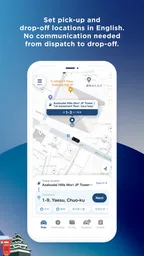
Taxi booking is inherently location-sensitive: the app needs a pickup point that makes sense for a driver. I’d therefore pay close attention when choosing or confirming where I’m standing, especially at a large station, airport, shopping complex, or hotel with several entrances. A pin dropped on the wrong side of a building can be a bigger problem than a complicated interface. Before requesting a ride, I would compare the selected point with a visible landmark and the exact entrance I can reach.
I also recommend checking what the app asks for during setup and at the point of booking, rather than granting or entering information automatically. The best habit is simple: provide what is required for the task you are doing, read the in-app explanations, and pause if a prompt does not make sense. I’m not going to assume a particular permission, privacy policy, or account-control feature that I can’t verify; a careful user should judge those details from the live app screens and the phone’s own settings.
That approach is useful beyond privacy. It reduces the chance of a rushed registration mistake and gives you a moment to notice whether your phone number is entered in the expected format, whether the pickup point is correct, and whether the journey details match what you intended. For a visitor, these small checks are more valuable than tapping through every prompt quickly just to get to the booking screen.
A practical workflow for a first ride
I’d set up the account before I need a taxi, using the non-Japanese number option, and then explore the booking flow without placing a request. That gives me time to understand what information is asked for and where pickup details appear. I would also save the hotel’s full address in a note or have it ready to copy, but I’d still verify the actual pickup location in the app rather than assuming an address alone will identify the right entrance.
On the day, I’d decide first whether a taxi is genuinely the best fit. If I have a suitcase, I’m travelling with someone who has mobility needs, or the weather makes a walk to transit unpleasant, a taxi can be worth the added cost compared with public transport. If I’m travelling light along a straightforward rail route, a station-to-station train journey may be simpler and easier to budget. GO is most useful when the taxi itself solves a problem, not merely because a phone app is available.
Before confirming, I’d check the pickup point, destination, and any displayed ride details carefully. If I’m in a crowded area, I’d move to a place where stopping is sensible and follow any instructions shown in the app. I’d avoid requesting from the middle of a busy curb or a location where a vehicle cannot safely pull in. This is a particularly useful habit in Japan’s dense city centres, where a nearby road or entrance may not be the one a visitor expects.
Where it fits among the usual alternatives
Compared with a general map app, GO is aimed at the taxi part of a trip rather than broad navigation. A map can help me understand the neighbourhood, compare walking and transit routes, or find a station; a taxi app is more directly relevant when I want to request a car. I would use both for different questions instead of expecting one to do everything. Checking the destination and surroundings on a map before booking can also help me choose a pickup point that is easier to identify.
Compared with a taxi stand, an app can make it more convenient to arrange a ride from somewhere that is not directly beside a queue, if the service is available and the pickup is workable. The stand remains a sensible fallback when I want immediate assistance, cannot get through registration, or am unsure how to describe my location. A hotel desk can also be a better choice when I need help communicating a destination or coordinating a pickup, particularly after a long flight.
Public transport is often the better alternative for predictable, high-volume city journeys, especially when the route is well served and I’m comfortable navigating stations. The trade-off is that stations can involve walking, stairs, transfers, and crowds, while a taxi may offer a more direct door-to-door option. I wouldn’t describe GO as a replacement for trains; I’d keep it for journeys where direct transport has a clear advantage.
Everyday situations where preparation pays off
Imagine arriving in Japan after a late flight with a tired child and luggage. I would not want to discover at the curb that registration is the part I have to solve first. Setting up the account in advance lets me see whether the foreign-number registration works on my phone and gives me time to consider a backup if it doesn’t. At the airport, I’d follow the location instructions shown in the app and use an official pickup area rather than choosing a convenient-looking pin that may not be accessible to a taxi.
For another common case, picture leaving a restaurant in an unfamiliar neighbourhood during rain. I’d use the app only after checking that I can identify a safe pickup point nearby. If the exact restaurant entrance is on a narrow street, a larger road or a clearly named public entrance may be easier for both sides, provided the app lets me select it and it is legal and safe to wait there. The useful lesson is not to treat the map pin as a minor detail: it is part of the ride arrangement.
For a short trip with several stops, I would think through the route before requesting rather than assuming the booking flow will handle every itinerary in the way I expect. If I need an unusual arrangement, I’d use the app’s displayed options and instructions as the guide, or ask staff for help before setting off. This avoids making a taxi request based on an assumption about stops or special requirements that the interface may not support.
Where I’d be cautious
The foreign-number option is welcome, but visitors should still expect some setup friction. Phone verification can depend on receiving a message or completing an in-app step, so I’d do it while I have access to my normal number and a stable internet connection. If I’m changing SIMs during the trip, I’d avoid making that change right before a ride until I know I can still access the account. That is a practical precaution, not a claim about a particular verification method.
Availability and suitability can also vary with the place and the moment. A taxi app is less useful if I’m in an area where I cannot get a workable pickup, if my phone battery is nearly empty, or if I’m unable to read the prompts comfortably. I’d keep the destination written in a form I can show to a driver or hotel staff, and know where a taxi stand is when travelling somewhere unfamiliar. These backups are especially sensible for a first-time visitor.
I would also skip relying on GO as my only transport plan if I need a guaranteed, highly specific arrangement or have accessibility requirements that must be confirmed in advance. In that situation, I’d contact the relevant provider or ask accommodation staff to help arrange a suitable ride. An app can streamline an ordinary request, but it should not be treated as proof that every special need or timing constraint can be met.
Who I’d recommend it to
I’d recommend trying GO if you’re visiting Japan, want a taxi option on your phone, and prefer to sort out registration before you travel. The non-Japanese number support is particularly relevant for people who do not plan to acquire a local number. It also makes sense for travellers who expect at least one journey where luggage, weather, fatigue, or a direct destination makes a taxi more appealing than public transport.
I’d be more cautious if you strongly prefer to avoid creating accounts, have limited mobile data, or do not want to use an app to coordinate a pickup. A taxi stand, hotel assistance, or rail travel may be a better fit depending on the journey. The app is a tool for a specific transport need, not a requirement for getting around Japan.
A measured recommendation for Japan trips
My view is that GO is worth preparing as one part of a visitor’s transport toolkit. Its foreign-number registration makes it more practical for international travellers, and its focused taxi purpose is easy to understand. I’d install it before the trip, review the account steps and visible choices at a calm moment, then use it when a taxi has a real advantage over walking or public transport.
At the same time, I would not rely on a rating or install count to answer personal questions about data handling, permissions, or payment suitability. Those are decisions to make from the current prompts and settings on your own device. Be deliberate with account information, check the pickup point every time, and keep a non-app fallback available. With those habits, GO can be a useful Japan taxi option without becoming your only plan for getting around.
What we like
- English-language menus make booking easier for many visitors.
- The app can help arrange rides without negotiating in Japanese.
- Pickup and destination details are shared with the driver.
- Useful for reaching places that are awkward to access by train.
- Fare estimates can help you plan your travel budget.
What could be better
- Availability may vary outside major cities.
- A mobile data connection is needed to book and track rides.
- Payment options may depend on your account and location.
- Traffic can make fares and arrival times less predictable.
- Some drivers may have limited English proficiency.





