

Game Maps IRL review
 Analysis by Appsdrops
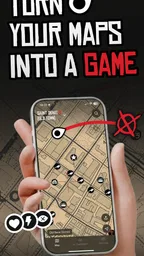
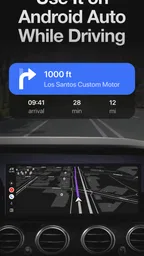
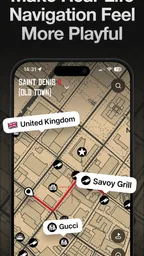
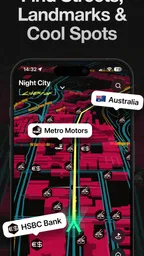
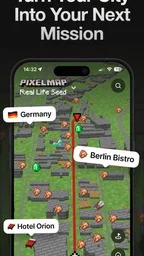
Game Maps IRL is built around a simple, appealing idea: bring the feel of a game map into the places you move through in everyday life. Its short description, “Game Maps IRL,” gets straight to the point, while its promise of a minimap for real-life missions invites you to think of an ordinary outing as a small adventure. I like that framing because it gives navigation a playful twist without requiring a complicated pitch. At the same time, the concept sets a clear expectation: this is an app for people curious about connecting map-based play with real-world movement.
Turning an outing into a mission
When I approach Game Maps IRL, the useful starting question is not simply where I want to go, but what sort of real-life mission I want the map idea to support. That distinction matters. A conventional navigation app is usually judged by how directly it gets someone from one point to another. Here, the appeal is more imaginative: the map is part of the experience, and the journey can feel like a task rather than just a commute.
That makes the app easiest to understand as a companion for people who enjoy game-inspired ideas in familiar surroundings. A walk, an errand, or a trip through a neighborhood can feel less routine when you approach it with a mission mindset. The concept encourages curiosity, but it does not change the real-world basics: you still need to decide where you are going, pay attention to your surroundings, and use good judgment while moving.
The category is maps and navigation, which gives the app a practical context alongside its playful one. I see that combination as its central appeal. It is not merely a game-themed label pasted onto an unrelated utility; the core image is a minimap for real life. For someone searching for a game-inspired navigation app, that positioning is easy to grasp and gives a good sense of the experience the title wants to evoke.
Starting with a clear intention
A smoother experience begins with choosing a manageable outing. If I head out with a vague idea and expect the app to turn it into a complete adventure on its own, I may be asking too much of the concept. A better approach is to decide what I want from the trip first: a bit of exploration, a reason to take a different route, or simply a playful way to think about a familiar journey. That intention gives the minimap idea something concrete to support.
This matters especially when the real destination has practical importance. If I am going somewhere on a schedule, I would put reliability and awareness ahead of the game-like framing. If I have more time, the imaginative angle can take center stage. In my view, that flexibility is a strength: the premise can accompany an ordinary outing without demanding that every trip become an elaborate event.
The app is free to install, so trying the basic idea does not require an upfront purchase. It is available to a broad audience, with an Everyone content rating, and its listed minimum operating system is Android 7.0. Those details help establish who can consider it, though the best fit still depends on whether the person actually enjoys mixing real-world exploration with game-like language.
Following the flow from plan to movement
Once I have a destination or a general purpose in mind, the next step is to treat the map as a guide to the outing rather than as permission to switch off my attention. That is the right balance for any map-centered activity in public. I can look for the broad direction, take in what is around me, and decide whether the route still makes sense in the moment. The playful premise works best when it adds interest instead of competing with awareness.
That step-by-step mindset also keeps expectations grounded. A minimap can make a journey feel more game-like, but real streets, sidewalks, crossings, and changing conditions are not a game board. I would pause somewhere safe before checking a screen, and I would never let the mission framing distract me from traffic or other people. Those habits are not a drawback unique to this app; they are part of using any map app for walking responsibly.
The simplest workflow is therefore a human one: decide what the outing is for, open the map experience, use it as a prompt for the journey, and make sensible decisions as circumstances change. That is less about chasing a perfect sequence of taps and more about letting the concept add a little structure to a trip. For me, that is a more convincing use than expecting a map to manufacture excitement without any input from the person carrying the phone.
Handoffs between screen and street
The most important handoff is between the digital map and the physical environment. The screen can shape how I think about a route, but the street supplies the details that matter: which way feels safe, whether a crossing is suitable, and whether I should stop to reassess. A good real-life mission leaves room for those decisions. The moment I treat the phone as more authoritative than what I can see around me, the playful idea stops being helpful.
There is also a handoff between the app’s framing and my own goal. The app presents the idea of real-life missions, but I still bring the purpose, pace, and boundaries of the outing. That can be a plus for people who like making their own fun. It can be less immediately satisfying for someone who expects a fully directed game with a detailed narrative or a rigid list of objectives. The title’s appeal depends partly on how much imagination the user wants to contribute.
Another practical handoff happens when an outing involves other people. If I am walking with a friend or meeting someone, the mission concept should fit around the shared plan rather than take it over. I would use it as a light framing device, not as a reason to ignore a companion or delay an agreed arrival. That makes the experience easier to bring into everyday life, where plans often include more than one person and a map is only one part of the journey.
There is a similar balance when switching from exploration to destination-focused travel. Sometimes the goal is simply to get somewhere; at other times, the route itself is part of the fun. I appreciate that the real-life mission idea can sit between those modes. The user can decide how much attention to give it, keeping the trip practical when necessary and allowing more room for playful exploration when circumstances permit.
What the experience offers
Game Maps IRL has found a substantial audience for a focused concept: it has over 500,000 installs, around 99,000 ratings, roughly 1,000 written reviews, and a 4.5 average rating. Those figures suggest broad interest, but they do not tell me what any individual outing will feel like. The more useful takeaway is that the game-map-meets-real-life premise has attracted plenty of people who are willing to try it.
The app is developed by Retry Apps, and its current version is 2.5. It was released on May 11, 2025. I would keep those details in perspective: a version number and release date identify the product, but the everyday value comes down to whether the central idea suits the way someone likes to explore. The app’s strongest feature, as presented, is its recognizable premise rather than a long list of claims that would need to be taken on faith.
There are in-app purchases, with items ranging from $4.99 to $79.99. That is worth knowing before spending time in the app, particularly for anyone who prefers to understand purchase options early. The free starting point makes it possible to consider the concept without paying upfront, while the presence of optional purchases means users should make deliberate choices and check what is being offered before buying anything.
For searchers comparing a free maps and navigation app with a playful angle, that combination is straightforward: the app is free to download, while in-app items are available at different prices. I would not judge the experience by purchases alone. The first question is whether the real-life mission framing clicks; the next is whether any optional content seems worthwhile for that person’s own use.
Where the flow can break
The main friction comes from expectation. “Game Maps IRL” is a memorable name, and the idea of missions naturally makes people imagine an active game. Someone arriving with that expectation may want a highly structured adventure, explicit goals, or a detailed progression system. The safer way to approach it is to focus on what the app clearly communicates: a minimap concept for real-life missions. Keeping that distinction in mind avoids confusing an evocative premise with a promise of a particular game system.
A second point of friction is that real-world movement is unpredictable. A route that seems appealing on a screen may be inconvenient or unsuitable once I am outside. Any map-based outing can require a change of plan, and that is especially important when the journey is framed as a mission. I would treat detours, pauses, and abandoned plans as normal decisions rather than failures. The point is to support a better outing, not to complete a digital idea at the expense of comfort or safety.
The screen itself can also interrupt the experience if I check it too often. A map is useful, but constantly looking down makes walking less enjoyable and can make a simple trip feel more demanding than it needs to be. I prefer a rhythm of checking, putting the phone away, and paying attention to the surroundings. That approach gives the playful theme room to work while keeping the physical journey in charge.
There is a learning curve in deciding how to use an open-ended concept. People who enjoy improvising may find it refreshing, while people who want a conventional, destination-first navigation tool may prefer a more familiar approach. That difference is not necessarily a flaw; it is a question of fit. The app is most appealing when the user wants a map experience with a game-like frame, rather than merely a no-frills route from one address to another.
Who is likely to enjoy it?
I would recommend giving Game Maps IRL a look if the idea of turning everyday movement into a small mission sounds fun. It is a natural match for curious walkers, fans of game-inspired concepts, and anyone who likes adding a theme to an ordinary outing. People who enjoy setting their own pace may also appreciate the open-ended feel implied by its real-life premise.
On the other hand, someone who wants a purely practical navigation experience may not care much about the mission angle. Likewise, a player looking for a conventional mobile game should be careful not to assume that a game-themed map necessarily works like a standard game. The app’s identity sits in the crossover: it borrows the language of maps and missions and applies it to real-world movement.
My overall impression is that the premise is easy to understand and has a pleasant everyday appeal. It gives users a reason to look at familiar places differently, while still leaving them responsible for their own plans and decisions. That balance is important. A good real-life map experience should make an outing feel more engaging without pretending that streets and daily responsibilities are part of a controlled game environment.
A practical final take
Game Maps IRL is best approached with a modest, clear goal: pick an outing, let the minimap idea add a little sense of purpose, and stay attentive to the real environment from start to finish. Its appeal is not that every journey needs to become an epic adventure. It is that even a familiar route can feel different when I give it a playful frame and make space for curiosity along the way.
For me, the app’s strongest point is that simple shift in perspective. It sits in maps and navigation but invites users to think in terms of real-life missions, creating a distinctive alternative to treating every trip as pure transportation. Its free entry point makes the concept approachable, while the in-app purchase range is useful to keep in mind before making any optional purchase.
If you are looking for a game-inspired map app and enjoy adding a little adventure to everyday movement, this is an appealing concept to explore. Go in expecting a playful way to frame real outings, not a reason to ignore the world around you, and the idea makes the most sense. Used thoughtfully, Game Maps IRL can give an ordinary trip a fresh point of view while keeping the real journey—and the person taking it—firmly in control.
What we like
- Offers map-based gameplay for exploring familiar places.
- Can make local exploration feel more like an adventure.
- Provides a distinctive real-world theme for map game fans.
- May encourage players to notice nearby streets and landmarks.
- Adds a fresh alternative to conventional fantasy maps.
What could be better
- Gameplay may be less engaging in areas with sparse map data.
- Exploring in person can raise safety concerns near traffic.
- Location features may require access to device permissions.
- The experience can be limited by GPS accuracy.
- Outdoor play may use extra battery power.





