
Friend Location: Phone Tracker review
 Analysis by Appsdrops
I can see why Friend Location: Phone Tracker might appeal quickly: when people you care about are travelling, meeting up, or heading home, knowing where they are can feel reassuring. The more important question is whether that reassurance remains useful once the novelty of checking a map wears off. My view is that this app makes the most sense as a shared, occasional safety aid—not as a reason to keep tabs on friends all day.
From first-week curiosity to a useful routine
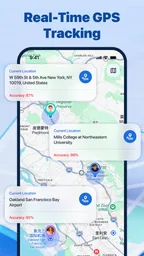
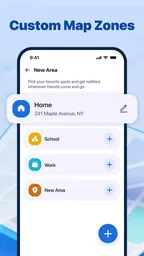
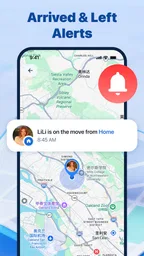
Friend Location is a free maps and navigation app from MG-MagicSoftGaming. Its central idea is straightforward: share locations with friends who have authorized it, and receive safety notifications. That focus makes the app easier to understand than a broad navigation tool, but it also means its value depends on a small group agreeing to use it and finding the arrangement comfortable.
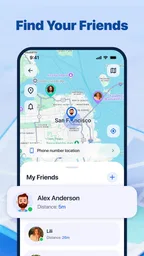
In the first few days, a shared map can make practical coordination feel simpler. Imagine friends travelling separately to a busy venue: instead of repeatedly asking who has arrived, everyone can check the location they have been permitted to see. On another day, someone walking home might share their whereabouts with a trusted friend for the journey. These are limited, clear purposes, which is preferable to turning location sharing into a vague expectation of constant availability.
The first-week trap is treating every location update as something that needs attention. A map is useful when it answers a real question—“Are they close to our meeting point?”—but less useful when it becomes a habit of checking where everyone is. I would agree on a reason and a time period for sharing before making it part of a group routine. That conversation matters as much as installing the app: consent should be ongoing and easy to revisit.
The app is rated for Everyone, and it is listed as having an average rating of 3.9 from around 1,300 ratings, with 91 written reviews. Those figures suggest a mixed but established reception rather than a universally loved essential. They are a useful prompt to keep expectations modest: judge it by whether it works for your particular group and use case, not by assuming that a location-sharing app will suit every relationship.
When location sharing earns its place
Friend Location is best suited to small, trusted circles that have a specific coordination or safety need. Friends travelling together, family members arranging a pickup, or people who want a companion to know their progress on a particular trip may find the concept practical. The key is that the group should be comfortable sharing location and should understand when that sharing is wanted.
A concrete way to make it useful is to treat it like a trip tool rather than a permanent social feed. Before setting out, agree who needs access and why; after the journey or meetup, reassess whether sharing is still relevant. This avoids the awkwardness of leaving an old arrangement running simply because nobody thought to discuss it. It also helps distinguish safety use from casual curiosity.
The distinction matters because location information is personal. Even with authorized friends, sharing should not be assumed to mean unrestricted access forever. I would avoid adding people just to make the map look more active, and I would not use location as a substitute for asking someone directly whether they are safe or need help. A notification can support communication, but it cannot provide the full context of a person’s situation.
Month-to-month value depends on a shared habit
After the initial curiosity fades, the app’s recurring value comes down to whether it solves a repeated problem. If your group often coordinates arrivals or has a clear reason to share location during journeys, checking the map can become a small, useful step. If you only need to find one another once in a while, opening a familiar messaging app and sending a quick update may be simpler.
That is the most important comparison with the usual alternatives. Messaging apps are often already part of a group’s routine, so a text such as “I’m at the entrance” may be enough for one-off plans. A dedicated location-sharing app is more appealing when seeing a person’s position is more useful than exchanging repeated messages. Conventional navigation apps, meanwhile, are the better fit when the main task is finding a route or directions rather than keeping in touch with an authorized circle.
I would decide based on the question you repeatedly need answered. If it is “Where should we meet?” a message may do the job. If it is “Are they still on the way?” shared location can reduce back-and-forth. If it is “How do I get there?” use a navigation service designed for directions. Choosing the lightest tool that solves the problem helps the app retain value instead of becoming another icon that everyone forgets to open.
One useful group habit is to agree on a simple check-in convention. For example, members can say when they are sharing for a particular outing and when that arrangement is no longer needed. That does not require any special app function; it is a practical way to prevent confusion about why someone is visible. It also makes the arrangement easier for less technically confident friends to understand.
The app has more than one million installs, so it has reached a sizable audience, but scale alone does not make it a good fit for your circle. A group that rarely travels together may get little lasting benefit. A group with recurring meetups or journeys may find that a shared location view cuts down on repeated “where are you?” messages. The difference is not how often the app is opened in the first week; it is whether it resolves a real recurring friction.
Maintenance is mostly about people and expectations
Location-sharing tools require a little social maintenance. Friends change plans, devices get replaced, and the reason for sharing can disappear. I would make a habit of checking that everyone still wants to participate, especially after a trip or event has ended. That small check-in is more useful than assuming a past yes applies indefinitely.
There is also the practical burden of getting a group onto the same routine. One person may be comfortable with live location sharing while another prefers a message when they arrive. If the group cannot settle on a shared expectation, the app may create more coordination than it removes. It is better to let people opt out without having to justify themselves than to make visibility a condition of friendship or safety.
Friend Location is currently at version 1.1.2 and requires Android 7.0 or later. That makes checking device compatibility a sensible first step, particularly if friends use older phones. The app is free, which lowers the barrier to trying it, but free access does not remove the need to think carefully about who is included and how the group will use location information.
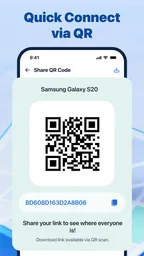
Since the app’s usefulness depends on authorized sharing, the most important setup question is not how many people you can add; it is whether each person understands what they are agreeing to. Before relying on it for a journey, confirm that the intended people are participating and that everyone knows the plan. For anything urgent, keep ordinary communication available too rather than treating a map as proof that everything is fine.
Where fatigue can set in
The main source of fatigue is the feeling of being watched. Even people who initially agree to share may later find constant visibility uncomfortable, especially if nobody has defined when it is appropriate. I would not recommend this app for friends who disagree about privacy, for anyone who feels pressured to share, or for groups that expect members to explain every movement. In those situations, direct messages or voluntary check-ins are healthier choices.
Another limitation is that location information can be easy to overinterpret. Seeing someone in one place does not tell you why they are there, whether they are available, or whether they have seen your message. A location marker is not a conversation. If a plan changes, asking directly is still clearer than making assumptions from a map.
There is also a risk of habit without purpose. A quick glance can turn into repeated checking, especially when friends are out separately. That can make a tool intended to reassure feel intrusive or distracting. I would keep its role narrow: use it to coordinate a meeting or support a specific trip, then return to ordinary communication. If the group finds itself checking out of boredom, that is a sign the arrangement may no longer be earning its place.
For people who mainly need route planning, this is not the right replacement for a full navigation app. For people who want to share a single arrival update, a text is likely less effort. And if someone needs a formal safety process, a consumer location-sharing app should not be treated as a substitute for emergency services or an agreed plan with trusted contacts. Matching the tool to the stakes is part of using it responsibly.
Does it deserve a lasting spot?
My long-term verdict is conditional but positive: Friend Location can earn a place on a phone when a trusted group has a recurring, clearly defined reason to share whereabouts. Its focused purpose is more compelling for coordinating journeys than for general social browsing. I would recommend trying it with a small circle and a specific use case, then keeping it only if it continues to save effort or provide meaningful reassurance.
The developer, MG-MagicSoftGaming, has made a free app that addresses a recognizable need, and the audience size shows that many people have tried it. Still, the app’s lasting value is not automatic. A good location-sharing routine needs consent, a shared understanding of when it is useful, and the freedom to stop. Without those conditions, even a convenient map can become a source of tension.
If you want a simple way for authorized friends to share location and receive safety notifications, this is worth considering—especially for planned outings and journeys where repeated messages are inconvenient. If your need is occasional, route-focused, or privacy-sensitive, a message or standard navigation app may be a better fit. I would keep Friend Location only while it serves a clear purpose, and I would revisit that decision as the group’s needs change.
What we like
- Location sharing can help friends coordinate meetups.
- A map view makes shared locations easy to understand.
- Useful for checking whether friends are nearby.
- Can provide reassurance when traveling with a group.
- Designed for social location sharing rather than navigation alone.
What could be better
- Location access may reduce battery life.
- Accurate tracking depends on GPS and network coverage.
- Friends must agree to share their location.
- Continuous location sharing can raise privacy concerns.
- Some features may require payment or an account.





