
Empower - Your ride, your way review
 Analysis by Appsdrops
I look at a ride-booking app differently when I’m thinking about who can use it comfortably, not just how quickly it can summon a car. Empower is a Maps & Navigation app from Yazam Inc, and its central appeal is choice: it aims to give riders an alternative to relying on a single familiar service. In my view, that can matter for people whose routines, budgets, or comfort levels make one-size-fits-all transport a poor fit. The important caveat is that an app’s promise of choice does not automatically make every step accessible or every ride suitable for every person.
Finding your way through the booking experience
Empower’s store summary points to a straightforward purpose: helping riders arrange trips on their own terms. That framing is useful if you already know you want a ride and are comparing options, but it does not tell me how every screen behaves in practice. I would treat clarity as something to check during a low-pressure first session rather than assume that a ride-booking interface will suit everyone equally well.
For someone who reads small text slowly, has limited vision, or finds dense screens tiring, the practical test is whether the essential choices are easy to distinguish: where the trip begins, where it ends, and what decision is needed before confirming. I recommend entering a familiar destination while seated at home, taking time to inspect each step, and checking the pickup point before travel. That small rehearsal can prevent the stress of trying to interpret a screen while standing outside or managing other tasks.
People who rely on screen readers or other assistive technology should also test the booking flow before depending on it for an important appointment. The key question is not simply whether the app opens, but whether each control is announced in a useful order and whether the final ride details can be reviewed without sight. I would not assume that the existence of an app means every interaction works equally well with every device setting.
Empower is free, has an Everyone content rating, and has a 4.8 average from around 20,000 ratings. Those figures suggest that many people have found it worth trying, but they cannot tell an individual rider whether the interface will be readable on their phone or compatible with their preferred access tools. I would use ratings as a reason to consider a test, not as a substitute for one.
Make the pickup step less stressful
One often-overlooked part of booking is not selecting a destination but explaining where to meet. A large building, a busy curb, or several nearby entrances can turn an otherwise simple trip into a confusing handoff. Before confirming, I’d pause to make sure the pickup location is the one I can actually reach, rather than the nearest point on a map that happens to be awkward in real life.
This matters especially for riders who walk slowly, use mobility aids, travel with children, or need extra time to get ready. A pickup point that looks close on a screen may still involve a difficult crossing, stairs, or a crowded entrance. If the app’s map or pickup instructions do not make the meeting place clear, contacting the driver through whatever options are available in the ride flow may help, but I would not leave that clarification until the last moment.
A useful habit is to book from a stable, recognizable landmark rather than while moving through a station or shopping area. That gives you time to check the route and decide whether the pickup is workable. It also reduces the chance of juggling a phone, bags, and conversation while trying to locate a car.
Different bodies, senses, and travel needs
Ride apps can reduce the need to navigate a long walk or a complicated public-transport transfer, which may be helpful for someone who is tired, in pain, carrying equipment, or traveling with a companion. Empower’s emphasis on choice may make it worth comparing when the usual option is not convenient. Still, I would separate the benefit of being able to request a ride from the question of whether a particular vehicle and pickup arrangement meet an individual’s needs.
If you use a wheelchair or need a vehicle with a specific access setup, confirm the available ride options before relying on the app for a time-sensitive trip. A general ride-booking service should not be treated as a guarantee of an accessible vehicle. The same caution applies if you need room for bulky medical equipment, a service animal, or a companion who must travel beside you. I would plan a backup until I knew that the available choices fit my circumstances.
For riders with hearing differences, a phone-based booking process can be convenient because it avoids having to explain a trip face-to-face at a counter. But the journey itself may still involve communication at pickup or during changes. If spoken directions are difficult to follow, check whether the app presents the ride information in a way you can review visually, and make sure your phone is easy to access when the car arrives. I would not rely on sound alerts alone when a missed notification could mean missing the pickup.
People who are sensitive to visual motion, bright screens, or rapid changes may prefer to complete the booking while stationary and then put the phone away. Constantly watching a moving map can add needless discomfort. I find it more practical to confirm the destination and pickup first, then use only the amount of live checking that helps me feel oriented. A map is a tool, not something that needs to occupy the whole journey.
For cognitive or attention-related needs, predictable preparation can make a ride less demanding. I’d save or write down the destination, check the pickup point, and leave enough time to read the ride details without rushing. If another person helps with travel planning, agreeing in advance on the destination and meeting spot can avoid last-minute decisions on a crowded sidewalk.
Where choice helps—and where it has limits
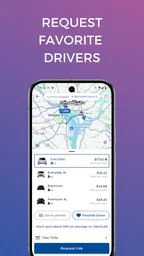
Compared with the usual alternatives in this category, Empower is most compelling when a rider wants another place to check for a ride rather than assuming one app is always the best fit. The ability to compare services can be useful when availability, fare, or personal preference varies from trip to trip. I would still keep a familiar alternative available, especially when traveling at an unusual hour or from a location where getting a ride quickly matters more than comparing every option.
That comparison is not only about cost. A cheaper fare may be a poor trade if the pickup is less convenient, the booking takes longer, or the available vehicle does not suit the rider. When comparing, I’d look at the full experience: how far I must walk to meet the car, whether the ride details are understandable, and whether I can manage any communication needed. For someone who values a predictable routine above having several choices, sticking with a service they already know may be easier.
A realistic example is an evening trip home after a medical appointment. A rider may be tired, carrying paperwork, and reluctant to walk to a distant pickup point. Empower could be useful as another option to check, but I’d first choose a meeting place that is safe and easy to reach, verify that the ride suits any mobility or sensory needs, and keep a backup plan in mind. That workflow makes the app part of a considered decision rather than the entire transport plan.
Practical situations where it may fit
Empower may suit someone who already uses ride-booking apps and wants another option to compare before committing. It may also help a person who occasionally needs a direct trip that would otherwise involve several transfers, or someone planning a ride for a relative and wanting to explore alternatives together. In each case, the value comes from having another choice to evaluate, not from assuming that one app solves every transport problem.
It is less likely to be the right sole option for a rider who needs a guaranteed specialized vehicle, cannot comfortably use a smartphone without assistance, or must arrive at a fixed time with no room for delay. In those situations, I’d arrange transport through a provider whose service directly matches the requirement, or have a trusted person help confirm the trip. A backup is sensible even for experienced riders because availability and pickup conditions can vary.
If you are setting it up for someone else, I recommend letting that person take part in the first booking instead of making all the decisions for them. They can confirm the destination, learn where the important details appear, and say what kind of pickup point feels manageable. That approach respects independence while still offering support, and it can reveal friction that a helper might not notice.
What to know before depending on it
Empower is a free app, and its current version is 2.15.5; it runs on Android 7.0 or later. It was released on December 9, 2019, and has reached over 100,000 installs. Those details make it easy to consider as a trial, but compatibility alone does not settle whether the experience will work well with a particular phone, assistive setup, or local trip.
The app has around 2,600 written reviews, alongside its broader rating history. I’d read recent comments with a specific question in mind—such as whether people describe confusing pickup experiences or difficulty completing a booking—rather than treating general praise or criticism as proof of how it will behave for me. A rider’s needs can be much more particular than an average score can capture.
Yazam Inc is the developer behind Empower. As with any ride app, I’d make sure I understand the details shown at the point of booking and keep my phone charged enough to handle the pickup. If I am traveling with someone who may need help communicating, I’d agree on a simple plan for what to do if the car is difficult to locate or the pickup point turns out to be unsuitable.
The main friction I would watch for is the gap between selecting a ride on a screen and completing a real-world pickup. Maps can make locations appear straightforward when sidewalks, entrances, traffic, and crowding complicate them. This is why I would not judge the app only by how quickly I can tap through a booking. The more important measure is whether I can understand the plan, reach the meeting point, and manage the handoff comfortably.
My inclusive verdict
Empower is worth considering as an additional ride-booking choice, especially for people who want to compare options rather than depend on one familiar service. Its free availability and broad adoption lower the barrier to trying it, while the strong average rating gives a new user a reason to take a closer look. I would still test the full process with an uncomplicated trip before using it for an appointment or other journey where a delay would be costly.
For riders with access needs, the right question is not simply whether the app is usable in general. It is whether the booking steps, pickup location, vehicle, and communication fit that person’s circumstances on that particular trip. A short practice run can answer much of that more reliably than assuming that a popular interface will be comfortable for everyone.
I’d recommend Empower as a useful alternative to keep in your transport toolkit, not as a universal replacement for established plans. It makes the most sense for someone comfortable comparing ride options and willing to check the details before confirming. If you need specialized accessibility features, highly predictable service, or support with smartphone interactions, choose a transport option that explicitly meets those needs and use Empower only when it genuinely adds a workable choice.
What we like
- Compare ride options and fares before booking.
- Schedule trips in advance for easier planning.
- Share trip details with trusted contacts.
- Track your driver's progress in the app.
- Save preferred places for quicker bookings.
What could be better
- Availability can vary by city and time.
- Fares may change with demand or traffic.
- Pickup estimates can shift during busy periods.
- Some ride options may not be offered locally.
- A stable internet connection is needed to book and track rides.





