



Delish review
 Analysis by Appsdrops
I see Delish as a recipe companion for the moment when “What should I make?” is the hardest part of dinner. Its appeal is less about replacing a well-worn cookbook or a precise meal-planning system and more about giving everyday cooking a fresh starting point. I’d recommend it to someone who enjoys browsing for ideas and wants food inspiration close at hand, while being more cautious if they need rigorous nutrition tracking, highly structured planning, or a guaranteed match for specific ingredients.
Inspiration first, with practical value for everyday cooking
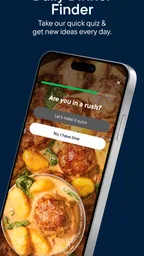
Delish is a free Food & Drink app from Hearst Communications, Inc. Its central promise is simple: offer recipe ideas and inspiration for daily cooking. That focus shapes how I’d use it. Rather than opening it with a fully specified recipe in mind, I’d turn to it when I have time to browse, want to shake up a familiar routine, or need a nudge toward something different from my usual rotation.
That distinction matters because recipe apps can serve very different purposes. Some work best as searchable databases; others are organized around planning, shopping, or keeping a personal recipe archive. Delish is most compelling as an idea source. If you like discovering dishes before deciding exactly what you want, that exploratory approach can make the app feel more enjoyable than searching a general web browser, where results may be scattered among unrelated pages and distractions.
It also makes sense for cooks who do not need every meal to be an elaborate project. Inspiration is useful on an ordinary weekday, when the challenge is often deciding what sounds appealing rather than learning a complicated technique. I would use the app to help break a streak of repeating the same few meals, then choose a recipe that suits the time and ingredients I actually have.
There is a trade-off in that emphasis. An inspiration-led app cannot automatically solve every kitchen constraint just by offering ideas. If you need recipes filtered tightly around allergies, exact pantry contents, a strict calorie target, or a carefully planned week, make sure the app’s current tools meet those needs before relying on it as your main system. For those jobs, a specialized meal planner or nutrition app may be a better fit.
How it fits into a real cooking routine
Imagine arriving home without a dinner plan and with only a rough idea of what is in the kitchen. I would browse Delish for a direction first, then check the recipe against the time I have and the ingredients I can use. If a dish calls for something inconvenient, I would treat it as inspiration rather than assume every ingredient can be swapped without changing the result. That small change in approach makes recipe browsing more useful: choose a promising idea, then decide whether it is realistic tonight.
For a more deliberate weekend meal, the app can play a different role. I might browse when I have time, select a dish that feels worth trying, and make a separate shopping list before heading out. That extra step is not a flaw in the recipe itself; it is a sensible way to bridge inspiration and execution when the cooking app is not also your complete grocery workflow.
A third use is building variety without overhauling how you cook. Instead of searching for a wholly unfamiliar dish every time, I would look for one new idea to rotate into a familiar pattern: a different main course, a fresh side, or a new flavor direction. This keeps experimentation manageable and makes it easier to learn what kinds of recipes are genuinely worth returning to.
What the app’s standing tells me—and what it cannot tell me
Delish has an average rating of 4.6 from around 700 ratings, with roughly 227 written reviews, and it has passed 100,000 installs. I take that as a useful sign that people are finding a reason to try it, not as proof that every cook will love its approach. Ratings can tell me there is an audience; they cannot tell me whether its recipe style suits my household, skill level, or dietary needs.
The app is free to download, so trying it does not require an upfront purchase. It also offers in-app purchases priced from $4.99 to $34.99 per item. That is worth keeping in mind if you are comparing it with free recipe browsing elsewhere: the basic download is accessible, but some optional purchases may change the overall cost depending on what you choose. I’d explore the free experience first and only pay if a specific purchase clearly adds value to the way I cook.
Its age rating is Everyone, which makes the app broadly accessible as a general food and recipe product. The current version is 2.5.0, and it was released on Sep 30, 2025. Those details are useful context, but the practical test remains whether the current app gives you recipes and browsing that feel relevant, clear, and easy to use in your own kitchen.
The main limitation: inspiration still takes a bit of work
The biggest reason I would not treat Delish as a complete cooking system is that inspiration and planning are different jobs. A collection of appealing recipes can help answer what might be good to eat, but it does not necessarily settle what can be made with the food already in the fridge, what fits a tight schedule, or how to organize several dinners around one shopping trip. I would not assume those tasks are handled automatically.
That means a little judgment is still required. Before committing to a recipe, check the ingredient list and preparation steps against your evening. A dish that looks ideal while browsing may be a poor choice if you are short on time or missing a key ingredient. This is particularly important for newer cooks: inspiration is a great way to build confidence, but a recipe only helps if its demands are clear and manageable for you.
There is also a cost consideration for people who prefer a strictly free experience. Since optional purchases range up to $34.99 per item, the app may not suit someone who wants every feature or piece of content included without additional spending. I would compare the specific purchase with what you already get from free recipe sources rather than buying out of habit. If your main goal is simply to find one dinner idea, free browsing elsewhere may be enough.
For highly structured cooking, I would also compare it with a dedicated meal-planning tool. Those apps are often a better match when the priority is coordinating a whole week, managing dietary rules, or turning a plan into an organized grocery routine. Delish makes more sense when the starting point is curiosity and variety, not a tightly managed schedule.
Who I think will get the most from it
I would point Delish toward home cooks who like to browse, enjoy discovering new meal ideas, and do not mind making the final decision themselves. It is especially appealing if your routine has become predictable and you want a low-friction way to find a reason to cook something different. Casual cooks can also benefit from having inspiration in one place rather than beginning every search from scratch.
It may be less suitable if you cook around strict medical or dietary requirements and need dependable, detailed filters before anything else. In that situation, I would first verify that the recipes and tools fit your needs, and keep a more specialized source as the primary option. Likewise, if your biggest problem is shopping and scheduling rather than deciding what sounds good, choose an app built around planning instead of expecting an inspiration app to do that work.
For a household with mixed tastes, I would use Delish as a shortlist-maker rather than letting it make the decision for everyone. Find a few candidates, then check which one fits the group, available ingredients, and time. That approach avoids the common frustration of choosing a tempting recipe before discovering that it does not suit the people at the table or the evening’s constraints.
My verdict
My overall view is positive, with a clear qualification: Delish is strongest when you want fresh ideas, not when you expect a single app to manage every part of cooking. The combination of a free download and a recipe-focused purpose makes it easy to try, while its optional purchases mean it is sensible to decide what you need before spending. Its 4.6 average suggests a favorable reception, but personal fit matters more than the number.
I would recommend giving it a look if you enjoy exploring recipes and want help escaping the same-meal rut. I would skip it as a primary tool if your needs center on strict dietary controls, detailed nutrition management, or end-to-end weekly planning. Used for what it does best—turning indecision into a promising dinner idea—it can be a useful addition to an everyday cooking routine rather than a replacement for every other kitchen tool.
What we like
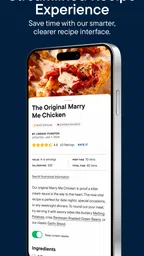
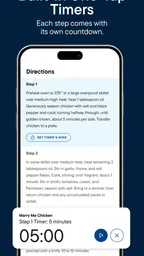
- Step-by-step recipes are easy to follow.
- Recipe videos offer a helpful visual guide.
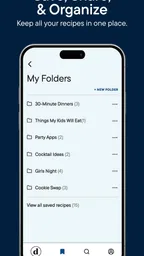
- Saved recipes make favorites easy to find.
- Meal planning helps organize weekly cooking.
- A wide range of dishes suits different occasions.
What could be better
- Some recipes require specialty ingredients.
- Video content may use significant mobile data.
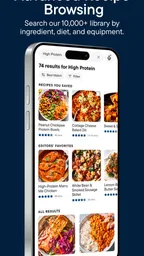
- The large recipe collection can feel overwhelming.
- Some features may require an account.
- Recipe availability may vary by region.





