
Checkers & Rally's Rewards review
 Analysis by Appsdrops
When I’m hungry and already know I want Checkers or Rally’s, I’d rather place the order before I reach the counter than work through the menu in a queue. That’s the practical appeal of Checkers & Rally’s Rewards: it puts restaurant ordering and rewards in one place, with options for ordering ahead and delivery. It is a focused tool for people who visit these restaurants, not a general food-discovery app, and that narrow purpose is both its strongest point and its main limitation.
What ordering ahead feels like
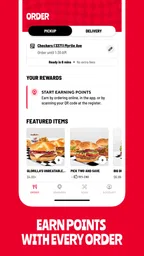
The app is built around a straightforward situation: decide what you want, arrange the order, and spend less time handling the transaction at the restaurant. I find this most useful when I’m fitting a quick meal into a busy day. If I’m leaving work or running errands, ordering ahead can make it easier to plan the stop instead of deciding everything after I arrive.
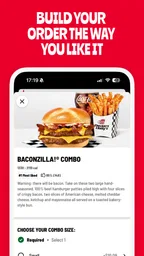
That convenience depends on being able to make the choice calmly. Looking through a restaurant menu on a phone before leaving gives me a chance to settle on a meal without the pressure of a line behind me. It can also make a group order easier to coordinate: I can ask what everyone wants before starting, rather than trying to remember several requests while ordering face to face.
There is an important trade-off, though. Ordering ahead is only helpful when the plan is reasonably settled. If I’m not sure where I’ll be, or I might change my mind on the way, placing an order too early could create more hassle than it saves. I would treat it as a way to prepare a definite restaurant stop, not as a promise that every visit will be faster regardless of timing or circumstances.
The app also supports delivery, which is useful when going out is the inconvenient part. I’d consider that option for a meal at home or a day when I can’t easily make a restaurant run. For a person deciding whether to install it, the key question is simple: do you order from Checkers or Rally’s often enough for a dedicated ordering app to earn a place on your phone?
Rewards are most useful when visits are already part of your routine
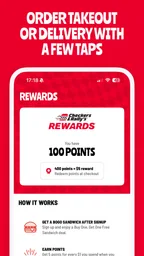
Rewards make the app more appealing to regular customers, since ordering and the loyalty side are brought together rather than treated as separate tasks. In my view, that can make it easier to remember to use the restaurant’s own rewards channel when placing an order. It is a better fit for someone who already chooses these restaurants than for someone hoping the app will introduce them to a wide range of places to eat.
I would still think of rewards as an extra, not the only reason to choose a meal. A reward program is most valuable when its terms fit the way you actually order; it is less compelling if you visit rarely or prefer to compare offers across many restaurants. The app’s focused approach means convenience and loyalty are linked to Checkers and Rally’s, rather than to a broad collection of competing food options.
A practical workflow for a rushed meal
For a realistic weekday use, I’d decide on the restaurant while I still have a few minutes to spare, check the menu, and place the order only once I’m confident about the stop. That small sequence matters: it avoids turning a quick pickup plan into a rushed decision made from the car or while approaching the counter. If other people are eating with me, I’d collect their choices first and review the order before submitting it.
A second useful habit is to keep the app’s role clear. I’d use it to handle the restaurant-specific part of the meal, then make sure the pickup or delivery plan still matches the day. If the route changes or the group changes its mind, I wouldn’t assume an order can be altered at any stage; I’d check the app’s available controls rather than count on a particular change or cancellation process.
This is also where the app differs from a general delivery marketplace. A broad service can be better when I’m choosing among many restaurants or want to compare different cuisines in one place. Checkers & Rally’s Rewards makes more sense when the restaurant decision is already made and I want a direct route to ordering and rewards. It reduces the need to browse unrelated choices, but that same focus leaves it less useful for deciding what to eat in the first place.
Busy periods and the limits of perceived speed
During a lunch break or before an evening commitment, the promise of ordering ahead is appealing because it can move some decision-making out of the restaurant visit. But I would separate faster preparation from guaranteed faster service. A phone order may help me arrive with the meal already selected; it cannot, by itself, tell me how busy a particular restaurant is or ensure that the handoff will happen instantly.
For heavy-use moments, such as organizing several meals or making a last-minute decision, I’d slow down enough to verify the order details before completing it. That is a small but useful safeguard: mobile ordering is convenient precisely because it is easy to act quickly, and speed can also make a mistaken item or an unconfirmed plan more frustrating. For a single familiar order, the process should feel more natural once I know where the options I use are located.
I also wouldn’t assume that delivery and pickup behave identically. They solve different problems: pickup helps when I’m already going past a restaurant, while delivery is better when leaving home or work is the obstacle. I’d choose between them based on the day’s logistics rather than treating one as universally quicker or more reliable.
Reliability, recovery, and everyday use
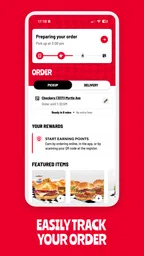
A restaurant app earns trust when it helps me complete a routine task without making me wonder what happened to the order. I’d pay attention to the confirmation shown after placing an order and keep the app available until I’m sure the transaction has gone through. If something seems unclear, I’d use the information the app presents rather than placing a second order immediately, since duplicate orders are an avoidable risk with any mobile ordering workflow.
That is practical caution, not a claim that problems are common. The experience of ordering can also depend on the phone connection and on what is happening at the restaurant. If the app pauses or a screen does not update, I’d first give it a moment and check the current order status before trying again. A stable connection and a little patience matter more when I’m placing an order close to the time I need to leave.
For someone who rarely visits either chain, occasional sign-in or account steps may feel like extra work compared with simply ordering at the counter. I’d install it when I expect to use its ordering or rewards functions more than once, then decide whether the routine is worth keeping. If I only stop by once in a long while, the app may add another account and another icon without delivering much day-to-day value.
Device fit and what the version tells me
The app is listed for devices running Android 8.0 or later, which gives it a broad base of supported Android phones, though an older compatible device can still feel different from a newer one. I wouldn’t infer low battery use, small storage needs, or smooth operation on every model from the minimum operating-system requirement alone. In ordinary use, I’d keep the app updated and make sure the phone has a dependable connection when I’m ordering.
Its current version is 2.71.3. That identifies the version available to users, but a version number alone does not tell me how quickly screens load or how the app behaves on a particular handset. If I rely on it for a time-sensitive pickup, I’d open it before I’m in a hurry and make sure I can reach the ordering flow, rather than discovering a login or update interruption at the last minute.
The app is free to download and is rated for Everyone. Those details make it easy to try without paying for the download, but they do not change the basic fit question: it is useful when Checkers or Rally’s is already part of your eating routine. The developer, Checkers Drive-In Restaurants, Inc., is also the restaurant company behind the experience, so this is a direct chain-focused tool rather than an independent service covering multiple brands.
Who I’d recommend it to
I’d recommend Checkers & Rally’s Rewards to regular customers who want a more organized way to place restaurant orders, use rewards, and choose between pickup planning and delivery. It has a clear everyday role: help me handle the order before the meal becomes another task to manage. The app has reached over one million installs, with a 4.7 average from around twenty-five thousand ratings, alongside roughly six thousand one hundred written reviews. Those figures suggest plenty of people have tried it, though they can’t predict how it will perform on my phone or at my local restaurant.
I would skip it if I mainly want one app for comparing restaurants, if I rarely eat at these chains, or if I prefer to make every decision at the counter. A general food-ordering service may suit someone who wants a wider restaurant selection in one place. And when I’m already at the restaurant with a simple order, the app may not save enough effort to justify opening it.
My overall view is that this is a practical, narrowly targeted companion rather than an essential app for everyone. Its best use is planning a familiar Checkers or Rally’s meal and keeping rewards close to the ordering process. I’d use it when the restaurant choice is settled and time or coordination matters; I’d leave it aside when I’m still deciding among places or when a quick counter order is simpler. That is a useful balance: convenient for the right routine, but not a replacement for broader food apps or for common sense about timing.
What we like
- Earn points on eligible purchases through the rewards program.
- Redeem points for free food and drinks.
- Order ahead to make pickup more convenient.
- Find nearby Checkers and Rally's locations in the app.
- Browse menu items and available deals in one place.
What could be better
- Rewards and deals may vary by location.
- Some menu items may not be available for mobile ordering.
- You need an account to track and redeem rewards.
- Pickup options depend on the selected restaurant.
- App features may require an internet connection.





