
Carl's Jr.® review
 Analysis by Appsdrops
The first time I used Carl’s Jr.®, what appealed to me was the chance to handle an order before reaching the counter. That is useful when I already know what I want and would rather spend less time deciding in a queue. The app is free, and its focus is straightforward: ordering from Carl’s Jr., collecting points, and finding deals. It makes the most sense as a practical companion to visits I was already planning, rather than as a reason to visit more often.
Easy to try, most useful when you already know your order
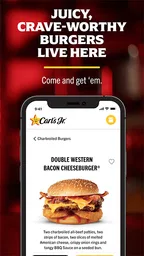
During an initial visit, I would use the app to browse the menu at my own pace, check what sounds good, and place an order without having to make every choice at the counter. That small change can matter when I am on a short lunch break or coordinating food for someone else. The benefit is not complicated; it is the ability to make decisions before the busy moment arrives.
The key is to treat the app as a way to plan a real meal, not as a guarantee that every visit will be faster. Ordering ahead only helps if the selected restaurant and the order flow suit the trip I am making. I would check the details on-screen before submitting, especially if I am picking up food for several people or have a tight schedule. A digital order can reduce counter conversation, but it still needs a little attention from me.
As a Food & Drink app, it is tightly tied to one restaurant brand. CKE Restaurants is the developer, and that narrow focus is both its strength and its main constraint: I can use it for Carl’s Jr. choices, but it is not a general-purpose restaurant finder or a way to compare meals across nearby chains. If I already like the menu, a dedicated ordering app is more direct than searching through a broad delivery service. If I am undecided about where to eat, a multi-restaurant option may be more helpful.
The first-week appeal is strongest when I have a predictable order. I can decide what I want away from the counter, then use the app as part of the pickup routine. For a first-time customer, browsing digitally can also make the menu feel less rushed. Still, I would not assume that the app removes every step of an in-person visit; it is a convenience for ordering, not a substitute for checking the pickup arrangements at the location.
Points and deals only matter when they fit your routine
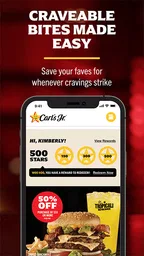
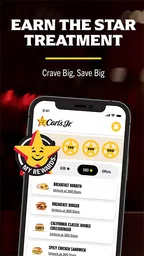
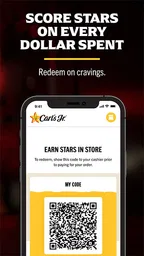
The rewards angle can make repeat use worthwhile, but only if I visit often enough for points or offers to influence my choices. The app has an average rating of 4.5 from around 27,000 ratings, and it has been installed over a million times. Those figures suggest broad interest, but they do not tell me whether the rewards will suit my own habits. I would judge the value by the offers actually shown to me and by whether I would have ordered the meal anyway.
A useful personal rule is to open the app before deciding what to buy, rather than letting a deal create an unnecessary purchase. That keeps a promotion in its proper role: a possible saving on something I already want, not a reason to spend more. If I visit only occasionally, rewards may feel like a pleasant extra rather than a meaningful benefit. Frequent customers are more likely to find a reason to keep the app handy.
For a family or a small group, I would use the menu and ordering process to settle choices before anyone reaches the counter. That can reduce the usual back-and-forth over what everyone wants. The trade-off is that one person becomes the organizer and needs to verify the order carefully. Before placing it, I would review each selection and the final order details, rather than assuming that a quickly assembled group order is correct.
Keeping it useful without turning it into a chore
One good aspect of a restaurant-specific app is that its purpose is easy to remember. I do not need to learn a broad delivery marketplace just to order from this chain. The maintenance burden is mostly behavioral: keep the app available if I use it, check for relevant deals when I am already planning a visit, and avoid opening it out of habit when I have no intention of ordering.
The current version is 5.8.0, and the app requires Android 10 or later. That is worth checking before downloading if I use an older Android device. It is also marked for Everyone, which makes its stated age suitability broad, though that does not change the fact that the app is mainly useful to people ordering from Carl’s Jr. The app is free, so trying it does not require an upfront purchase; the more important question is whether it fits my regular routine.
I would not keep notifications or repeated app checks in my routine unless they help me catch an offer I genuinely plan to use. A simple workflow is enough: open the app when I am considering a Carl’s Jr. meal, compare the available choices and deals, place the order if it suits the occasion, and close it. This avoids letting a loyalty feature become another source of digital noise. The app earns space through convenience and relevant value, not merely because points exist.
There is also a practical trade-off between ordering through the restaurant’s own app and using a delivery service. The direct app is the more focused choice when I want to order from this particular chain and handle the process myself. A delivery platform is likely the better starting point when I need to compare restaurants or arrange delivery across different places. I would choose based on the actual trip: pickup from Carl’s Jr. favors the dedicated app, while a broader search favors a multi-restaurant service.
Where repetition can wear thin
The biggest source of fatigue is the app’s narrow scope. If my meals rotate among several chains, I may not want a separate app for each one, even when each promises points or deals. Carl’s Jr. is most compelling when the restaurant is already part of my routine; outside that pattern, the convenience can be too occasional to justify another icon and another ordering habit.
Rewards can also lose their appeal if I focus on collecting rather than on whether an offer is worthwhile. I would not change my usual order just to chase points, and I would check the offer terms shown in the app before counting on a deal. That is especially sensible when ordering for a group, since one promotion may not suit every person’s meal. The app can help me notice value, but I still need to decide whether the value is real for that visit.
Another limitation is that placing an order digitally does not remove the need to pay attention. I would confirm the selected items and pickup details before submitting, and leave enough time for the visit instead of assuming that ordering ahead means instant handoff. That is not a special flaw unique to this app; it is the sensible way to use any restaurant ordering tool. The app reduces some friction, but it cannot make a rushed or poorly planned trip effortless.
People who rarely eat at Carl’s Jr. may be better off ordering in person when they do visit. They avoid maintaining a dedicated app and can ask questions directly while choosing. Likewise, anyone who wants one place to compare menus from many restaurants should start with a broader service. I would skip this app if its rewards and ordering features would sit unused; its focused design is helpful only when the brand itself is relevant to me.
Does it deserve a lasting place?
For me, Carl’s Jr.® earns a lasting place when I visit often enough to make advance ordering or relevant deals part of an ordinary meal plan. Its strongest long-term value is not novelty. It is the repeated small convenience of deciding before I arrive, with the possibility of earning points along the way. That can be worthwhile for a regular customer, especially on a workday when I want to settle lunch choices quickly.
The app has 11,000 reviews, but I would treat public feedback as context rather than a promise that every order will go smoothly. My own decision would depend more on whether the ordering flow fits the locations I visit and whether the offers I see are useful. I would give it a try if I already choose Carl’s Jr. regularly, then keep it only if it saves me effort or provides value on actual visits.
My overall recommendation is selective: download it if you want a direct way to order from Carl’s Jr. and expect to return often enough to use its points and deals. Use it before a planned visit, review the order carefully, and let the offers inform rather than dictate what you buy. If your restaurant choices change constantly or your visits are rare, the usual in-person order or a broader restaurant app may suit you better. It is a useful routine tool for regular customers, not an essential app for everyone.
What we like
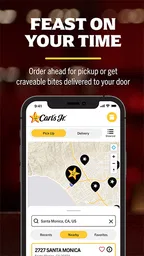
- The app makes it easy to find nearby Carl's Jr. locations.
- Menu details help you check ingredients and nutrition before ordering.
- Saved payment details can make checkout quicker.
- Order customization lets you adjust items to suit your preferences.
- The app is free to download and use.
What could be better
- Mobile ordering may not be available at every location.
- Deals and rewards can vary by location or account eligibility.
- Some menu items may be unavailable during certain hours.
- You need an internet connection to browse and place orders.
- Pickup timing can be affected by busy restaurant periods.





