


Yazy the yatzy dice game review
 Analysis by Appsdrops
My first impression of Yazy is that it asks very little of a new player: open a board game, understand the basic aim, and get on with a round. That makes it an easy choice when I want a brief game rather than a long session with a rulebook or a group that needs to coordinate. It is a dice-based board game, so luck is part of the appeal, but the useful decisions come from choosing how to use the results you get.
That mix makes it a comfortable first game for someone curious about yatzy-style play. I would not approach it expecting a deep strategy game or a substitute for a full tabletop night. I would approach it as a lightweight way to practise making choices under uncertainty, whether I have a few quiet minutes alone or want a simple game to share with someone nearby.
What a new player can expect
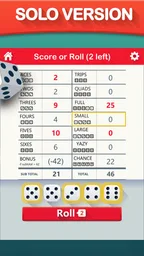
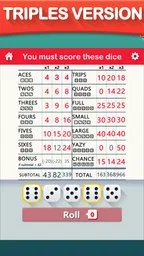
The basic rhythm of a yatzy dice game is familiar even if you have not played one before: roll, consider the result, and decide what outcome to pursue. The tension is less about mastering complicated controls and more about weighing a promising combination against the risk of chasing something better. That makes each turn understandable without making every choice automatic.
In my view, the best way to start is to focus on the decision in front of you rather than trying to plan a perfect overall score. Early on, ask yourself whether the dice already offer a worthwhile result or whether another attempt might improve it. This keeps the game approachable and helps you learn the logic of the board through play, not by memorizing a long explanation first.
It is also worth setting expectations about randomness. A sensible choice can still be followed by an unhelpful roll, and a fortunate result can rescue a turn that looked uncertain. If you enjoy games where every outcome can be controlled through skill, this may feel too dependent on luck. If you like making small tactical calls while accepting that chance has a say, that balance is part of the fun.
Yazy sits within the board game category, but its pace and compact decisions make it feel more casual than a strategy-heavy board title. FIOGONIA LIMITED is the developer. The game is free to download, with in-app purchases listed from $2.99 to $99.99 per item, so I would treat optional spending as a separate consideration rather than a requirement for trying the core idea.
Getting from installation to a first turn
For a first-time player, I would keep the setup simple: install the game, open it, and take the first available opportunity to learn by doing. The store presents it for Everyone, and it was released on May 18, 2017. Its current version is 1.6.1, and it requires Android 7.0 or later. Those details are useful when checking whether it suits a device, but they do not change the practical advice: begin with a low-pressure round and let the game’s flow teach you.
Before settling in for a longer session, it helps to decide what you want from the game. If you are filling a short wait, play one round without worrying about the final result. If you are introducing it to a friend, explain only the immediate choice—what result you are aiming for and whether the current roll is good enough. Too much coaching can make a simple game feel like homework.
A helpful first-session habit is to pause briefly before committing to a choice. Name the outcome you are considering, then compare it with what you already have. This small routine makes the decisions easier to follow and helps you notice when you are chasing a possibility simply because it sounds exciting. It is not a secret strategy; it is a practical way to learn what kinds of risks you enjoy taking.
The first satisfying decision
Your first meaningful success does not have to be a spectacular score. It can be recognizing that a usable result is already in front of you and choosing not to gamble it away. In a dice game, that kind of restraint is easy to overlook, especially when another roll might produce something better. I find that treating a sensible decision as a win makes the learning curve feel fairer, even when the final outcome is mixed.
Try a simple comparison during your first few turns: note what you hoped to get, what the dice actually gave you, and whether your choice matched your original plan. You do not need to track anything outside the game. The point is to build a feel for the trade-off between taking a dependable result and pursuing a less certain one. That reflection is especially useful if you are used to games where the best move is always obvious.
For a realistic everyday use, imagine having a short break while waiting for a pickup or for food to arrive. A quick round gives you something more engaging than scrolling, but it does not demand a long uninterrupted block of attention. If you are playing with another person, the same small decisions can make conversation easy: you can talk through a choice without needing elaborate rules or a dedicated table.
One practical tip is not to judge the game by a single unlucky round. Randomness can make a newcomer feel that their decisions had no impact, when the more useful question is whether they chose thoughtfully with the information available. Play enough to see the pattern of decisions, but stop if the luck-driven swings are exactly what you dislike. A casual game should be relaxing, not an obligation to keep trying until chance turns in your favour.
Where first-time players may get stuck
The most likely confusion is mistaking a possible outcome for a guaranteed one. Seeing a promising start can tempt you to keep pursuing it, but dice do not promise to cooperate. I recommend deciding in advance what would make you settle for a result and what would justify taking another chance. That simple boundary makes the choices feel deliberate instead of reactive.
Another source of friction is expecting every turn to produce a satisfying combination. Some rolls will leave you with awkward options, and that is part of a game built around chance. If you are playing with someone new, resist the urge to explain every theoretical possibility at once. Let them make a choice, see how it plays out, and then discuss what they might try next time. The game is easier to enjoy when learning happens in manageable pieces.
It is also sensible to distinguish the free download from optional purchases. The game can be tried without paying upfront, while individual in-app purchases range from $2.99 to $99.99. I would check purchase prompts carefully and avoid spending simply because a round went badly. If your goal is only to see whether the dice-and-decisions format suits you, first establish that you enjoy the basic play before considering any optional item.
Yazy has an average rating of 4.7 from around 41,000 ratings, with about 15,000 written reviews and over 1 million installs. That level of uptake suggests plenty of people have found a reason to try it, but it cannot tell you whether its balance of luck and choice matches your taste. I would use those figures as context, not as a substitute for trying a round yourself.
How it compares with other board games
Compared with a traditional board game that depends on a shared board, a collection of pieces, and a long session, a dice game like this is easier to fit into a spare moment. Its appeal is the compact decision loop rather than a sprawling plan. Compared with other casual dice games, the key question is whether you enjoy choosing among possible scoring outcomes, instead of simply rolling for a high number or watching an automated result unfold.
If you want a game that rewards careful long-term planning, a more strategic board title may be a better fit. If you want an activity where your group can build a story or negotiate directly, a party game will probably offer more social interaction. Yazy is strongest when you want a light contest of judgement and luck, with enough choice to keep a roll from feeling entirely passive.
It can also work as a low-pressure introduction to tabletop-style decisions for someone who finds complex games intimidating. The useful trade-off is that accessibility limits depth: you can learn the basic rhythm quickly, but players looking for layered tactics may soon want something more demanding. That is not a flaw for a short-break game; it is simply a reason to choose it for the right occasion.
What to do after the first round
After a first game, decide what you liked most. If you enjoyed weighing a safe result against a risky one, play another round and try a different approach rather than repeating the same instinct. If the uncertainty irritated you, there is little reason to force it; choose a board game with more direct control. That is a better test of fit than chasing a score you feel you should have achieved.
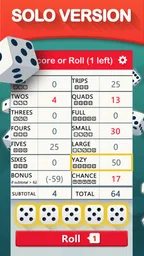
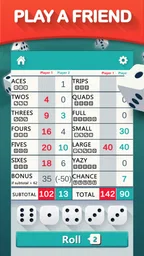
For a casual group, I would keep the focus on friendly choices rather than turning every roll into a lesson. For solo play, I would use the game as a short mental reset, not as a replacement for a deeper strategy session. Either way, the best next step is modest: play again only if the decision-making itself was enjoyable, not just because you hope the next roll will be kinder.
Overall, I think Yazy is a straightforward option for anyone who wants a quick, approachable dice board game and is comfortable letting luck share the spotlight with judgement. Its free entry point makes trying it easy, while optional purchases are worth treating cautiously. I would recommend it to casual players, newcomers, and people looking for a brief game between other plans. I would skip it if I wanted sustained strategic depth or outcomes driven almost entirely by skill. For the right kind of short session, it gives a first-time player a clear path from opening the game to making a confident choice—and that is enough to make another round appealing.
What we like
- Quick rounds make it easy to play during short breaks.
- Simple rules are welcoming to new players.
- Dice rolls add an enjoyable element of chance.
- Score tracking makes it easy to follow each game.
- Familiar Yahtzee-style play is easy to pick up.
What could be better
- Luck can outweigh careful choices in a single round.
- Repeated games may feel similar over time.
- A poor roll can leave few useful scoring options.
- Players may need to learn the scoring strategy.
- The dice theme may not appeal to every player.







