


Yatzy - Classic Dice Game review
 Analysis by Appsdrops
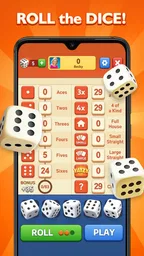
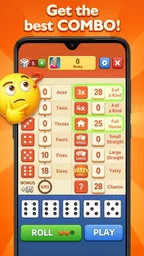
I like Yatzy - Classic Dice Game best as a small, familiar board game for moments when I want to think a little without learning a complicated ruleset. Its appeal is the simple rhythm of rolling dice, choosing what to keep, and deciding where each result belongs on the scorecard. That makes it easy to pick up, though the classic format also means it won’t offer the variety of a larger board-game collection.
A familiar dice game for short breaks
This is a free board game from TerranDroid, with a 4.9 average from around 12,000 ratings and more than 100,000 installs. It is rated for Everyone, so it’s an approachable option to share with younger players or relatives who already know the basics. The current version is 1.3.9, and it runs on Android 6.0 or later.
The central pleasure is making choices with imperfect information. A roll may suggest one scoring category, but a later roll can change the plan. I find that small tension is what keeps a simple dice game engaging: luck gives each turn its shape, while the decisions about what to retain make the player feel involved.
That balance also makes it useful in everyday situations. If I have a few minutes while waiting for a meal or taking a break between tasks, a round gives me something focused to do without asking me to remember a story, manage a long campaign, or coordinate a group. It suits short, self-contained play better than a game I’d want to settle into for an evening.
Where the decisions come from
For new players, the best way to approach Yatzy is to avoid chasing a particular combination on every turn. I would first look at the scorecard and identify which categories still offer a sensible target, then judge each roll against those open choices. A modest result that fills a useful space can be better than repeatedly hoping for a dramatic one.
A helpful habit is to decide what a roll is trying to accomplish before using another chance to improve it. If the dice already support a reasonable category, keeping that result can protect a dependable score. If they point toward a stronger combination, taking a calculated risk may be worthwhile. The important trade-off is that a promising roll is not valuable in isolation; it matters in relation to what remains available on the card.
This makes the game a gentle way to practise probability and planning, especially for children learning to compare options. I would still explain that luck plays a substantial role. A thoughtful choice can improve a turn, but it cannot guarantee the result, so it works better as a relaxed family game than as a test of who is objectively the best player.
How it fits among board-game alternatives
Compared with a digital board game built around maps, long-term upgrades, or elaborate rules, this one has a much lower learning burden. You can focus on the dice and scorecard rather than tracking a changing world. That simplicity is its strongest advantage for casual use, and also the reason it may feel limited to players looking for new mechanics or substantial progression.
Against a physical dice set and paper scorecard, the app is convenient because it keeps the activity on a phone. That can be useful when there’s no table space or score sheet nearby. On the other hand, a physical version is often the better choice when the social ritual matters: passing dice around, watching each other’s rolls, and talking through decisions are part of the fun that a screen-based game may not reproduce as naturally.
If you usually choose word puzzles or logic games, this offers a different kind of thinking. There is less emphasis on finding a single correct answer and more on choosing a sensible option from the roll you get. I’d recommend it to someone who enjoys a little strategy but doesn’t want every session to feel like a demanding puzzle.
What the current release tells returning players
The available release details place the game’s release on January 14, 2025, and identify version 1.3.9 as the current version. That gives returning users a clear version to check against what is installed, but it does not by itself explain what changed between releases. I wouldn’t treat a version number as evidence of a new mode, a rules revision, or a particular fix.
For someone who already knows the game, the practical question is whether the familiar dice-and-scorecard loop still suits the way they play. The current version keeps the product positioned as a classic Yatzy-style experience rather than suggesting a change in direction. If you return after a break, it makes sense to check the app’s update notes in the store before expecting any specific improvement; the number alone isn’t enough to establish what has evolved.
That distinction matters because established players may care about small changes more than newcomers do. A beginner mainly wants to understand the turn and scorecard, while a returning player may be looking for adjustments that affect pace or convenience. I’d judge the release on how it feels in a few rounds rather than assuming that a newer version necessarily changes the underlying experience.
Small practical choices that improve a session
One useful way to keep play brisk is to treat each round as a fresh decision rather than trying to rescue every poor roll. If the result is awkward, consider which available category would make the least damaging use of it. This is a more reliable habit than focusing only on the best-case combination, and it helps newer players see that scoring choices matter even when luck is unhelpful.
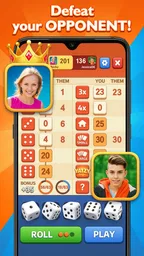
For a casual head-to-head session, agree on the pace before starting. One player may want to deliberate over every possibility, while another may prefer quick choices. Since the core attraction is a series of compact decisions, taking too long over each one can make a simple game feel oddly serious. I’d keep the conversation light and use the scorecard as a prompt for comparing choices, not as a reason to argue over a single unlucky turn.
It can also work as a low-pressure introduction to turn-based games for someone who is hesitant about more involved board games. Explain the goal in plain language, let them make their own choices, and resist steering every roll. The game is most enjoyable when the player feels ownership of the decision, even if the dice don’t cooperate.
Where the experience may fall short
The classic format is both the draw and the main limitation. Once the scoring choices are familiar, the experience depends on enjoying repeated rounds of the same basic decision cycle. Players who want a changing objective, a story, deeper tactical layers, or a broad range of modes may soon prefer another board game.
There is also a natural tension between convenience and atmosphere. Playing on a phone is easy to fit into a spare moment, but it may feel less social than sharing real dice around a table. If you’re choosing a game for a family gathering where conversation and physical interaction are the point, I’d bring a tabletop option instead. This app is better as a convenient solo break or a simple digital alternative when everyone is comfortable playing on a screen.
The game is free to download, with in-app purchases ranging from $1.99 to $49.99 per item. That is worth keeping in mind if you prefer games with no optional spending. I’d check the purchase prompts carefully and decide in advance whether you want to spend anything; the core appeal is the traditional dice-game loop, so there is no need to treat purchases as a reason to try it.
Who I’d recommend it to
I’d suggest it to people who already enjoy Yatzy, families looking for an easy-to-explain game, and anyone who wants a compact activity for a commute or waiting room. It is especially suitable when players have different levels of experience, since the basic idea is easy to communicate and the decisions can become more thoughtful as people learn to use the scorecard.
I’d steer away from it if you need a rich single-player campaign, frequent changes in objectives, or a game that rewards skill more consistently than luck. It is also not my first choice for a screen-free social gathering. A physical dice set is better for that, while a more elaborate digital board game is a stronger fit for players who want progression and more varied systems.
A measured recommendation
Overall, Yatzy - Classic Dice Game is an easy recommendation when the goal is familiar, low-commitment play rather than novelty. The game’s strength is the small but satisfying decision between accepting a result and taking a chance on a better one. Its limits are just as clear: the classic loop may become repetitive, and it cannot replace the shared feel of physical dice for every group.
I’d try it if you want a straightforward dice game that can fit into a few spare minutes, especially if you already enjoy weighing a little risk against a safe score. Keep expectations focused on that compact experience, and it has a clear place among casual board games. If you’re hoping for a broader collection of activities or a major evolution of the familiar rules, you’ll likely be happier with a different option.
What we like
- Simple rules make it easy for new players to learn.
- Quick rounds fit well into short breaks.
- Dice rolls add an element of chance to every turn.
- The score sheet encourages thoughtful choices.
- Familiar gameplay suits casual players of many ages.
What could be better
- Luck can outweigh strategy in a single round.
- Repeated play may feel less varied over time.
- A poor roll can leave few useful scoring options.
- Players seeking complex mechanics may find it too simple.
- Scoring decisions can be confusing for first-time players.







