
Vigor Mahjong review
 Analysis by Appsdrops
I’m drawn to board games that are easy to pick up but still give me a reason to return after the first few sessions. Vigor Mahjong sets out to do that with a familiar idea: match tiles in a mahjong solitaire game. Its appeal is immediately understandable, and its focused premise makes it a natural choice when I want a quiet puzzle rather than a game that demands a long commitment. The key question is whether that simple loop can keep feeling worthwhile once the novelty wears off.
A familiar puzzle with a quick first-week appeal
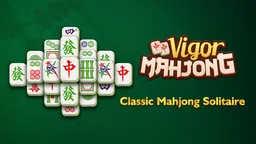
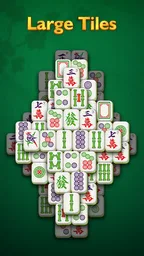
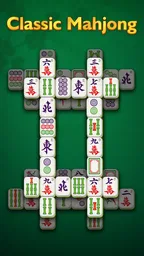
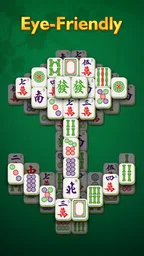
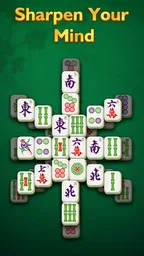
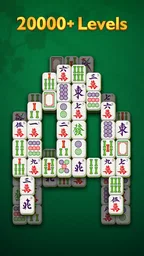
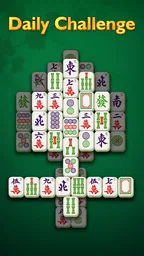
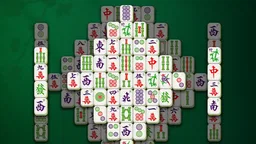
Mahjong solitaire is a straightforward concept to grasp: look over the layout, find matching tiles that can be paired, and work toward clearing the board. That clarity is a real strength. I don’t need to learn a complicated rulebook before starting, and the game’s board-focused nature makes it easy to settle into a short session. For anyone searching for a mahjong tile matching game on Android or iOS, the premise is immediately recognizable.
The first few sessions are likely to be the most naturally compelling. Matching tiles gives each move a clear purpose, while the larger goal of clearing the layout encourages me to keep scanning for a useful pair. When I’m in the mood for a low-pressure game, that rhythm feels satisfying: examine the board, make a choice, and see how the remaining tiles change the possibilities.
Its store summary describes it as a classic tile-matching and mahjong solitaire game, which captures the core attraction without making the experience sound more complicated than it is. I like that directness. Vigor Mahjong is built around a recognizable board-game puzzle, so it can appeal both to people who already enjoy solitaire-style tile games and to newcomers who want something approachable.
Why the simple loop works
A good casual puzzle does not always need a sprawling set of systems. Sometimes the pleasure comes from having a clear objective and enough room to think through the next move. Mahjong solitaire offers exactly that kind of mental pause: I can play at my own pace, focus on the tiles in front of me, and decide whether a pair is worth taking now or leaving for later.
That makes the game particularly suitable for brief breaks. It doesn’t ask me to follow a story or keep track of a complicated set of tasks in order to enjoy a session. The board itself provides the immediate focus. If I’m browsing for a free board game that feels more thoughtful than a reflex challenge, this is the sort of format I would consider.
The first-week appeal is therefore easy to understand. The rules are familiar, the objective is visible, and each board invites a little bit of planning. A rating of 4.8 from around 280,000 ratings also shows that the game has attracted a large audience, although ratings alone can’t predict whether its particular style will suit every player.
Does it keep earning a place month after month?
Long-term value depends less on the initial pleasure of matching tiles and more on whether I continue to enjoy repeating that process. Mahjong solitaire can be rewarding over time because it asks for observation and small decisions rather than speed. A board may prompt me to reconsider what I noticed at first, and that shift in attention can make a familiar puzzle feel engaging again.
At the same time, the central activity remains the central activity. Players who enjoy scanning a board and pairing tiles may find that consistency comforting. Those who need a steady stream of different mechanics, dramatic progression, or a changing challenge structure may find the format less compelling over the long haul. I would treat this as a focused puzzle game, not a broad collection of unrelated activities.
That distinction matters when deciding whether it deserves space on a phone. A game does not need to reinvent its genre to be worth keeping; it does need to fit the way I actually play. If I often want a calm, self-contained puzzle, a familiar tile-matching loop can offer recurring value. If I usually abandon games once I understand their basic rhythm, the initial appeal may not turn into a lasting habit.
A habit-friendly kind of board game
For me, the strongest long-term argument is convenience of intent. I can open a mahjong solitaire game because I want to concentrate on a board, rather than because I’m chasing a lengthy campaign or trying to stay current with a sequence of events. That makes the experience easier to return to on my own terms. It can be part of a small daily routine, or something I play only when the mood strikes.
The game is free, which lowers the barrier to trying it. Its age rating is Everyone, making its presentation suitable for a broad audience. It was released on June 7, 2024, and its current version is 7.7. These details help place the game as an established mobile release, but the reason to keep it installed is ultimately the puzzle itself: whether matching tiles continues to feel relaxing and mentally satisfying.
There is also a useful kind of predictability in a classic board-game format. I know what sort of attention it asks from me, and I can decide quickly whether I want that experience. The game is not trying to occupy every moment of my day. For players who value a dependable option for a quiet break, that restraint can be a plus rather than a limitation.
Maintenance and the effort of returning
Every mobile game carries some practical upkeep: it occupies space, may receive updates, and competes with other apps for attention. I would not keep a game installed simply because I tried it once; I would keep it if returning feels effortless and the sessions still fit my routine. With a focused tile puzzle, the main maintenance question is less about managing a complicated game world and more about whether I continue to want this particular kind of mental break.
CanaryDroid is the developer, and the game has passed five million installs. That broad reach suggests that many players have found the concept appealing. It does not mean everyone will keep playing indefinitely, but it does support the idea that there is a substantial audience for an accessible mahjong solitaire puzzle.
For a prospective player, compatibility is worth checking before installing. The listed minimum operating system is Android 5.0, so the game is intended to run on devices meeting that requirement. Once it is available on a compatible phone, the real test is whether its straightforward format earns a regular place alongside the apps and games already in use.
Where repetition can set in
The same simplicity that makes the game easy to approach can also become its main source of fatigue. If tile matching is the only kind of puzzle I want, repeating the basic activity may feel meditative. If I’m looking for frequent changes in pace or a markedly different challenge from session to session, a classic solitaire format may eventually feel too familiar.
This is not necessarily a flaw. A focused game can be satisfying precisely because it avoids unnecessary complexity. Still, it helps to choose it with the right expectations. I would not install it expecting a sweeping adventure or a constantly changing set of activities. I would install it because I want a board puzzle whose central pleasure comes from looking closely and making deliberate matches.
Another possible source of fatigue is the way personal habits change. A puzzle that feels ideal during a quiet week may be less attractive when I want something social, faster, or more varied. That doesn’t make the game unsuccessful; it simply means its lasting value depends on how often the player wants a calm, tile-based challenge. The best casual games are the ones I can return to without feeling obligated, and this one’s clear premise supports that kind of flexible use.
Who is most likely to keep playing?
I can see this appealing most to players who enjoy traditional board-game thinking, casual puzzles, and short sessions that don’t require a big warm-up. It is also a sensible option for anyone curious about mahjong solitaire and looking for an approachable place to start. The combination of a familiar format and a broad Everyone rating makes it easy to understand who might give it a try.
Players who want deeper strategic systems or a game that constantly changes its core rhythm should be more cautious about their expectations. The available appeal is concentrated in the tile-matching puzzle, so enjoyment depends on liking that loop in the first place. I’d rather be clear about that than pretend the game is something other than what its premise promises.
My long-term verdict
Vigor Mahjong earns consideration as a straightforward, free mahjong solitaire game for people who want a calm board puzzle they can revisit on their own schedule. Its most convincing quality is clarity: the tile-matching idea is familiar, the goal is easy to grasp, and the experience has room for thoughtful play without demanding a large time commitment.
Its lasting appeal will depend on personal taste more than novelty. If I enjoy the steady process of examining a layout and pairing tiles, I can imagine keeping it available as a reliable break-time game. If I quickly tire of repeating one core activity, the first sessions may be more satisfying than the months that follow. That’s the fair trade-off of a focused casual puzzle.
Overall, I’d recommend giving it a try if classic tile matching is already your kind of relaxation. The game has attracted over 11,000 written reviews, and its established audience reflects genuine interest in this style of play. I wouldn’t call it an essential fit for every mobile gamer, but for the right player, Vigor Mahjong can earn lasting space by being simple to return to, easy to understand, and pleasantly focused on the board.
What we like
- Mahjong solitaire offers a familiar and easy-to-understand puzzle format.
- Short rounds make it suitable for quick play sessions.
- Matching tiles provides a relaxing alternative to fast-paced games.
- The rules are simple enough for newcomers to learn quickly.
- Tile layouts encourage visual scanning and forward planning.
What could be better
- Some layouts can become unwinnable after a poor sequence of matches.
- Repeated tile matching may feel monotonous over time.
- Small tile symbols can be difficult to distinguish on compact screens.
- Progress may depend on having a stable internet connection.
- Hints can reduce the challenge for players seeking a tougher puzzle.







